Maxpro 3-in-1 Grinder.
Stress-Free Nail Trimming.
Whisper-quiet DC motor (<40 dB) eliminates fear & discomfort. Features 3 ports, dual speeds, and 7-hour battery life. Safe, precise, and painless.
In This Article
- How slick hardwood floors accelerate joint degeneration in aging canine family members.
- The biophysical relationship between overgrown claws and severe paw sliding issues.
- A comprehensive look at protective boots, non slip dog socks senior, and rubber caps.
- Step-by-step guidance on keeping senior claws short and painless without causing panic.
- Why professional-grade whisper-quiet grinding is the ultimate tool for aging canine wellness.
Solving the Slip Crisis: How Non Slip Traction Socks and Senior Dog Nails Connect

Slick hardwood floors represent one of the most dangerous and physically exhausting daily environmental hazards for an aging dog living in a modern home.
As dogs grow older, their joint cartilage naturally deteriorates and their supporting musculature begins to slowly atrophy.
This progressive musculoskeletal decline makes standing up from a resting position on polished laminate or tile an incredibly stressful physical battle.
Many pet parents do not realize that continuous paw sliding can cause painful micro-tears in fragile knee and hip ligaments.
When you combine unstable indoor flooring with long, neglected claws, you create a dangerous environment that drastically increases the risk of slips and falls.
Utilizing high-quality toenail grippers for elderly dogs can provide immediate relief by allowing the nails to find mechanical leverage on hard surfaces.
However, pairing those external grip accessories with specialized, breathable footwear delivers the ultimate baseline of physical stability.
Aging canines rely heavily on their claws to dig into the ground like outdoor soccer cleats to stabilize their entire torso.
On modern varnished hardwood, this natural defensive digging mechanism completely fails because the keratin cannot penetrate the hard wood surface.
Instead of gripping, the hard nails slide outward, forcing the dog’s legs to splay apart in a highly unnatural and painful posture.
This continuous splaying motion puts immense, exhausting strain on the hips, patellas, and the lower lumbar spine.
Premium non slip traction socks with medical-grade silicone patterns help prevent this dangerous outward splaying.
They establish a soft, highly adhesive barrier directly between the sensitive paw pads and the slick floor surface.
However, even the most advanced traction socks cannot work effectively if your senior companion’s claws are left overgrown.
Long, unkempt nails will push the sock fabric forward, stretching it away from the designated bottom grip zones.
This constant structural misalignment causes the sock to twist around the paw, rendering the non-slip coating completely useless.
That is why maintaining exceptionally short claws is the absolute, non-negotiable foundation of canine indoor traction.
When the nail is properly shortened, the traction sock sits perfectly flat and flush against the entire paw pad.
The dog can then distribute their weight naturally and evenly across the high-friction silicone grip patterns.
Our team at Zenpaw strongly emphasizes that we must look at the aging canine paw as a complete, highly integrated sensory ecosystem.
Every single element, from the digital paw pads to the curvature of the nails, contributes directly to your dog’s balance and proprioception.
If one part of this biomechanical system is out of alignment, the entire leg structure suffers, accelerating joint degeneration.
Our goal as pet wellness advocates is to restore that structural alignment so your senior pet can walk proudly and confidently once again.
By addressing both the tactile paw grip and the physical length of the nail, you solve the chronic slipping problem at its absolute core.
Your beloved dog will no longer hesitate in fear before walking across the kitchen to reach their food bowl.
They will stand up from their orthopedic bed without their legs sliding out from underneath them.
This simple, elegant combination of grooming and traction can dramatically extend your dog’s golden years and preserve their physical dignity.
99-Day 100% Money-Back Guarantee
“Ever since we started using the Zenpaw Maxpro Grinder, it’s been such a peaceful experience. It’s very quiet, and my dog actually relaxes. It’s turned our stressful sessions into quick, quiet grooming times.”
— Sarah M. | ✔ Verified Customer
- ✓ Prevents Infection & Splitting
- ✓ Ideal for All Dog Sizes
- ✓ Low-Vibration Technology
- ✓ Fast 2-7 Days Delivery
Need Support? Call 302-307-1000
The Science of Paw Traction: Socks, Grippers, and Rubber Tips for Senior Dog Nails
Deeply understanding how an aging dog physically interacts with hard indoor flooring is crucial for managing their long-term comfort.
Canines are biologically classified as digitigrade animals, meaning their entire skeletal structure is designed to walk on their toes.
Their natural paw pads are filled with fat deposits that act as shock absorbers and complex neurological feedback centers.
When walking on natural, soft outdoor turf, a dog’s claws naturally sink into the dirt to provide an instantaneous anchor.
But inside a modern home, this ancient cleat mechanism completely fails on varnished hardwood or ceramic tile floors.
Hardwood floors do not compress under the intense pressure of a dog’s downward claw strike.
Instead, the unyielding surface pushes the hard keratin nail upward, forcing it deep into the delicate digital joint capsule.
This constant, highly abnormal upward pressure causes chronic, low-grade inflammatory pain in the toe joints of senior pets.
To combat this agonizing issue, pet parents often look for versatile temporary solutions like dog nail covers for traction.
These lightweight, medical-grade covers wrap directly around the claw tip to soften the structural impact on hard floors.
Another popular option is installing specialized rubberized dog nail grips directly onto the mid-section of the claws.
These specialized grips utilize a highly elastic material that naturally grabs smooth flooring to prevent sudden slips.
They provide an excellent, non-intrusive alternative for dogs that suffer from severe sensory aversion to wearing fabric socks.
Additionally, some veterinary experts recommend using premium rubber dog nail covers to protect delicate floor finishes from scratching.
Each of these options works by replacing a hard, low-friction keratin surface with a soft, high-friction polymer material.
High-friction silicone and rubber have a dramatically higher static coefficient of friction than raw, dried canine claw keratin.
When these flexible materials come into direct contact with smooth wood, they stop the lateral sliding motion instantly.
However, specialized socks offer a distinct therapeutic advantage by covering and warming the entire arthritic paw pad.
Senior canine paw pads contain tiny sweat glands that can sometimes excrete excess moisture when the dog is anxious.
This subtle layer of perspiration can actually act as a lubricant, making the dog slide even worse on highly polished tile.
Traction socks actively absorb this excess moisture while simultaneously providing a dry, reliable external grip surface.
But we must also acknowledge that wearing thick socks can slightly reduce your dog’s natural tactile feedback from the floor.
This is why a highly tailored, hybrid approach often yields the absolute best physical results for elderly pets.
Many aging dogs perform beautifully with light traction socks on their front paws and nail grips on their weaker rear limbs.
The rear legs are typically where muscle wasting and chronic hip dysplasia make their earliest structural appearances.
The front legs, which carry up to sixty percent of the dog’s total weight, are primarily used for steering and stopping.
By customizing your traction plan to your dog’s specific physical deficits, you optimize their mobility and confidence.
Always consult your professional groomer to evaluate your dog’s unique gait patterns before introducing a new tool.
The Core Problem: Why Long Nails Destroy Traction in Aging Canines
We cannot discuss indoor traction in any meaningful way without directly addressing the physical length of the canine nail.
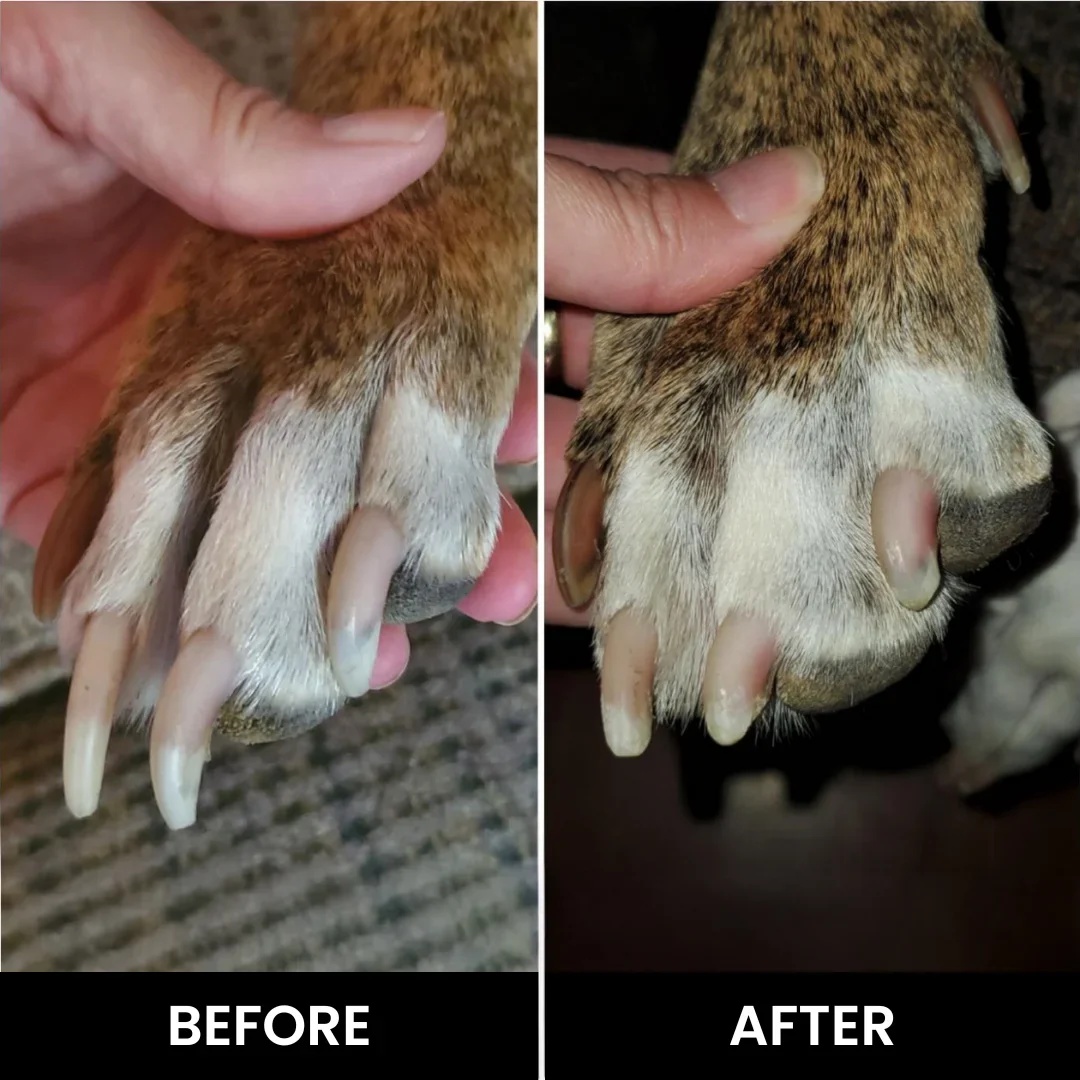
When a dog’s claws are allowed to grow too long, they permanently alter the healthy structural geometry of the entire paw.
The overgrown nail strikes the hard floor surface first, which mechanically forces the toes to tilt backward and upward.
This abnormal skeletal tilt prevents the primary, shock-absorbing paw pads from making solid physical contact with the ground.
Instead of standing firmly on their soft, slip-resistant pads, the dog is forced to balance precariously on their hard claws.
This is biologically equivalent to a human being trying to walk across a sheet of ice in high-heeled shoes.
The drastic reduction in surface area contact makes sudden, painful slipping almost guaranteed for an older dog.
Furthermore, this unnatural, backward-tilted paw posture completely throws off the dog’s natural center of gravity.
To compensate for this unstable shift, the dog must adjust their posture, overloading their vulnerable rear knees and hocks.
This chronic postural compensation leads directly to severe lower back pain, spinal misalignment, and rapid muscle wasting.
Many owners believe they must use heavy-duty steel clippers to resolve this overgrown nail problem quickly.
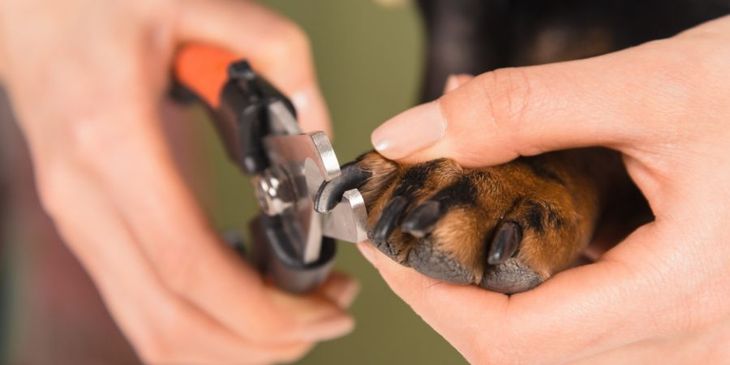
However, traditional scissor clippers apply intense crushing force directly to the sensitive, hardened outer keratin wall.
This sharp, violent crushing sensation can cause painful micro-fractures inside the nail, leading to splitting and infection.
For an older canine dealing with fragile, arthritic joints, this sudden crushing sensation is incredibly painful and stressful.
Additionally, using traditional manual clippers makes it remarkably easy to accidentally slice into the sensitive quick.
The quick is the central, highly vascularized nerve and blood vessel that runs directly through the core of the claw.
If you cut the quick, it causes immediate, sharp pain and significant, difficult-to-stop bleeding that terrifies the pet.
This highly traumatic experience can make your senior dog incredibly defensive and aggressive during future grooming sessions.
Fortunately, you can easily learn how to safely keep dog nails short without clipping.
Using a premium, high-speed rotary nail grinder is the safest, most compassionate alternative currently available to pet parents.
Grinding allows you to gently file away the hardened keratin structure gradually, millimeter by millimeter, without any crushing.
This gradual filing process gives you complete, microscopic control over how close you get to the sensitive inner quick.
It also perfectly rounds and smooths out any sharp, jagged edges that could snag on carpets or tear delicate skin.
As you grind, the thermal energy generated by the diamond bit naturally stimulates the blood vessels, causing the quick to recede.
This anatomical phenomenon means you can safely and painlessly shorten even extremely long, historically neglected nails over time.
Short, beautifully rounded claws allow the toe joints to rest flat, letting the paw pads grip the floor naturally.
They also ensure that any protective non-slip traction socks you apply will fit snugly without twisting out of place.
Without a consistent, stress-free nail maintenance routine, no traction accessory can keep your senior dog stable on hardwood.
Step-by-Step Practical Application: Grooming Senior Nails and Applying Socks

Grooming an anxious, stiff senior dog requires a gentle hand, immense patience, and specialized, professional-grade tools.
Before you begin handling your dog’s sensitive paws, you must establish a tranquil, stress-free environment in your home.
Choose a quiet, well-lit room away from busy household traffic, loud noises, or other family pets.
We highly recommend placing a thick, non-slip yoga mat on the floor to provide your dog with secure footing during grooming.
Introduce the Zenpaw Maxpro 3-in-1 Grinder by allowing your dog to sniff the device while it is completely turned off.
Pair this initial introduction with high-value treats to build a strong, positive psychological association with the tool.
Next, turn the grinder on to its lowest speed setting to let your dog acclimate to the soft, gentle hum.
The Zenpaw Maxpro features a state-of-the-art whisper-quiet DC motor that operates consistently under forty decibels.
This ultra-quiet performance prevents the sudden, panic-induced fight-or-flight response triggered by loud, vibrating rotary tools.
Once your senior dog is completely relaxed, gently lift one of their paws while keeping their leg in a natural alignment.
Gently press your thumb against the base of the toe pad to extend the nail away from the surrounding fur.
Hold the Zenpaw Maxpro grinder at a precise forty-five-degree angle relative to the natural slope of the nail tip.
Apply light, tapping pressure with the diamond grinding bit for no more than two to three seconds on each claw.
This brief, intermittent contact prevents friction heat from building up and causing discomfort to the underlying nailbed.
Work in a smooth, circular motion around the tip to create a beautifully polished, rounded finish on the keratin.
If you are grooming dark or black claws, look directly at the center of the grind zone after each gentle tap.
You will notice a small, dark gray or white circular dot appear in the center when you approach the quick.
Stop grinding immediately once this indicator dot becomes visible to ensure you do not cause any pain or bleeding.
Once all the claws are short, smooth, and healthy, you can confidently select the perfect traction accessories for your home.
For dogs that suffer from severe, chronic slipping, you can apply premium dog nail covers for hardwood floors.
These highly durable, soft dog nail covers insulate the claw tip and provide a rubberized grip on slick surfaces.
If you prefer a semi-permanent solution that lasts for weeks, explore dog nail caps for hardwood floors.
These lightweight polymer caps are bonded to the nail tips using veterinary adhesive, providing excellent traction without bulky footwear.
If you choose to use fabric traction socks, ensure you measure the widest part of your dog’s paw before purchasing.
Gently slide the sock over the paw, making sure the grippy silicone pattern is positioned flat on the bottom of the pads.
Secure the adjustable hook-and-loop strap firmly enough to prevent sliding, but loose enough to maintain perfect circulation.
Check your dog’s paws every few hours to ensure the socks have not twisted or bunched up around their sensitive dewclaws.
Always remove the socks before your dog goes to sleep at night to allow the paws to breathe and prevent yeast infections.
Comparing Senior Dog Traction Solutions
Selecting the ideal traction aid for your aging companion depends on their unique anatomy, lifestyle, and behavioral temperament.
Some highly sensitive dogs will immediately try to chew off any fabric footwear or boots you place on their paws.
Other dogs may have ultra-sensitive skin or paw allergies that make topical veterinary adhesives uncomfortable.
We have compiled a clear, objective comparison to help you evaluate the best option for your home environment.
| Traction Method | Ideal Use Case | Primary Advantages | Primary Disadvantages |
|---|---|---|---|
| Zenpaw Maxpro + Short Nails | All senior dogs; essential foundation | Restores natural posture; pain-free | Requires regular 5-minute upkeep |
| Non-Slip Traction Socks | Dogs with sensitive, cold, or dry pads | Warmth; full-pad grip; washable | Can twist, slide off, or retain moisture |
| Nail Grips / Rubber Tips | Severe weakness; dogs that hate socks | proprioception remains; natural feel | Can be physically challenging to install |
| Adhesive Nail Caps | Long-term hardwood protection | Stays on for weeks; no fabric friction | Requires adhesive glue; professional removal |
Review this scientific comparison data carefully to determine which tool matches your pet’s current stage of life and mobility.
Overcoming Risks: Mistakes to Avoid with Senior Paws
The most dangerous and common mistake a well-meaning pet owner can make is rushing through a senior grooming session.
Aging canines possess highly delicate skeletal systems and rigid joints that cannot tolerate sudden or forceful handling.
If you pull your dog’s leg too far backward or outward, you can cause severe, long-lasting muscle strain and joint inflammation.
Always support your dog’s leg close to their body, keeping the paw low to the ground in a comfortable, relaxed position.
Another frequent and highly painful grooming error is utilizing dull, outdated manual scissor clippers.
Dull steel blades do not slice through the tough keratin cleanly; instead, they squeeze and crush the nail shaft violently.
This crushing pressure can instantly shatter the fragile nail wall, exposing the highly sensitive inner nerve endings.
This excruciating experience causes immense immediate pain and creates severe, long-term grooming anxiety for your pet.
The Zenpaw Maxpro 3-in-1 Grinder completely eliminates this crushing hazard through its gentle, progressive filing action.
Its high-density diamond bit head files away the nail without placing any vertical pressure on the sensitive joint capsule.
This advanced engineering guarantees a perfectly smooth, splinter-free finish that will not snag on rugs or blankets.
Furthermore, never leave non-slip traction socks on your senior dog’s paws for twenty-four hours a day without a break.
Canine paws naturally excrete sweat to regulate temperature, and trapped moisture can quickly breed painful yeast infections.
Regularly inspect the elastic closure bands to make absolutely sure they are not restricting vital blood flow to the digits.
If you observe any swelling, redness, or localized heat, remove the traction socks immediately to allow the tissue to recover.
By avoiding these common mistakes, you can protect your companion’s physical health while successfully restoring their independence.
Frequently Asked Questions (FAQ)
Is the Zenpaw Grinder safe for large dogs?
Yes, the Zenpaw Maxpro is fully engineered to handle canine companions of all physical sizes and nail thicknesses.
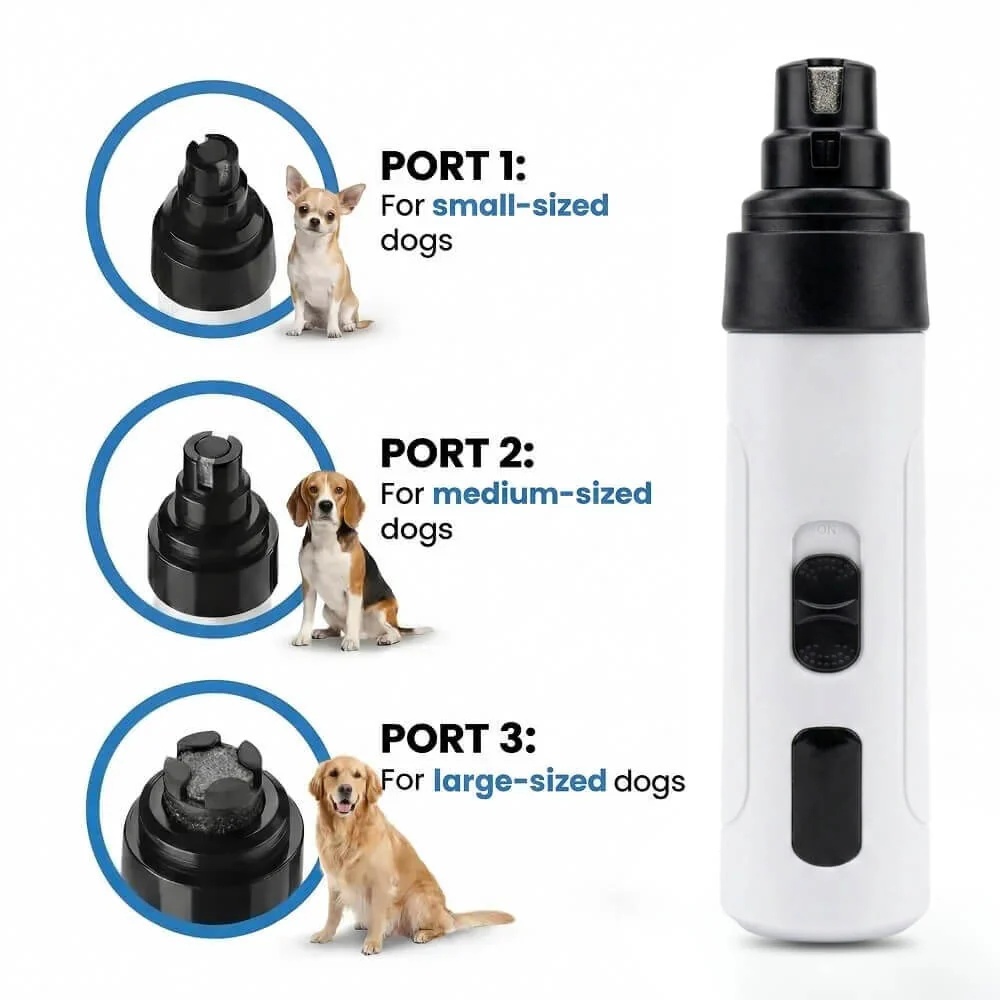
The device features three distinct, specially shaped ports designed to accommodate small, medium, and large breeds safely.
For larger breeds with exceptionally thick claws, you can easily remove the safety cap to expose the entire diamond bit.
The high-torque motor maintains consistent speed under load, preventing stalling and ensuring a fast, smooth grooming session.
How long does the battery last on a single charge?
The Zenpaw Maxpro is equipped with a premium, high-density lithium-ion battery that is easily rechargeable via any standard USB port.
It delivers up to seven hours of continuous, fade-free run time on a single, full battery charge.
This extensive battery life allows you to complete multiple, relaxed grooming sessions without worrying about the device losing power.
An integrated LED battery life indicator lets you know exactly when it is time to connect the charging cable.
Which speed setting is best for senior dogs?
We always recommend starting your grooming session on our lowest speed setting, especially when working with older, anxious dogs.
This ultra-gentle speed helps your senior pet easily acclimate to the soft vibrations and minimal noise of the rotating bit.
Once your pet is completely relaxed, you can seamlessly switch to the higher speed setting to quickly shape thicker, tougher claws.
The precise dual-speed control allows you to customize the entire grooming experience to match your dog’s unique comfort level.
Does the grinder head get hot during use?
Traditional high-speed rotary tools can generate intense friction heat that can quickly burn the sensitive nerve of the nailbed.
The Zenpaw Maxpro utilizes advanced cool-running technology and a premium diamond wheel to minimize heat transfer during filing.
However, we still recommend moving the grinder smoothly across the nail tip rather than pressing it continuously in one spot.
By applying light, brief touches of two to three seconds, you keep the temperature completely cool and comfortable for your dog.
Conclusion
By maintaining short, healthy claws and utilizing premium non-slip traction socks, you can instantly restore your senior dog’s mobility and protect their aging joints.
Ready to transform nail trimming from a battle into a breeze? Explore the Zenpaw Maxpro 3-in-1 Grinder. Call: 302-307-1000 — our team can help you advise on the best grooming practices and help with any product questions.