
I still remember the sheer panic I felt when my golden retriever, Cooper, tore his claw on a deck board, leaving me staring in horror at what looked like a dog nail bone exposed. I realized then how terrifyingly easy it is to injure our dogs’ paws with traditional clippers, which led our team at Zenpaw to develop a much safer, pain-free alternative for grooming at home.
Maxpro 3-in-1 Grinder.
Stress-Free Nail Trimming.
Whisper-quiet DC motor (<40 dB) eliminates fear & discomfort. Features 3 ports, dual speeds, and 7-hour battery life. Safe, precise, and painless.
In This Article
- Immediate Action Guide: Learn how to perform first aid when a dog’s nail bone or quick appears exposed.
- Canine Nail Anatomy: Understand the structure of the quick, the nailbed, and the distal phalanx bone.
- Infection Prevention: Find out how to protect your pet from painful bone infections like osteomyelitis.
- Stress-Free Maintenance: Master the gradual desensitization techniques for safe home nail care.
- Common Pitfalls: Discover why traditional clippers damage paws and how to avoid these grooming hazards.
What Should You Do When a Dog Nail Bone is Exposed? An Expert Care Guide

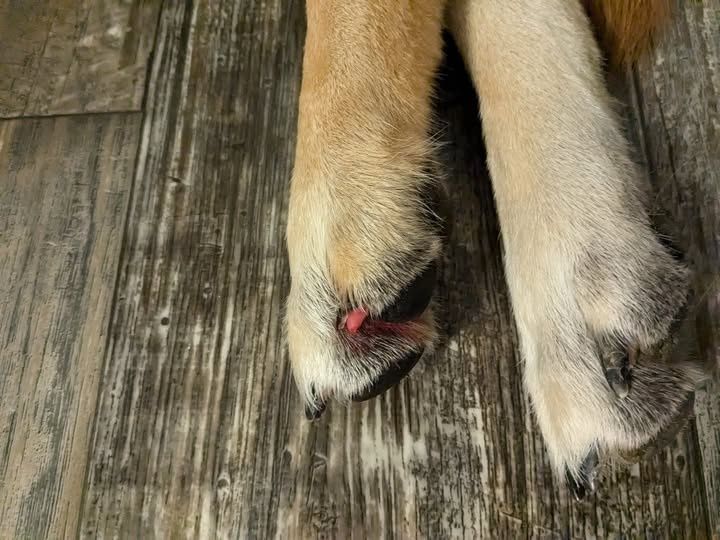
When a dog tears their claw down to the pink or white center, many pet parents panic because they believe they are seeing a dog nail bone exposed.
In reality, this is usually the quick, which is a highly vascular bundle of nerves and blood vessels that lives inside the protective outer keratin shell of the claw.
Any dog of any breed can suffer this painful injury when their nails snag on carpets, fences, or rough terrain during outdoor play.
This trauma typically happens at home or in the yard, requiring immediate first aid to stop the bleeding and prevent harmful bacteria from entering the open wound.
Because this area is packed with sensitive nerve endings, the injury causes intense pain and leaves the paw vulnerable to serious bone infections.
You must act quickly by calming your dog, applying pressure, and evaluating whether you need to visit a veterinary clinic for professional treatment.
First, wrap your dog in a towel to keep them calm and secure while you inspect the injured paw.
Next, apply gentle, continuous pressure using a clean cloth or sterile gauze to stop the bleeding.
If you have styptic powder or cornstarch nearby, press it directly onto the exposed tip to help clot the blood quickly.
Once the bleeding stops, carefully wash the paw with lukewarm water to remove dirt and debris without scrubbing the wound.
Apply a pet-safe antiseptic ointment to protect the delicate nail bed from bacterial contamination.
Finally, wrap the paw loosely in a clean bandage and contact your veterinarian to see if antibiotics or pain relief are necessary.
If you want to handle this safely at home, the Zenpaw Maxpro Grinder provides painless, quiet filing — explore it here.
99-Day 100% Money-Back Guarantee
“Ever since we started using the Zenpaw Maxpro Grinder, it’s been such a peaceful experience. It’s very quiet, and my dog actually relaxes. It’s turned our stressful sessions into quick, quiet grooming times.”
— Sarah M. | ✔ Verified Customer
- ✓ Prevents Infection & Splitting
- ✓ Ideal for All Dog Sizes
- ✓ Low-Vibration Technology
- ✓ Fast 2-7 Days Delivery
Need Support? Call 302-307-1000
Understanding Canine Nail Anatomy: Quick vs. Exposed Bone
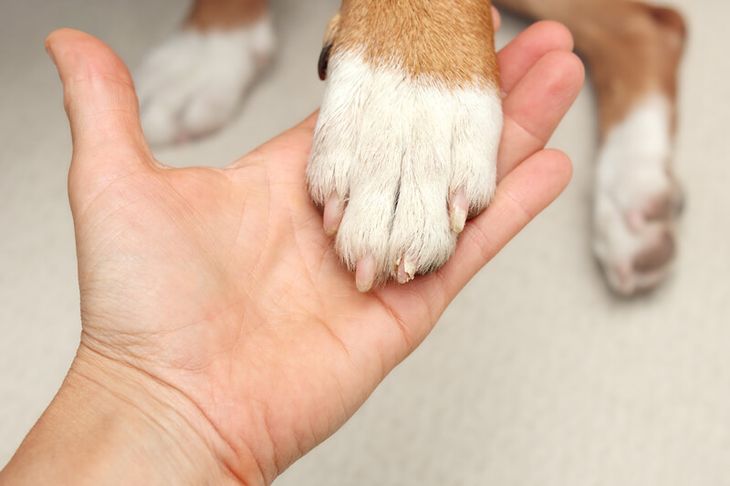
Many dog owners mistakenly believe that a deep nail injury has left a bone completely exposed.
To understand what is actually happening, we must look at the unique anatomy of a canine claw.
A dog’s nail consists of a hard outer shell made of keratin, which protects the delicate inner structures.
Inside this keratin shell lies the quick, which is a soft tissue core rich in blood vessels and nerve endings.
The quick is directly connected to the distal phalanx, which is the actual coffin bone at the very tip of the toe.
When a nail is ripped completely off, the tissue you see may be the extremely sensitive nailbed or the quick itself.
A true bone exposure is rare but can happen if the claw suffers severe crushing trauma or a deep laceration.
In most cases of a dog nail separated from quick, the white or pink tissue visible is the quick rather than the bone.
However, because the quick sits so close to the underlying bone, any exposure carries a high risk of complications.
Understanding this anatomical relationship helps pet parents react with calm precision rather than blinding panic.
By recognizing the difference between a simple broken nail and a deep bone-level injury, you can make informed decisions for your pet’s wellness.
The Quick vs. The Distal Phalanx (The Coffin Bone)
The distal phalanx, often called the coffin bone, is the physical skeletal foundation of your dog’s toe.
The outer claw grows directly over this bone and is anchored tightly to it by specialized connective tissue.
Because the bone is located just millimeters beneath the surface of the quick, any deep injury can expose it to the elements.
If your dog has a severe condition like slo dog nails, the nail structure may weaken and break away entirely.
This disease, known as Symmetrical Lupoid Onychodystrophy, causes the claws to lift and separate from the quick.
When this happens, the underlying bone can easily become exposed to dirt, saliva, and environmental bacteria.
An exposed bone will typically look like a hard, white, or off-white stump protruding from the center of the torn nail bed.
Unlike the quick, which may bleed profusely and look like soft pink flesh, the bone will feel firm and rigid to the touch.
If you suspect the bone itself is damaged or visible, you must treat this as a veterinary emergency.
Leaving a bone unprotected can lead to permanent damage to the physical structure of your dog’s paw.
Why Traditional Clippers Cause Nail Splitting and Cracking
Traditional scissor or guillotine clippers work by applying massive crushing force to the sides of the claw.
This crushing action squeezes the hard keratin shell until it violently snaps apart.
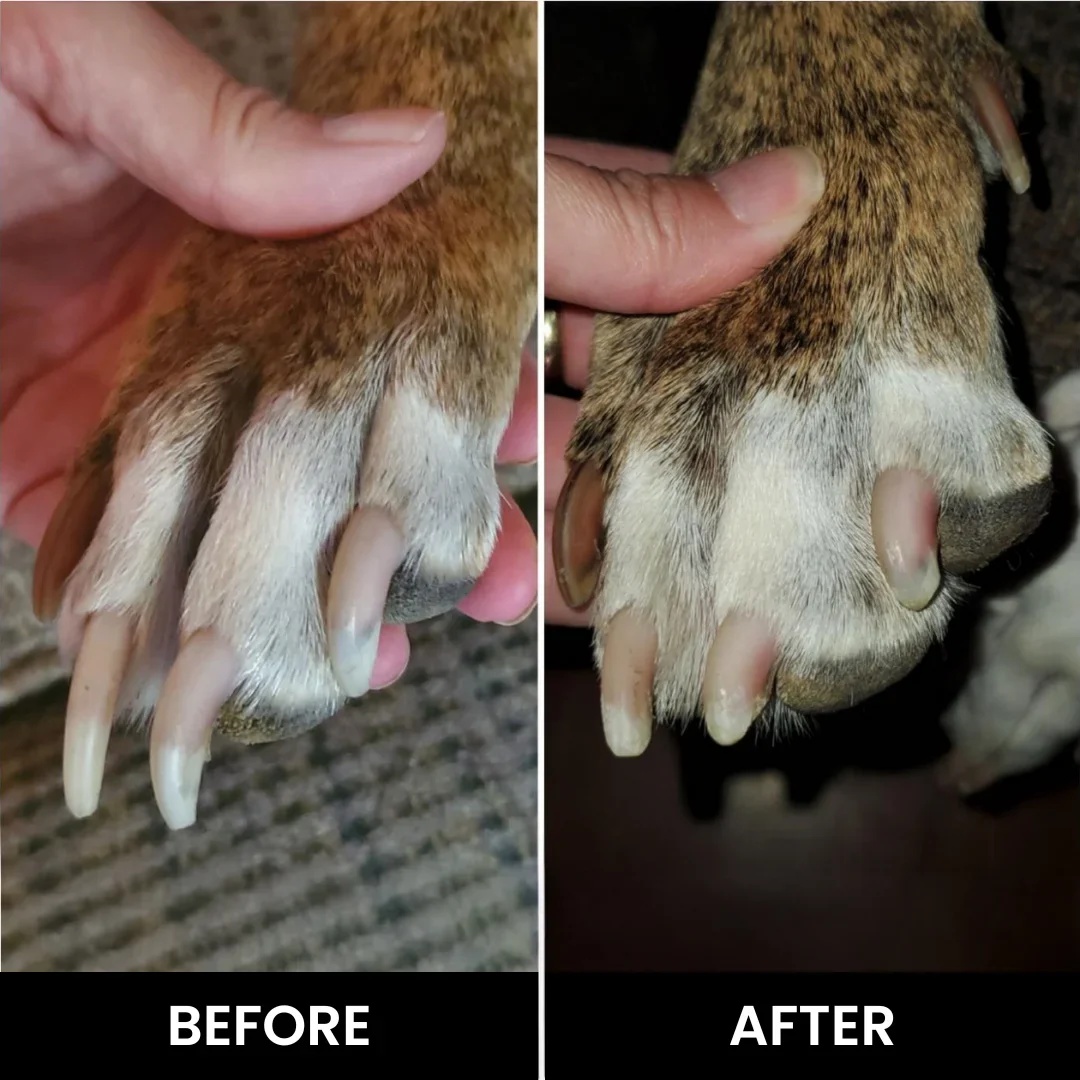
If your dog has dry, brittle nails, this sudden pressure often causes the nail to split longitudinally.
These micro-cracks can easily travel upward toward the paw, eventually exposing the sensitive quick or even the bone.
Furthermore, the sudden pinch of traditional clippers is incredibly painful for your dog, creating intense grooming anxiety.
Over time, this pain makes dogs fight back during grooming, turning a simple trim into a highly stressful battle.
Many pet parents try to hide these cosmetic splits using dog nail polish pens to seal the surface.
However, cosmetic covers do not fix the structural damage caused by heavy steel blades crushing the claw.
To prevent these dangerous splits and protect the inner anatomy, veterinarians highly recommend using a high-quality grinder.
Filing the nail down gradually eliminates the risk of sudden cracks and keeps the quick perfectly safe.
The True Risks of an Exposed Quick: Preventing Bone Infections (Osteomyelitis)
An exposed nail bed is not just a painful inconvenience; it is an open pathway for dangerous infections.
Because dogs walk on the ground, their paws are constantly exposed to dirt, feces, and microscopic pathogens.
When the protective outer keratin shell is compromised, bacteria can easily invade the soft tissues of the quick.
From there, the infection can travel deeper into the toe, eventually reaching the distal phalanx bone.
A bone infection in dogs is known as osteomyelitis, and it is an extremely serious medical condition.
Osteomyelitis causes severe pain, tissue destruction, and can eventually lead to the amputation of the affected toe.
To prevent this nightmare scenario, immediate disinfection and proper wound management are absolutely vital.
You should never ignore a broken claw or hope that it will simply heal on its own over time.
Even a minor tear can escalate into a deep-seated infection if bacteria are allowed to multiply in the warm, moist nail bed.
Using a safe, clean filing method like a silent dog nail grinder allows you to maintain healthy nail lengths without creating jagged edges that snag and tear.
Taking proactive steps to keep the claws short and smooth is the best way to safeguard your dog against painful structural injuries.
Recognizing the Warning Signs of Canine Paw Infection
As a dog owner, you must monitor your dog’s healing process closely to spot any signs of budding infection.
The first major warning sign of a paw infection is persistent, obsessive licking or chewing at the injured toe.
Dogs naturally lick their wounds to soothe pain, but excessive grooming will introduce harmful bacteria from their mouth.
You may also notice significant swelling, redness, and heat radiating from the injured toe or paw pad.
If the infection progresses, a foul-smelling discharge or yellow pus may begin to ooze from the nail bed.
Your dog will likely exhibit severe limping or refuse to put any weight on the injured leg during walks.
In advanced cases, the infection can become systemic, causing your dog to become lethargic, lose their appetite, or run a fever.
If you observe any of these symptoms, you must take your dog to a veterinary clinic immediately.
Do not delay treatment, as early intervention with antibiotics is key to saving the bone and restoring paw health.
Keeping a clean environment and restricting your dog’s activity during recovery will help ensure a safe, infection-free healing process.
Step-by-Step Guide to Safe Nail Maintenance and Injury Prevention
Preventing a painful nail injury is always much easier and safer than treating a torn claw after the damage is done.
By establishing a consistent, stress-free grooming routine, you can keep your dog’s claws at a safe, healthy length.
Our team at Zenpaw designed the Maxpro 3-in-1 Grinder to make this process incredibly easy, even for highly anxious dogs.
This advanced tool uses low-vibration technology and a whisper-quiet motor to keep your pet calm during grooming sessions.
To help you achieve professional results at home, we have outlined our proven step-by-step process below.
With a little patience and the right tools, you can completely transform your dog’s nail care experience.
Say goodbye to the fear of cutting the quick and hello to a peaceful, bonding grooming routine.
Many pet parents worry about the high cost of veterinary visits just to keep their dog’s claws trimmed.
By researching local walk in dog nail trimming prices, you will quickly see how much money you can save by doing it at home.
Investing in a reliable, professional-grade grinder pays for itself after just a few successful sessions.
More importantly, it spares your dog from the stress of being handled by strangers in a chaotic salon environment.
Let us explore how to introduce this gentle grooming tool to your dog step-by-step.
The Step-by-Step Desensitization Protocol for Anxious Dogs
If your dog has had a bad experience with traditional clippers, they will likely be highly defensive of their paws.
To overcome this fear, you must use a gradual desensitization protocol to build trust and positive associations.
Start by placing the Zenpaw Maxpro Grinder on the floor near your dog while it is turned off.
Allow them to sniff the device naturally, and immediately reward them with high-value treats and praise.
Once they are comfortable with the physical tool, turn the grinder on its lowest, whisper-quiet speed while holding it a few feet away.
Let your dog get used to the gentle hum of the motor while feeding them delicious treats to create a happy connection.
Next, gently touch your dog’s leg with the vibrating handle of the grinder to let them feel the mild vibration without filing.
Repeat this step several times over a few days, always pairing the touch with their favorite rewards.
When your dog remains completely relaxed, you can finally touch the grinding wheel to the tip of a single nail for just one second.
Gradually increase the contact time as your dog learns that the process is completely painless and safe.
This patient approach ensures your dog feels secure, turning grooming from a terrifying chore into a peaceful routine.
How to Hold the Grinder at the Correct 45-Degree Angle
Achieving a smooth, healthy nail shape requires using the proper grinding technique and safety angles.
You should always hold your dog’s paw securely but gently, separating the target toe from the other digits.
Position the Zenpaw Maxpro Grinder at a precise 45-degree angle relative to the bottom of the nail.
This specific angle allows you to file away the sharp outer keratin without putting pressure on the sensitive quick.
Use short, gentle taps lasting no more than two to three seconds per nail to prevent heat buildup on the claw.
Filing continuously in one spot can cause a hot, burning sensation that will startle your dog.
Instead, work in a circular motion around the tip of the nail to create a smooth, rounded finish.
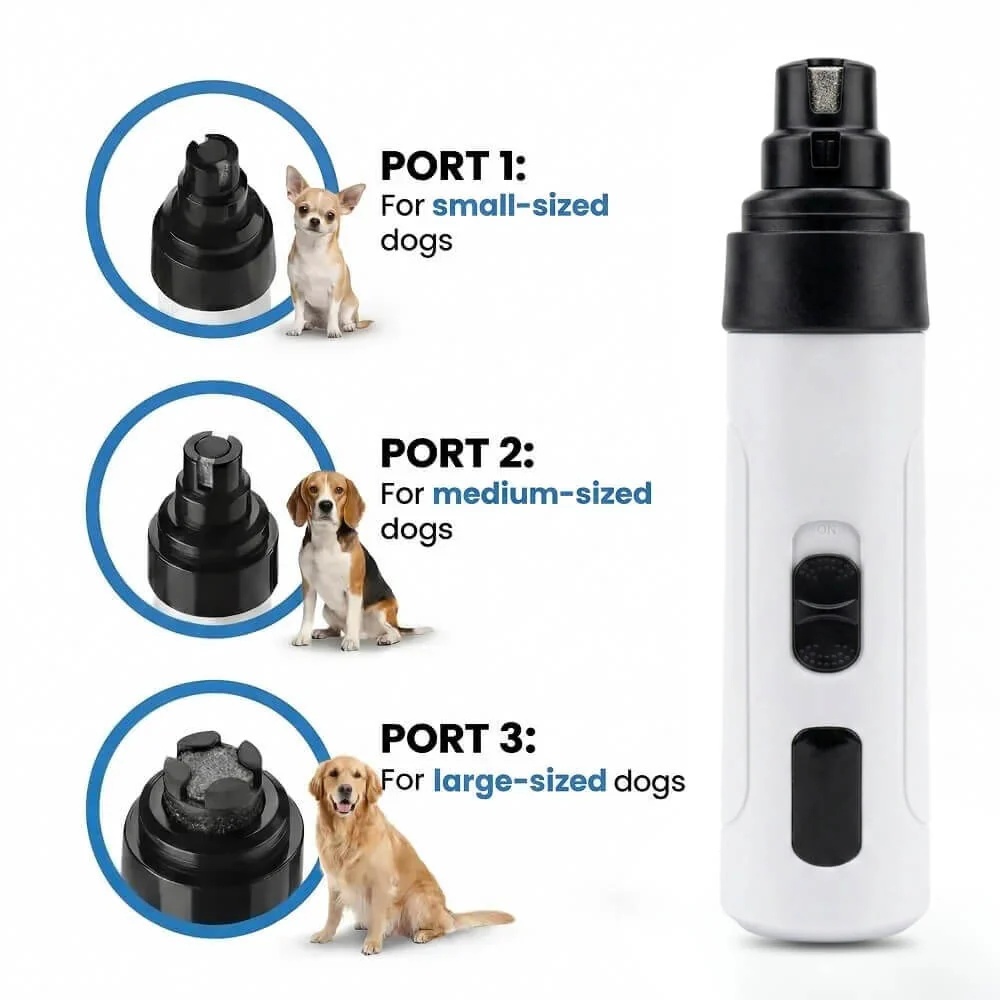
The Zenpaw Maxpro features three different ports to accommodate small, medium, and large dog breeds perfectly.
By choosing the correct port and using a high-quality diamond bit, you can file thick nails effortlessly.
This precise control keeps you far away from the quick, ensuring a painless experience every single time.
Crucial Mistakes to Avoid During Home Nail Care
Even well-meaning pet parents can make critical errors when attempting to trim their dog’s nails at home.
One of the most common mistakes is rushing the process to get it over with as quickly as possible.
Rushing increases the risk of slipping, which can lead to accidental cuts and painful injuries.
Another major hazard is using dull, outdated clippers that crush and splinter the nail structure.
Dull blades put uneven pressure on the claw, causing micro-fractures that can split all the way to the root.
Furthermore, many owners fail to properly inspect the nails beforehand, especially on dogs with dark or black claws.
On black nails, the quick is completely invisible from the outside, making traditional clippers highly dangerous.
Using a grinder allows you to look at the tip of the nail head-on to spot the dark circle that indicates the quick is near.
This visual feedback prevents you from over-trimming and causing painful bleeding.
Additionally, some owners hold the grinder on the nail for too long, causing uncomfortable friction heat.
Our low-heat technology helps mitigate this risk, but using short, pulsing taps is still the safest practice.
By avoiding these common pitfalls and using the right equipment, you can ensure a flawless, injury-free grooming session.
Frequently Asked Questions About Dog Nail Health and Grinding
To help you feel completely confident in your home grooming journey, we have compiled the most common questions from pet parents.
Understanding these key details will ensure you get the absolute best results from your Zenpaw Maxpro Grinder.
Let us dive into the facts about battery life, safety ports, speed settings, and heat management.
With the right knowledge, you can provide professional-level paw care from the comfort of your living room.
Is the Zenpaw Grinder safe for large dogs?
Yes, the Zenpaw Maxpro 3-in-1 Grinder is explicitly engineered to handle dogs of all shapes and sizes.
The safety cap features three distinct ports designed to match different claw sizes and thicknesses perfectly.
Port 1 is ideal for small dogs and delicate puppy nails that require precise, gentle filing.
Port 2 is designed for medium-sized dogs, providing a wider opening for steady, controlled grooming.
Port 3 exposes the entire grinding wheel, making it powerful enough to file down thick, tough claws on large breeds.
The high-performance brass motor provides consistent torque, so the wheel never stalls under heavy pressure.
Whether you have a tiny Chihuahua or a massive Great Dane, this versatile tool ensures a safe and smooth trim.
Many owners of large breeds struggle with clippers that simply cannot cut through thick, dense keratin.
Our diamond-drum bit files down even the toughest nails smoothly, eliminating the risk of splitting or cracking entirely.
This makes it the ultimate all-in-one solution for multi-pet households looking to simplify their grooming routine.
How long does the battery last?
The Zenpaw Maxpro Grinder is equipped with a premium, long-lasting rechargeable battery for maximum convenience.
On a single full charge, the high-density lithium-ion battery provides up to seven hours of continuous run time.
This exceptional battery life means you can complete multiple thorough grooming sessions without needing to recharge.
The convenient USB charging design allows you to plug the grinder into your laptop, power bank, or wall adapter.
A full charge is achieved in just a few hours, keeping the tool ready whenever your dog is relaxed and ready.
No more dealing with annoying tangled cords or hunting for replacement batteries in the middle of a trim.
The cordless design gives you complete freedom of movement, allowing you to groom your dog in their favorite, most comfortable spot.
Whether you are grooming on the couch, in the backyard, or on a road trip, you will always have reliable power.
Which speed is best for trimming thick dog nails?
The Zenpaw Maxpro features two adjustable speed levels to give you complete control over the grooming process.
For thin, delicate nails or nervous puppies, the low-speed setting is the best option to start with.
This low speed minimizes noise and vibration, allowing your dog to stay perfectly calm as they get used to the sensation.
For thick, tough claws or rapid shortening, you should switch to the high-speed setting.
The high-speed mode provides the extra power needed to file down dense keratin quickly and efficiently.
We recommend starting on low speed to shape the outer edges, then switching to high speed to shorten the length.
Always pay close attention to your dog’s reaction and adjust the speed to match their comfort level.
This dual-speed versatility ensures a customized, pain-free experience tailored specifically to your dog’s unique nail structure.
Does the grinding head get too hot during use?
Friction heat is a common issue with cheap, low-quality pet grinders that can cause discomfort for your dog.
To solve this problem, the Zenpaw Maxpro uses advanced low-heat technology to keep the grinding head cool.
The high-grade diamond bit is engineered to dissipate heat quickly, preventing painful thermal buildup on the claw.
However, as a best safety practice, you should still avoid holding the wheel against a single nail for more than three seconds.
Using short, pulsing strokes and moving between different nails keeps the temperature perfectly cool and comfortable.
This gentle technique prevents any burning sensations, ensuring your dog remains happy and relaxed throughout the session.
By combining our cool-running motor with proper technique, you can enjoy a completely stress-free grooming experience.
Your dog will appreciate the gentle, soothing care, making future nail trims easier than ever before.
Conclusion: Safer, Happier Nail Care Starts Here
Ready to transform nail trimming from a battle into a breeze? Explore the Zenpaw Maxpro 3-in-1 Grinder. Call: 302-307-1000 — our team can help you advise on the best grooming practices and help with any product questions.
Note: Individual results may vary depending on individual dog breeds, nail thickness, and behavioral temperaments. This article is intended for general pet grooming reference purposes only and does not replace professional veterinary advice.