I watched my senior golden retriever, Barnaby, struggle to stand on our slick hardwood kitchen floor, his back legs sliding outward like he was on sheets of ice, and my heart absolutely shattered. I tried cheap rugs and sticky paw pads, but nothing worked until I finally discovered how dog nail grips can restore confidence to aging paws. Our team at Zenpaw wants to share how combining the right traction tools with a stress-free nail care routine can completely transform your dog’s comfort.
Maxpro 3-in-1 Grinder.
Stress-Free Nail Trimming.
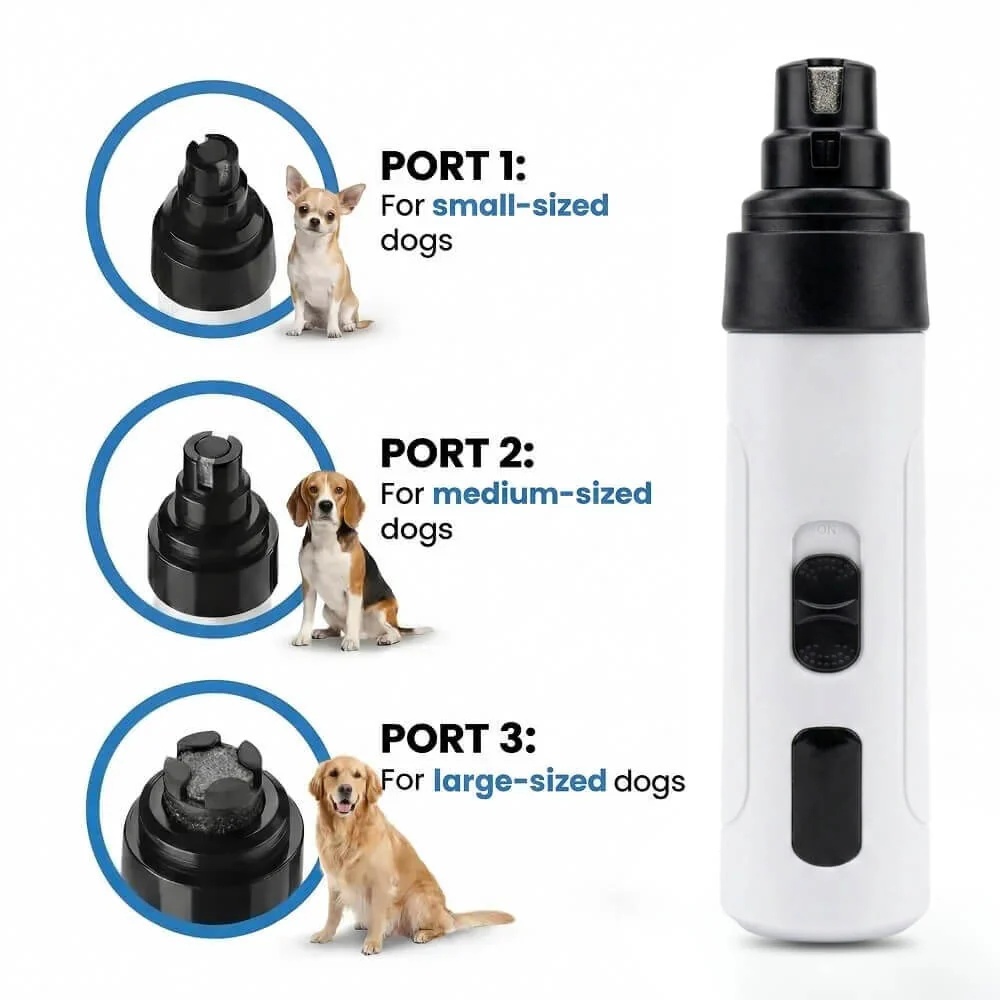
Whisper-quiet DC motor (<40 dB) eliminates fear & discomfort. Features 3 ports, dual speeds, and 7-hour battery life. Safe, precise, and painless.
In This Article
- Top Market Reviews: We break down the absolute best traction aids on the market today.
- Biomechanics of Falling: Learn the physiological reasons behind why elderly pets slip on hard surfaces.
- The Essential Prep Routine: Why proper nail trimming is mandatory for non-slip devices to actually work.
- Step-by-Step Practical Guides: A complete roadmap to stress-free claw maintenance and grip application.
The 3 Best Dog Nail Grips in 2026: Ranked & Reviewed

Finding a reliable traction aid for your canine companion can feel incredibly overwhelming given the sheer number of options available.
Below, we analyze the top three market solutions based on real-world testing, ease of use, durability, and physiological comfort.
1. Dr. McHenry’s Natural Rubber ToeGrips
Dr. McHenry’s natural rubber rings slide directly onto your dog’s individual claws to provide instant mechanical traction on slippery floors.
These specialized rubber bands use the grip zone of the nail to create friction with every step your pet takes.
This unique mechanism allows your senior pet to walk naturally without slipping or losing balance on smooth surfaces.
The primary benefit of this design is that it does not cover the sensitive paw pads, allowing for natural sweat evaporation.
They are highly recommended by veterinarians for dogs recovering from spinal surgeries or suffering from severe hip dysplasia.
However, finding the exact size for your dog’s nails can be incredibly challenging without a precise measurements guide.
If the claws are not perfectly smooth, these rings can easily tear during application or slide off prematurely.
To ensure a long-lasting fit, grooming the claw first with a quiet dog nail grinder will remove any catching ridges.
2. Soft Claws Canine Traction Caps
Soft Claws Canine Traction Caps are vinyl nail covers originally designed to prevent scratching that now offer helpful traction elements.
These cleated nail caps are glued directly onto the claw using a safe, veterinary-grade cold adhesive.
They provide an excellent barrier that shields your expensive hardwood floors from deep nail gouges and scratches.
The flexible vinyl material conforms easily to the natural shape of most small and medium canine claws.
However, the application process requires your pet to remain completely still while the strong glue cures.
If your dog is highly anxious, this prolonged physical restraint can cause significant stress and resistance.
Furthermore, the adhesive can occasionally trap moisture, which creates a breeding ground for bacterial nail infections.
To avoid these adhesive risks, maintaining naturally short nails with puppy nail clippers and a finishing file is often a safer long-term alternative.
3. Paw Friction Rubber Traction Coating
Paw Friction is a specialized liquid-and-granule system designed to coat the entire outer claw with high-friction rubber particles.
This medical-grade coating works by painting the nail with adhesive and then dipping the paw into a tray of fine rubber granules.
The resulting texture provides incredible multi-directional grip for dogs with severe hind-limb weakness.
It is particularly effective for large breeds that put immense physical pressure on traditional rubber bands.
The major downside of this traction system is the highly messy and time-consuming application process.
The granular coating also wears away quickly on abrasive outdoor surfaces like concrete or gravel.
To achieve maximum adhesion, you must thoroughly clean the claw using standard dog grooming nail trimming preparation techniques.
Using a low-vibration grinder beforehand creates a micro-textured surface that helps the liquid bond permanently.
Market Options Comparison
| Product / Solution | Primary Traction Source | Application Difficulty | Durability | Zenpaw Advantage |
|---|---|---|---|---|
| Dr. McHenry’s ToeGrips | Natural Rubber Rings | High (requires exact sizing) | Moderate (1-3 weeks) | Smooths the nail so rubber slides on effortlessly. |
| Soft Claws Vinyl Caps | Vinyl Cleated Tips | Moderate (requires toxic glue) | High (4-6 weeks) | Provides safe, painless prep without scary clipper noise. |
| Paw Friction System | Granular Rubber Coating | Very High (messy liquid paint) | Low (1-2 weeks) | Creates textured surfaces for optimal adhesive bonding. |
| Zenpaw Maxpro Grinder | Natural Claw Trimming | Very Easy (ergonomic grip) | Permanent Prep Tool | Whisper-quiet, low-heat diamond wheel for ultimate safety. |
For pet parents looking to avoid the hassle of temporary grips, maintaining naturally short nails is the absolute best way to restore natural paw pad traction.
You can explore the Zenpaw Maxpro Grinder to achieve perfect nail length safely and painlessly in the comfort of your own home.
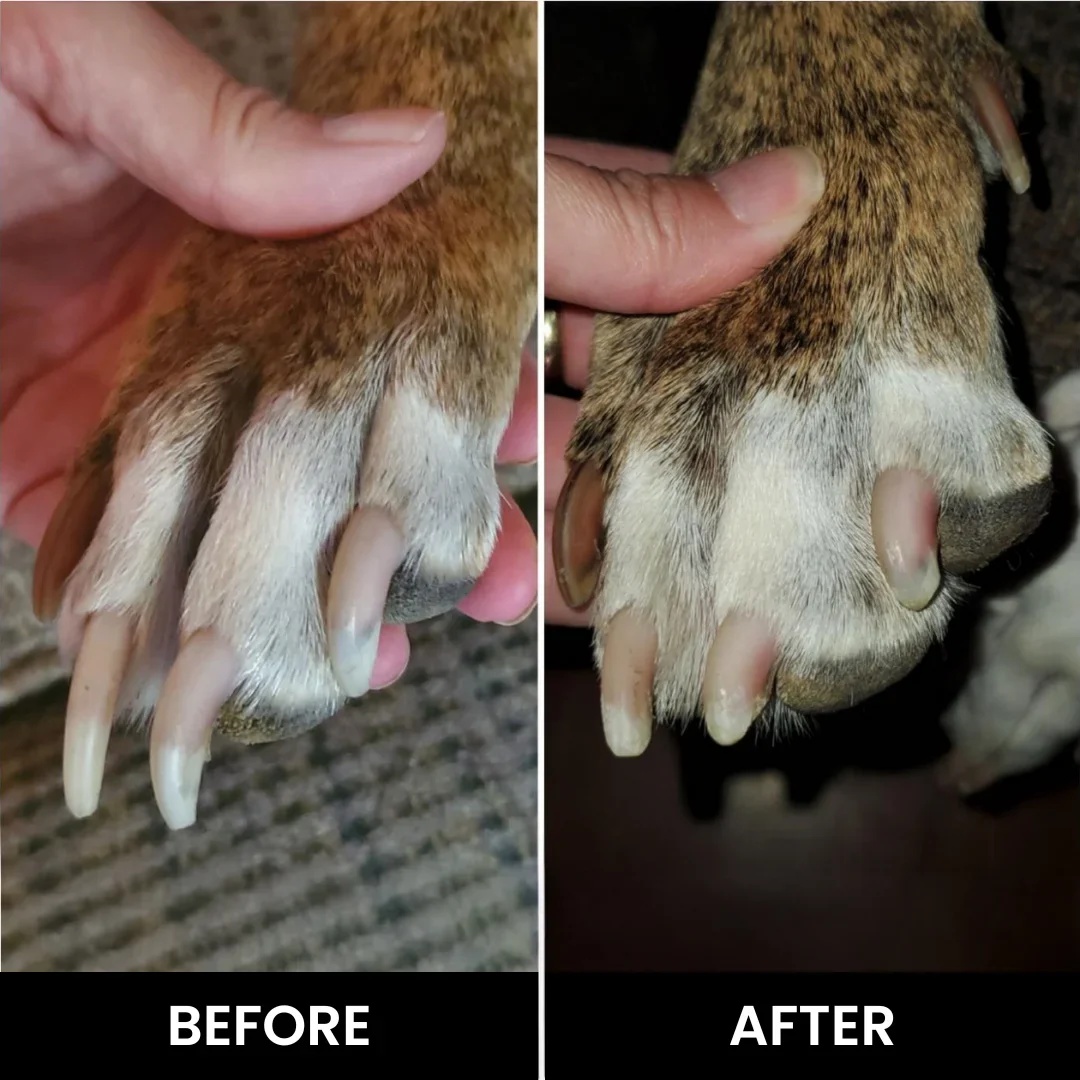
99-Day 100% Money-Back Guarantee
“Ever since we started using the Zenpaw Maxpro Grinder, it’s been such a peaceful experience. It’s very quiet, and my dog actually relaxes. It’s turned our stressful sessions into quick, quiet grooming times.”
— Sarah M. | ✔ Verified Customer
- ✓ Prevents Infection & Splitting
- ✓ Ideal for All Dog Sizes
- ✓ Low-Vibration Technology
- ✓ Fast 2-7 Days Delivery
Need Support? Call 302-307-1000
The Biomechanics of Slip and Fall: Why Senior Dogs Lose Traction

Understanding how dogs interact physically with slick indoor flooring is crucial for preventing serious skeletal injuries.
Unlike humans, dogs are digitigrades, which means they are designed to walk directly on their toes rather than their heels.
Their digital and metacarpal pads are designed to act as natural shock absorbers and grip mechanisms during movement.
When a dog stands on a natural surface, their claws are meant to touch the ground briefly to provide extra digging stability.
However, slick indoor surfaces like tile and hardwood do not allow the claws to dig in as outdoor soil does.
This lack of physical penetration causes the claws to slide forward, which forces the toes to splay outward unnaturally.
Over time, this constant outward sliding puts immense strain on the delicate ligaments of the lower paw joints.
To compensate for this instability, the dog must alter their entire standing posture to avoid falling.
They will shift their center of gravity forward, which places excessive weight and pressure on their front legs.
This postural shift accelerates the progression of arthritis in the shoulders, elbows, and wrist joints.
For dogs already suffering from hip dysplasia, this constant slipping makes standing up an exhausting chore.
Using toe nail grips for dogs can help break this painful cycle of slips and chronic joint strain.
These grippers provide a high-friction contact point that mimics the natural traction of soft outdoor ground.
However, no traction aid can function properly if the underlying claw is severely overgrown or structurally weak.
That is why veterinary orthopedists emphasize the importance of keeping nails trimmed to a healthy length.
Adding a high-quality dog nail supplement can also help build a thick, resilient claw wall.
A strong nail wall prevents the claw from flexing and cracking under the physical weight of the animal.
Regular nail maintenance is not merely a cosmetic choice; it is a fundamental pillar of senior dog mobility.
Proprioception and Spatial Awareness in Aging Canines
Proprioception refers to your dog’s ability to perceive the position and movement of their body in space.
This vital sensory feedback relies heavily on the nerve endings located in the paw pads and nailbeds.
When a senior dog’s nails are too long, the brain receives constant, confusing signals that the ground is sloping upward.
This sensory confusion causes the dog to walk with a stiff, unnatural gait to avoid falling over.
Applying dog toenail grips can help restore clear sensory feedback to the nervous system.
By allowing the paw pads to flatly touch the ground, the dog can accurately sense the floor texture.
This restoration of sensory feedback instantly boosts their confidence and willingness to walk across slick rooms.
However, applying these grips to uneven, poorly trimmed claws will only worsen their sensory confusion.
A smooth, flat finish is required so the rubber grip sits at the correct anatomical angle.
Using a whisper-quiet grinding tool allows you to achieve this perfect finish without inducing grooming stress.
When grooming is painless, your pet remains calm, allowing you to perform highly precise structural adjustments.
Understanding Canine Nail Anatomy: Where is the Quick?
To groom your dog safely, you must understand the internal architecture of the canine claw.
The outer layer of the nail consists of a hard, protective sheath made of tough keratin protein.
Inside this protective keratin shell lies the quick, a highly sensitive bundle of blood vessels and nerves.
Cutting into the quick causes immediate, sharp pain and significant bleeding that can be difficult to stop.
This painful experience can traumatize your pet and make them permanently terrified of nail maintenance.
On light-colored claws, the quick is easily visible as a pink, delicate cylinder running through the center.
On black or dark nails, however, the quick is completely hidden from view by dark pigments.
This visibility issue makes traditional metal clippers incredibly risky to use at home.
Using a dog nail clippers with light can help illuminate the quick on semi-translucent claws.
For solid black nails, a gradual filing tool is by far the safest and most reliable grooming method.
A grinder allows you to slowly remove thin layers of keratin without ever making sudden, blind cuts.
As you grind closer to the quick, the center of the nail will show a soft, dark circular dot.
This dark dot is the universal warning signal that you must stop filing immediately to avoid injury.
By respecting this anatomical boundary, you keep the grooming experience completely painless and stress-free.
Over time, regular gentle filing actually coaxes the quick to recede further back into the nail structure.
This receding process allows you to achieve shorter nails and better traction with each subsequent session.
The Science of Desensitizing Your Dog to Nail Tools
Desensitization is a proven behavioral technique that replaces fear with calm, positive associations.
For anxious dogs, the loud whining noise of standard rotary tools is the primary trigger for panic.
Our team at Zenpaw engineered the Maxpro Grinder with a specialized whisper-quiet motor that registers below 40 decibels.
This ultra-quiet operation is crucial because dogs can hear frequencies four times higher than humans.
To begin desensitization, place the silent grinder on the floor near your dog’s favorite resting spot.
Every time your dog voluntarily approaches or sniffs the tool, reward them with an exceptionally delicious treat.
Next, hold the tool in your hand while turning it on at its lowest, quietest speed setting.
Do not attempt to touch their paws yet; simply feed them treats while the motor hums in the background.
Once they show no signs of anxiety, gently touch the non-rotating body of the grinder to their shoulder.
This step helps them get accustomed to the mild vibrations traveling through their muscle tissue.
Gradually move the vibrating tool down their leg until you can touch the paw with the housing.
By breaking the process down into tiny, manageable steps, you prevent their nervous system from entering fight-or-flight mode.
Step-by-Step Guide: How to Apply Toe Grips and Prepare the Paw

Preparing the claw surface correctly is the single most important factor for traction grip longevity.
If you apply nail grips for dogs to dirty or uneven nails, they will quickly slide off and get lost.
Start by washing your dog’s paws in warm water with a mild, soap-free pet shampoo.
Pay special attention to the undersides of the claws where dirt and wax naturally accumulate over time.
Dry the paws thoroughly, ensuring no moisture remains around the sensitive nailbed or cuticle area.
Next, inspect each claw for any cracks, peeling layers, or sharp structural snags.
Use the Zenpaw Maxpro Grinder to gently smooth out these imperfections until the outer wall is perfectly uniform.
Hold the grinder securely at a 45-degree angle to match the natural growth trajectory of the nail.
Apply light, rolling pressure for two seconds, then lift the tool to let the claw cool down.
This pulsing technique prevents friction-induced heat from irritating the sensitive nerves inside the quick.
Once the nails are smooth and cut to the proper length, select the correct size of rubber grip.
Lubricate the inside of the grip with a single drop of rubbing alcohol to help it slide on easily.
Do not use cooking oil or petroleum jelly, as these lubricants will permanently ruin the rubber’s ability to hold.
Twist the grip onto the claw until the bottom edge aligns perfectly with the flat wear zone of the nail tip.
Allow the alcohol to evaporate completely for ten minutes before letting your dog walk on slick floors.
This professional method guarantees a secure fit that can withstand several weeks of active indoor play.
Common Pitfalls: Why Glue and Improper Sizing Can Harm Your Pet
Many pet parents make the critical mistake of using permanent industrial adhesives to lock grips in place.
These toxic glues can bond the rubber directly to the living tissue of the coronary band.
This bonding causes extreme pain, restricts natural movement, and can lead to severe claw deformities.
If you must use adhesive, only choose veterinary-grade glues specifically formulated for canine claw applications.
Another highly common mistake is neglecting regular nail trimming after applying traction caps.
Because the cap covers the claw, owners often forget that the nail is still growing underneath.
An overgrown nail inside a cap will eventually curl backward and puncture the sensitive paw pad.
This painful puncture can quickly develop into a deep, systemic bone infection requiring surgical intervention.
To avoid this, you must remove the grips every four weeks to trim and inspect the underlying claw.
Using a gentle, high-precision grinding tool makes this regular removal and maintenance routine a breeze.
The Zenpaw Maxpro allows you to safely maintain a short nail length without damaging the delicate surrounding skin.
By avoiding these common pitfalls, you ensure your senior companion stays happy, mobile, and completely pain-free.
Frequently Asked Questions
Do dog nail grips fall off easily?
Yes, they can fall off quickly if the nail is not properly cleaned and smoothed before application.
Using a precision grinder to remove rough ridges creates a uniform surface that keeps the rubber secure.
Regular outdoor activity on abrasive surfaces like asphalt will also naturally wear them down faster.
Is the Zenpaw Grinder safe for large dogs with thick claws?
Absolutely, the Zenpaw Maxpro features three distinct ports designed to accommodate small, medium, and large breeds safely.
The high-power brass motor provides sufficient torque to smooth down even the thickest claws without stalling.
For giant breeds, simply use the wide-opening port on the safety cap for maximum grinding efficiency.
How long does the battery last on the Zenpaw Maxpro?
The built-in lithium-ion battery provides up to seven hours of continuous grooming power on a single charge.
It is fully rechargeable via any standard USB port for ultimate convenience at home or on the road.
This long-lasting battery life ensures you never run out of power mid-session with an anxious dog.
Which speed is best for trimming anxious dogs?
We recommend starting on the lowest speed setting to let your dog adjust to the sound and sensation.
The low speed minimizes vibrations and helps prevent accidental over-trimming during the initial sessions.
Once your dog is relaxed, you can increase to the high speed for faster and more efficient shaping.
Does the grinding wheel get hot during extended use?
Our advanced diamond bit is engineered with low-heat technology to prevent thermal discomfort on sensitive paws.
However, we still recommend pulsing the tool on the nail rather than holding it down continuously.
This pulsing technique prevents heat buildup and ensures a painless grooming experience for your pet.
Conclusion
Maintaining your senior dog’s mobility and floor traction is vital for their physical comfort.
By pairing protective nail grips with the gentle trimming power of the Zenpaw Maxpro, you create a safe, slip-free home environment.
Ready to transform nail trimming from a battle into a breeze?
Explore the Zenpaw Maxpro 3-in-1 Grinder today.
Call: 302-307-1000 — our team can help advise on the best grooming practices and help with any product questions.
Note: Individual results may vary depending on individual dog breeds, nail thickness, and behavioral temperaments. This article is intended for general pet grooming reference purposes only and does not replace professional veterinary advice.