
I still remember the absolute terror in my sweet golden retriever’s eyes every single time I pulled out those heavy, metallic nail clippers; he would shake, whine, and try to hide behind the couch, leaving me feeling incredibly guilty and anxious about hurting him. That heartbreaking struggle is why we committed to mastering dog nail trim desensitization at Team Zenpaw. By replacing aggressive clipping with patient cooperative care and our whisper-quiet, painless Zenpaw Maxpro 3-in-1 Grinder, we transformed our stressful grooming battles into a peaceful, trust-building ritual.
Maxpro 3-in-1 Grinder.
Stress-Free Nail Trimming.
Whisper-quiet DC motor (<40 dB) eliminates fear & discomfort. Features 3 ports, dual speeds, and 7-hour battery life. Safe, precise, and painless.
In This Article
- Step-by-Step Desensitization Guide: Learn the exact steps to build physical trust and make grooming a painless event.
- Anatomy of Canine Nails: Understand the location of the quick on light and dark nails to prevent painful bleeding.
- Science of Low-Vibration Grinding: Discover why whisper-quiet motors reduce flight-or-fight triggers.
- Cooperative Care Solutions: Practice expert behavioral tricks like the peanut butter hack for smooth sessions.
How to Desensitize Your Dog to Nail Trims: A Step-by-Step Guide
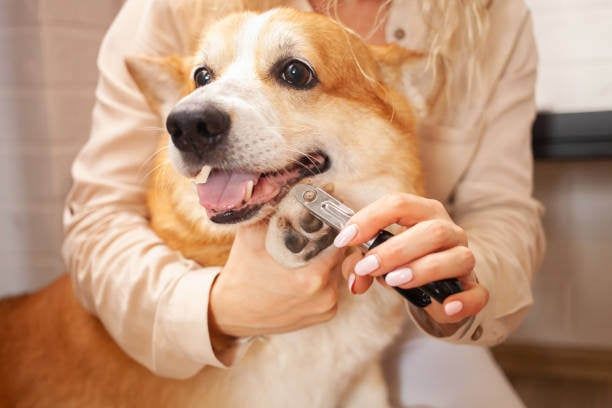
Before beginning your cooperative care journey, you must gather the necessary tools for safety and comfort.
You will need high-value treats such as freeze-dried liver, safe peanut butter, or fresh boiled chicken.
Find a quiet room in your home where your dog feels completely secure and relaxed.
Ensure you have a modern, whisper-quiet file tool like the Zenpaw Maxpro 3-in-1 Grinder to minimize sonic triggers.
Prepare yourself to progress slowly, keeping sessions brief to avoid overwhelming your dog’s nervous system.
-
Step 1: Training dog to accept paw touch
Sit comfortably on the floor with your dog in a neutral, relaxed position.
Gently touch your dog’s shoulder and slide your hand slowly down to their wrist.
If they do not pull away, hold their paw in your palm for exactly one second.
Immediately mark this positive behavior with a high-value treat and warm verbal praise.
Repeat this gentle slide-and-hold sequence five times per session.
If your dog retracts their paw, simply scale back to touching their shoulder and rewarding that contact.
Over several days, work your way up to a comfortable five-second hold.
This simple exercise establishes a foundation of safety for training dog to accept paw touch.
-
Step 2: How to desensitize a dog to nail clipping and grinding tools visually
Place your silent grooming device on the floor in plain view of your dog.
Do not pick it up or turn it on; keep the device completely motionless.
Allow your dog to explore, sniff, and inspect the new object at their own comfort speed.
The instant your dog’s nose makes contact with the device, deliver a highly appealing reward.
Pick up the tool and hold it near their limbs without making physical contact.
Reward your dog for maintaining a calm, curious posture in the presence of the tool.
This teaches your pet that the visual presence of the device brings wonderful consequences.
Keep these passive visual exposures brief, limiting them to two minutes per session.
-
Step 3: Noise desensitization for dog nail grinding
Move several feet away from your dog before turning on the device.
Using a tool with a whisper-quiet motor under 40dB is critical to prevent acoustic shock.
Turn on the motor and let the low hum run for three seconds.
While the hum is active, toss your dog a sequence of delicious treats.
Turn off the motor and immediately stop the delivery of the treats.
Repeat this exercise, slowly decreasing the physical distance between the active hum and your dog.
If your dog shows any signs of alert or distress, step back to a distance where they feel safe.
This intentional counter-conditioning is the gold standard for noise desensitization for dog nail grinding.
-
Step 4: Introducing cold tool contact to the paw
Ensure the grinding device is turned completely off for this phase of the program.
Gently hold your dog’s paw in your hand as practiced in Step 1.
Bring the cold, inactive grinding tip to touch one of your dog’s nails.
Maintain this silent physical contact for two seconds.
Offer a premium snack the entire time the tool is touching the nail.
Repeat this process across all the nails on the hand you are holding.
This helps your dog adapt to the physical sensation of metal or stone resting against their claws.
Always stop the session immediately if your pet displays signs of rising stress.
-
Step 5: Performing the first active grind
Activate your grinding device on its lowest speed setting.
Isolate a single toe on your dog’s paw with a secure, supportive grip.
Touch the rotating grinding head to the very tip of the nail for just one second.
Immediately withdraw the tool and offer a highly desirable jackpot of delicious treats.
End the grooming session right there, even if your dog appears perfectly happy.
This prevents sensory overload and leaves your dog wanting more.
Celebrate this milestone with playtime, verbal praise, or a favorite walk.
Gradually build up to two nails per session over the next week.
-
Step 6: Consolidating your long-term maintenance schedule
Slowly increase the number of nails you file during a single grooming session.
Focus on short, successful micro-sessions rather than forcing all four paws at once.
Maintain relaxed body language to show your dog that the situation is safe.
Conclude every successful session with a highly special reward reserved only for grooming.
Consistent weekly maintenance keeps the nails short, healthy, and easy to manage.
To support your desensitization training, our team designed the Zenpaw Maxpro Grinder with ultra-low vibration technology.
The whisper-quiet DC motor operates below 40 decibels, making your noise counter-conditioning sessions effortless.
You can discover this advanced tool and elevate your training success by visiting the Zenpaw Maxpro 3-in-1 Grinder product page.
99-Day 100% Money-Back Guarantee
“Ever since we started using the Zenpaw Maxpro Grinder, it’s been such a peaceful experience. It’s very quiet, and my dog actually relaxes. It’s turned our stressful sessions into quick, quiet grooming times.”
— Sarah M. | ✔ Verified Customer
- ✓ Prevents Infection & Splitting
- ✓ Ideal for All Dog Sizes
- ✓ Low-Vibration Technology
- ✓ Fast 2-7 Days Delivery
Need Support? Call 302-307-1000
The Science of Dog Nail Trim Desensitization
Understanding Canine Nail Anatomy: Where is the Quick?
The anatomy of a dog’s nail consists of two primary structures: the hard outer shell and the living inner quick.
The quick is rich in sensitive nerves and active blood vessels that supply blood flow to the growing tip.
Cutting directly into the quick causes sudden, sharp pain and immediate bleeding for your beloved pet.
This sudden pain is the leading cause of chronic grooming anxiety and severe phobias in dogs.
On light-colored nails, identifying the quick is simple because it appears as a distinct pink tissue at the center.
On dark or black nails, the quick is completely hidden from view by dense, dark pigment.
Understanding how to cut dog’s side nails is vital because these side claws do not touch the ground during daily walks.
When side claws are neglected, they can curl back and cause severe pain or lead to a painful dog dislocated toe nail limping.
Using a premium grinder allows you to safely file down the nail layer by layer without sudden pressure.
As you grind, look closely at the tip of the nail for a tiny, dark gray-to-black circle appearing at the center.
This physical circle is the protective boundary of the quick; once it is visible, you must stop filing immediately.
Why Traditional Clippers Fail Anxious Dogs
Traditional scissor or guillotine clippers rely on crushing force to slice through the dense keratin shell.
This intense force creates painful pressure and micro-fractures along the physical structure of the nail.
Many pet parents ask: can dogs file their own nails naturally on rough concrete or asphalt?
While walking on rough surfaces helps, it rarely files the nails evenly and cannot trim the elevated dewclaws.
Allowing your dog’s claws to grow too long shifts their skeletal alignment, causing strain on their leg joints.
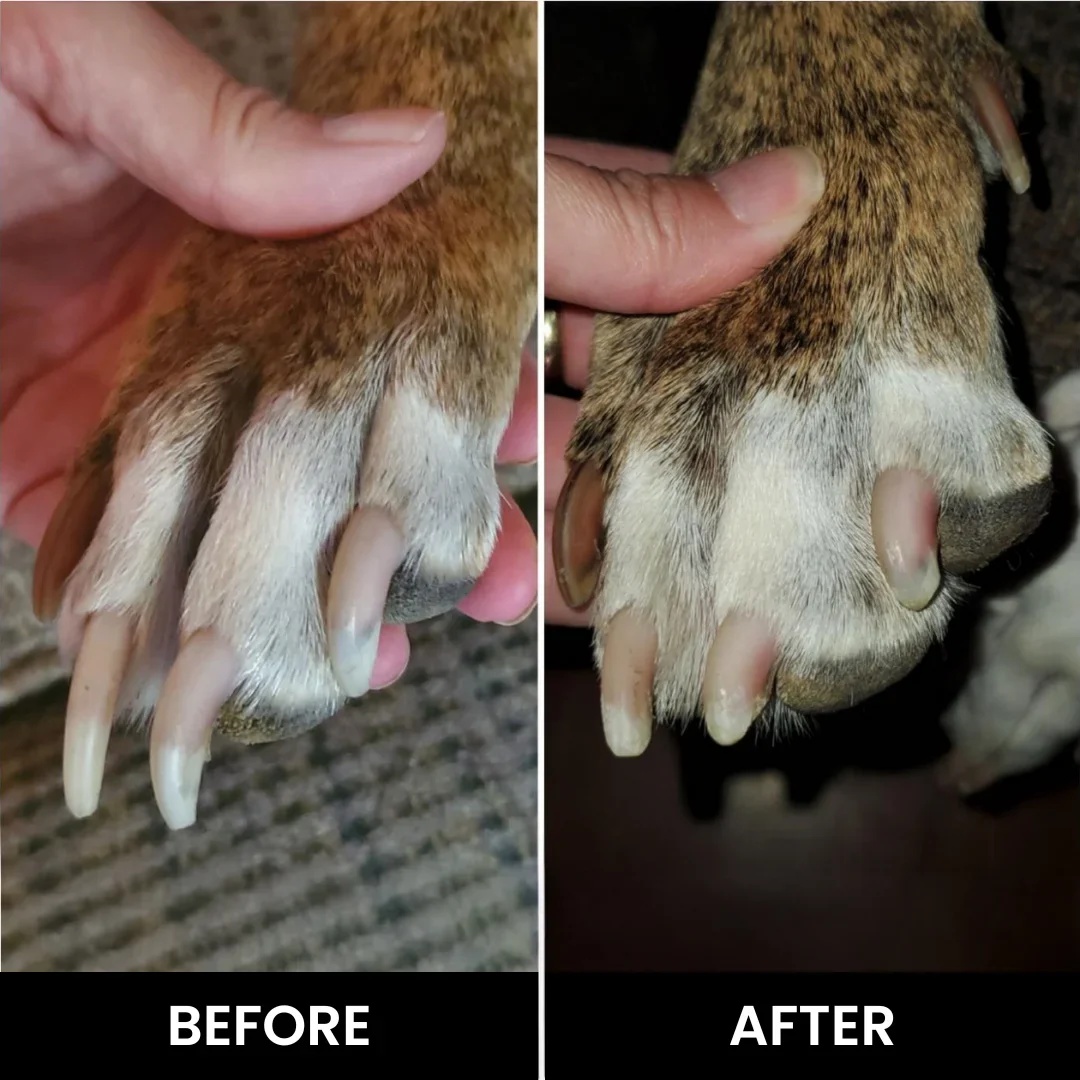
A clear comparison of dog nails before and after professional grinding highlights the massive posture benefits of proper care.
Grinding eliminates the jarring compression that makes traditional clippers so scary for sensitive dogs.
Our whisper-quiet design files the rough edges smoothly, preventing painful snags on carpets and upholstery.
The Psychology of Canine Grooming Anxiety and Cooperative Care
Classical Conditioning vs. Operant Conditioning in Grooming
Successful desensitization relies on classical conditioning to replace a negative association with a positive one.
We pair the presence of the grinding device with premium, high-value food to rewire their emotional response.
Through patient repetition, your dog’s brain shifts from a flight response to eager, positive anticipation.
Operant conditioning then teaches your pet that voluntary cooperation leads to rewarding outcomes.
This modern training method is known in the pet industry as cooperative care.
Cooperative care empowers your dog by giving them a sense of control over their physical environment.
If your pet chooses to pull away, we respect their choice, stop the tool, and pause the training.
This deep mutual respect dramatically reduces struggle and builds lifetime trust between you and your pet.
Signs of Silent Stress in Your Dog
Many dog owners mistakenly believe that a frozen, motionless dog is behaving perfectly during grooming.
However, a completely still dog may actually be in a state of intense psychological shutdown or fear.
It is crucial to learn to identify the subtle, non-vocal signs of stress in your pet.
Frequent yawning, rapid lip licking, and avoiding physical eye contact are early warning indicators of stress.
You may also observe pinned-back ears, a tense jawline, or a tail tightly tucked between their hind legs.
Whale eye, where the white sclera of your dog’s eyes is highly visible, is another classic distress signal.
If you notice any of these signs, pause the session immediately and return to an easier training step.
Forcing a stressed dog through a trim only reinforces their fear and damages your relationship.
The Professional Grinding Technique: Angles and Safety Protocols
Hold your dog’s paw securely by placing your thumb on top of the toe and your index finger underneath the pad.
This professional hold extends the nail safely while stabilizing the toe against vibration.
Hold the grinding tool at a precise 45-degree angle relative to the natural growth line of the nail.
This 45-degree angle matches the anatomical angle at which wild canines naturally wear down their claws.
Apply light, brief pulses of contact rather than pressing the tool continuously against the nail.
Follow the 3-second rule: touch the nail for three seconds, then lift the wheel to prevent heat buildup.
Frictional heat can cause significant discomfort to the internal nerves of the quick if left in place too long.
Always keep a commercial styptic powder or clean styptic gel nearby for complete peace of mind.
If you encounter an unexpected emergency, applying black pepper for dog nail bleeding is an effective home remedy.
Using our advanced Zenpaw Maxpro Grinder dramatically reduces the risk of ever exposing the quick.
The safety cap features specialized ports that shield your dog’s skin and surrounding fur from the rotating wheel.
The Peanut Butter Trick and Positive Reinforcement Hacks
To keep your pet happily distracted, utilize a textured silicone lick mat coated with organic peanut butter.
Stick the lick mat to a vertical glass surface or refrigerator door at your dog’s eye level.
The repetitive motion of licking releases natural endorphins that soothe and calm your dog’s brain.
This simple sensory distraction allows you to handle their paws with minimal resistance or struggle.
Always ensure the peanut butter is completely free of xylitol, a sweetener that is highly toxic to dogs.
Rotate your selection of training treats to keep your dog highly motivated and focused.
Keep your tone of voice soft, reassuring, and cheerful throughout the grooming process.
Avoiding Common Pitfalls in Home Nail Care
Rushing the Desensitization Process
The absolute biggest mistake pet parents make is attempting to grind all sixteen nails on the very first day.
Forcing an anxious dog through a complete grooming session ruins hours of careful desensitization work.
Patience is your most valuable asset when rebuilding physical trust with a fearful pet.
Celebrate tiny victories, such as your dog remaining completely relaxed during a simple paw touch.
If your dog shows reluctance, simply step back to the previous successful stage of training.
Ignoring the Side Nails and Dewclaws
Many pet owners forget to examine the dewclaws located higher up on the inside of the front legs.
Because dewclaws never touch the walking surface, they do not wear down naturally on concrete.
Left unmanaged, overgrown dewclaws can curl completely around and grow painfully into the leg.
This causes severe discomfort, structural damage, and high risks of painful bacterial infection.
Ensure you include these elevated claws in your weekly desensitization and filing routine.
The Zenpaw Maxpro features tailored grinding ports designed to safely fit these unique claws.
Frequently Asked Questions About Dog Nail Desensitization
We have compiled the most frequent questions from pet parents regarding stress-free nail care at home.
Is the Zenpaw Grinder safe for large dogs?
Yes, our high-power grinder is designed for dogs of all sizes and breeds.
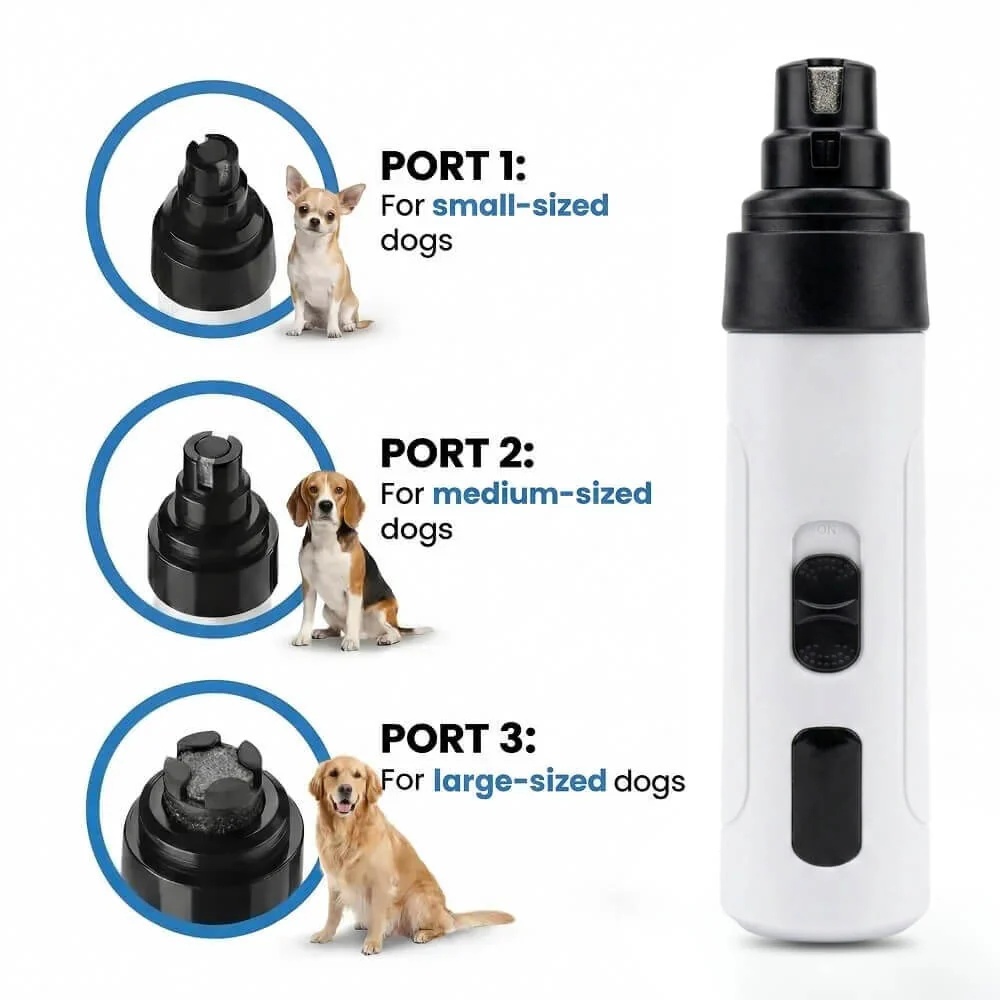
The protective safety cap features three distinct ports to match different nail sizes.
The small port is ideal for puppies, while the medium port fits medium-sized dogs.
For large breeds with very thick claws, you can remove the safety cap completely to use the full wheel.
How long does the battery last?
The Zenpaw Maxpro features a premium, high-capacity lithium-ion battery.
A single full charge delivers up to seven hours of continuous operating time.
It is fully USB rechargeable, allowing you to charge the device anywhere with ease.
This long battery life ensures you never run out of power in the middle of a training session.
Which speed setting is best for anxious dogs?
We highly recommend starting on the lowest speed setting for all anxious dogs.
The lower speed produces minimal sound and vibration, reducing initial sensory triggers.
Once your dog is comfortable, you can switch to the high-speed mode for faster results.
Our dual-speed control allows you to customize the grooming experience to your dog’s comfort.
Does the grinding bit get hot during use?
Our grinder utilizes advanced low-heat technology to protect your dog’s sensitive claws.
However, continuous friction against any hard surface naturally generates minor warmth.
This is why we stress the importance of the 3-second pulsing technique during grooming.
Shifting the grinder from nail to nail prevents heat from accumulating in any single spot.
What should I do if I accidentally nick the quick?
First, remain completely calm so your dog does not feed off your nervous energy.
Apply a small amount of styptic powder or clean cornstarch directly to the bleeding tip.
Hold gentle pressure on the nail for up to sixty seconds to stop the bleeding.
Immediately reward your dog with a jackpot treat to end the session on a positive note.
Conclusion: A New Era of Stress-Free Paw Care
Ready to transform nail trimming from a battle into a breeze?
Explore the Zenpaw Maxpro 3-in-1 Grinder.
Call: 302-307-1000 — our team can help you advise on the best grooming practices and help with any product questions.
Note: Individual results may vary depending on individual dog breeds, nail thickness, and behavioral temperaments. This article is intended for general pet grooming reference purposes only and does not replace professional veterinary advice.