
I still remember the heart-stopping moment my golden retriever whimpered in the yard, holding up a blood-slicked paw that revealed a painful dog nail split vertically down to the pink skin. In that instant of sheer panic, I realized how easily traditional clippers can crush and fracture delicate claws, prompting our team at Zenpaw to develop a whisper-quiet, painless grooming solution that restores peace to nail maintenance.
Maxpro 3-in-1 Grinder.
Stress-Free Nail Trimming.
Whisper-quiet DC motor (<40 dB) eliminates fear & discomfort. Features 3 ports, dual speeds, and 7-hour battery life. Safe, precise, and painless.
In This Article
- Emergency Response: Learn how to handle a vertical split safely and stop active bleeding immediately.
- Anatomy Explained: Understand the structure of the quick and why traditional clippers damage the nail structure.
- Veterinary Insights: Identify when a split requires professional clinical evaluation or simple home care.
- Painless Grooming: Master the step-by-step 45-degree angle technique to smooth split edges without pain.
- Preventative Care: Transition your anxious companion to stress-free, whisper-quiet grinding tools.
What to Do if Your Dog’s Nail Splits Vertically?
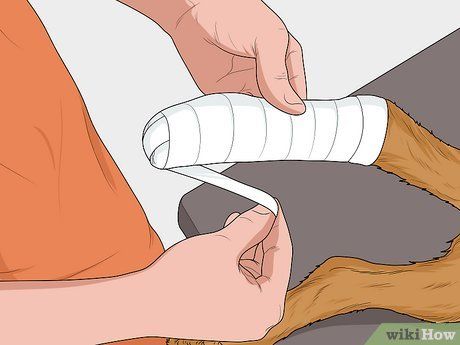
When a dog experiences a vertical nail split, swift and deliberate action is required because the split can travel upward toward the nail bed and cause intense physical pain. You must first calm your companion, inspect the damaged claw under excellent lighting, and determine if the sensitive internal blood vessel known as the quick is exposed to the elements. This painful condition often occurs when traditional, dull grooming tools exert immense crushing force rather than delivering a clean, sheer cut. If the split is minor and does not involve bleeding, it can often be safely managed at home by stabilizing the outer horn, cleaning the area to prevent debris buildup, and carefully filing away snagged edges.
To resolve a basic vertical split safely, wash the affected paw with lukewarm water and mild antibacterial soap to remove foreign particles. If the nail is actively bleeding, apply styptic powder or clean cornstarch with gentle, firm pressure for several minutes until the blood flow ceases completely. Use a high-quality, whisper-quiet nail grinder to smooth down the rough vertical edges of the split, which prevents the crack from expanding further when your dog walks on hard surfaces. If you want to handle this safely at home, the Zenpaw Maxpro Grinder provides painless, quiet filing — explore it here.
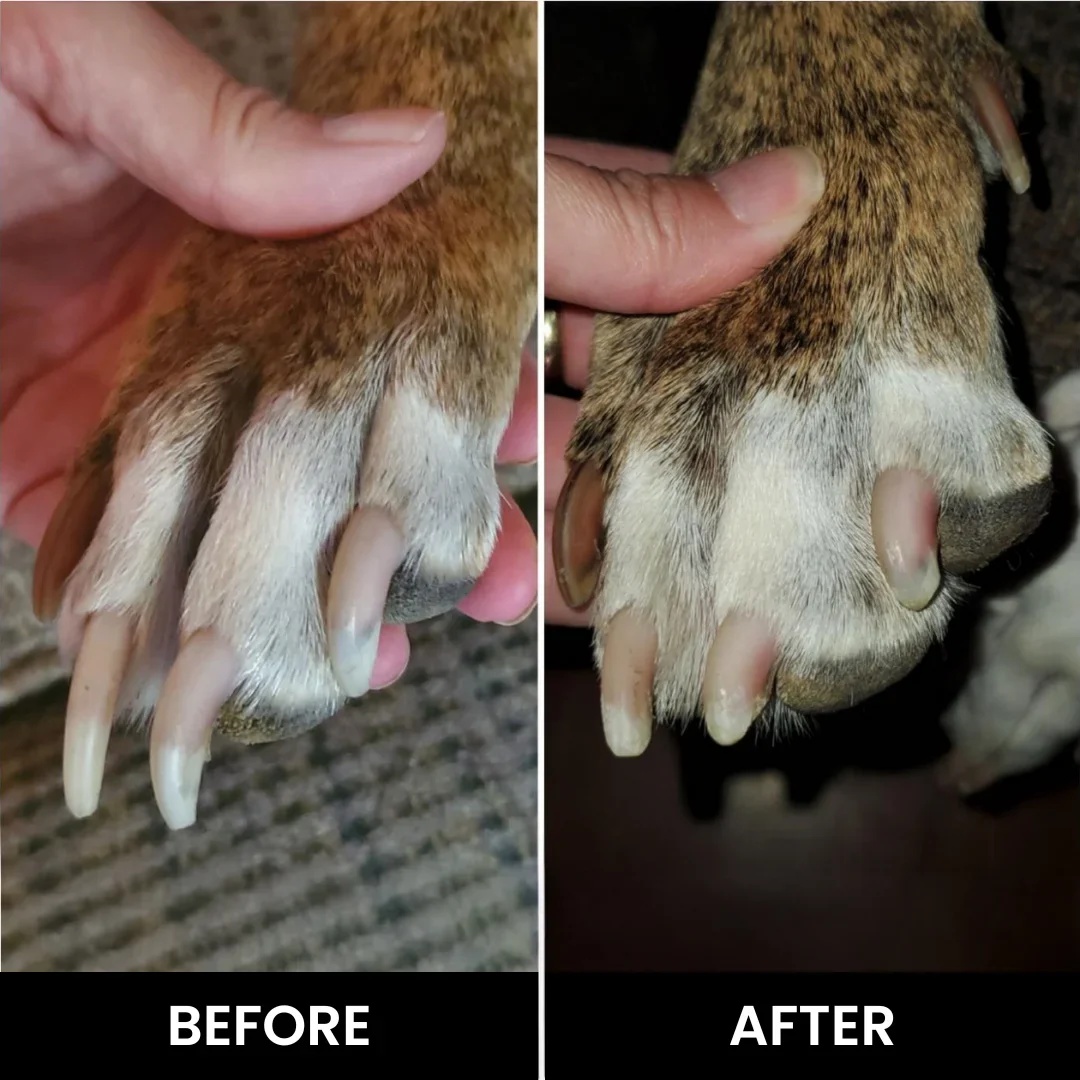
99-Day 100% Money-Back Guarantee
“Ever since we started using the Zenpaw Maxpro Grinder, it’s been such a peaceful experience. It’s very quiet, and my dog actually relaxes. It’s turned our stressful sessions into quick, quiet grooming times.”
— Sarah M. | ✔ Verified Customer
- ✓ Prevents Infection & Splitting
- ✓ Ideal for All Dog Sizes
- ✓ Low-Vibration Technology
- ✓ Fast 2-7 Days Delivery
Need Support? Call 302-307-1000
Understanding Canine Nail Anatomy and Why Vertical Splits Happen
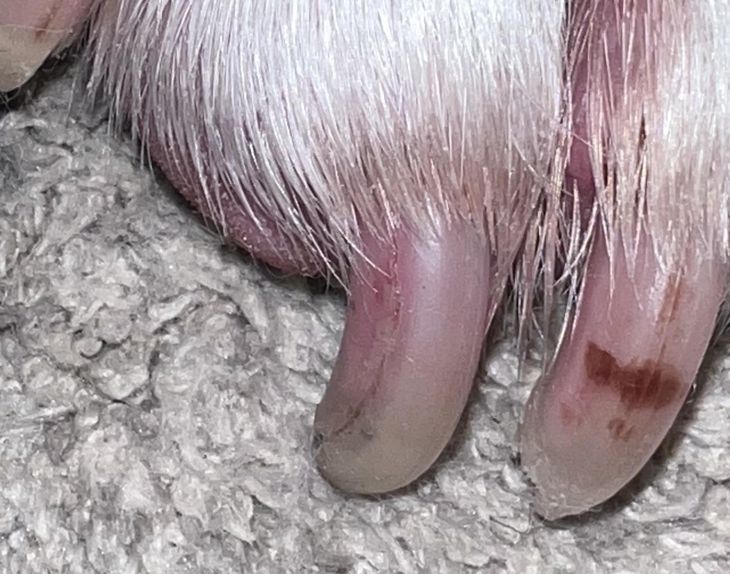
Canine claw structural integrity depends heavily on the hard outer layer of keratin surrounding the highly sensitive quick.
The quick contains a dense network of blood vessels and nerve endings linked directly to the digit bone.
When a dog nail bed injury occurs, it causes intense throbbing pain and opens a pathway for opportunistic environmental bacteria to enter.
This structural vulnerability is exacerbated when the outer horn is dehydrated, weak, or subjected to intense mechanical stress.
Standard guillotine or plier-style trimmers apply immense concentrated lateral pressure directly across the round circumference of the claw.
This crushing force often causes micro-fractures in the keratin layers that slowly expand into a painful vertical split.
The Root Causes of Vertical Splits in Canine Claws
Dogs often suffer from structural splits when their claws grow too long and repeatedly strike hard pavement or hardwood flooring.
This constant impact forces the nail upward into an unnatural angle, putting severe structural stress on the center of the claw.
Over time, these repetitive micro-impacts cause the tip of the nail to weaken and break open vertically.
Environmental conditions like dry winter air, frequent exposure to chemical ice melts, or indoor heating can strip natural moisture from the keratin shell.
In some cases, genetic factors or poor dietary absorption of zinc and essential fatty acids can lead to brittle outer nail walls.
When a dry, brittle nail catches on woven carpet fibers, outdoor roots, or wire crates, the tension forces the nail to crack open.
Using a high-quality grinder prevents this by slowly shaving down the nail structure molecule by molecule, eliminating all mechanical crushing forces.
Differentiation: Minor Splits vs. Severe Exposure
It is crucial for pet parents to distinguish a simple aesthetic hairline fracture from a complex, painful emergency.
A simple dog nail split vertically no bleeding means the crack resides entirely within the dead keratin tip.
This minor issue can be safely filed and managed at home without causing pain to your companion.
However, if you observe a deep dog nail split in half where the pink quick tissue is clearly visible, your dog is in severe discomfort.
An exposed quick feels like an open nerve and will cause immediate limping, persistent licking, or defensive growling when touched.
If the split extends past the visible curve of the nail directly into the sensitive skin of the toe, it is classified as a severe injury.
In such instances, you must stabilize the paw, protect the exposed tissue, and seek veterinary assistance immediately to manage the pain.
How to Safely Treat and Protect a Vertically Split Dog Nail

Grooming a damaged nail requires a calm workspace, a steady hand, and precise steps to avoid triggering pain.
If your pet is highly anxious, take several minutes to massage their paws and offer high-value rewards before touching the split nail.
Keep your tools organized and within arm’s reach so you can complete the process efficiently without unnecessary pauses.
Always work under bright light to ensure you can clearly see where the healthy tissue ends and the damaged quick begins.
Step 1: Sanitize and Clean the Paw
Before attempting any physical adjustments, you must clean the damaged claw to remove trapped dirt and yard debris.
Submerge the paw in a shallow bowl of lukewarm water mixed with a small amount of veterinary-approved antiseptic wash.
Gently pat the area dry using a clean, lint-free microfiber towel, taking care not to snag the split edge on any fabric loops.
If the dog pulls away or whimpers during cleaning, pause immediately and allow them to calm down before proceeding further.
Step 2: Control Active Bleeding
If the split has breached the inner core, you will likely see active bleeding due to the high vascularity of the quick.
Pour a generous amount of styptic powder or clean baking soda into the palm of your hand or onto a sterile gauze pad.
Press the powder directly onto the bleeding tip and hold firm, consistent pressure for at least sixty seconds.
Avoid wiping the blood away repeatedly, as this disrupts the natural clotting process and prolongs the bleeding.
If the bleeding does not stop after ten minutes of continuous pressure, contact your local veterinary clinic for guidance.
Step 3: Trim Loose Flaps Safely
Loose, dangling pieces of nail are highly dangerous because they can snag on furniture and rip the remaining nail from the toe.
If a tiny piece of the outer shell is completely separated and hanging by a thread, you can clip it away using sharp, sanitized plier style dog nail clippers.
Only make this cut if you are absolutely certain the metal blade will not touch or compress the sensitive pink quick tissue.
If the vertical split runs straight up the center, never attempt to cut the nail in half with a traditional blade.
Doing so will send a painful shockwave through the split and can cause the claw to fracture further up into the toe.
Step 4: Smooth the Split Edges with a Grinder
Smoothing the split is the most critical step to prevent the crack from spreading further upward as your dog walks.
A high-quality rotary grinder allows you to file down the sharp outer corners without exerting any painful pinching pressure.
Turn on your whisper-quiet grinder and gently touch the rotating head to the rough outer edges of the vertical crack.
Hold the grinder at a precise 45-degree angle relative to the natural slope of the claw to create a smooth, rounded edge.
Use brief, one-second touches to prevent heat buildup, as friction heat can quickly irritate the delicate nerve endings inside.
For dogs with dark claws, utilizing dog nail clippers with light for black nails or a grinder with an integrated LED light makes it much easier to avoid the quick.
The Science of Stress-Free Desensitization for Paw Care
Many dogs develop severe grooming anxiety because they associate nail trims with past pain or loud, vibrating tools.
To rebuild trust, you must implement a systematic desensitization protocol over several days before attempting any active grooming.
Start by placing your quiet grinder on the floor while it is turned off, and reward your dog with high-value treats for sniffing it.
Next, turn the device on its lowest speed setting while keeping it several feet away from your pet’s body.
Praise your dog warmly and feed them premium treats to build a positive association with the soft, comforting hum of the motor.
Slowly decrease the distance over multiple short sessions until you can touch the vibrating handle to your dog’s leg without causing fear.
This patient, low-stress approach ensures your companion remains completely relaxed when you eventually touch the tool to their damaged claw.
Critical Mistakes to Avoid When Managing Split Claws
The most common mistake pet parents make is trying to force traditional, dull clippers through a cracked or compromised nail.
Traditional blades squeeze the outer walls inward, which can instantly turn a simple hairline crack into a deep, painful split.
Another frequent error is rushing the grooming process when a dog shows obvious signs of intense stress or physical discomfort.
If your pet is struggling, pulling their paw away, or panting heavily, they are telling you that they need a physical break.
Forcing the issue can lead to an accidental injury, or cause your dog to develop a long-term fear of paw handling.
Lastly, never ignore a deep split that runs directly beneath the hair line into the fleshy skin of the toe.
A deep dog ripped toenail completely off or split deep in the bed requires a vet’s care to prevent deep bone infections.
Grooming Method Comparison for Anxious Pets
| Grooming Method | Crushing Risk | Anxiety Level | Precision & Safety |
|---|---|---|---|
| Traditional Metal Clippers | High (Squeezes Claw) | High (Loud Snapping Sound) | Low (Easy to cut the quick) |
| Zenpaw Maxpro Grinder | Zero (Smooth Filing) | Minimal (<40dB Quiet Motor) | Excellent (Gradual control) |
| Manual Hand Files | Zero (No Squeezing) | Low (No Noise) | Very Low (Extremely slow) |
Frequently Asked Questions About Cracked Dog Nails
Q: Is the Zenpaw Grinder safe for large dog breeds with very thick nails?
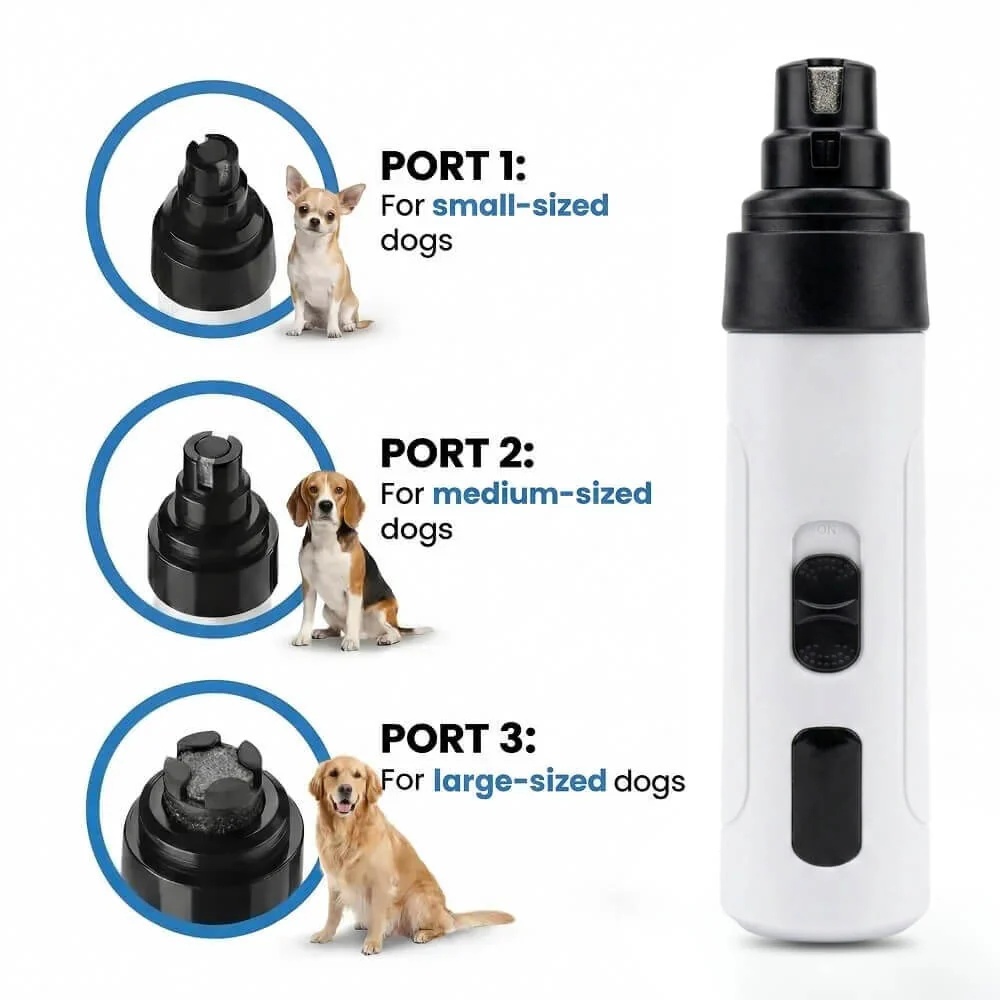
Yes, our grinder is engineered with three specialized ports and dual speed settings designed to handle the thickest claws.
The high-speed setting easily files down large, tough nails, while the smaller ports provide excellent precision for smaller toy breeds.
Q: How long does the internal battery last on a single charge?
The Zenpaw Maxpro features a high-capacity lithium-ion battery that delivers up to seven hours of continuous use.
It is fully rechargeable via any standard USB port, allowing you to groom your pets anywhere without dealing with annoying cords.
Q: Which speed setting should I use for a vertically split nail?
We highly recommend starting on the lowest speed setting when working on a compromised or split nail.
This low-vibration setting gives you maximum physical control and prevents sudden movements that could startle an anxious pet.
Q: Does the rotating grinding head get hot during extended use?
Our advanced diamond bit grinding wheel utilizes low-heat technology to minimize thermal buildup during grooming.
However, you should always use brief, light touches of one to two seconds to keep the nail surface completely cool and comfortable.
Securing Your Dog’s Paw Health
Taking proactive steps to manage vertical splits immediately keeps your pet happy, healthy, and moving comfortably on their daily walks.
By replacing stressful traditional clippers with quiet, vibration-free tools, you can easily turn a difficult grooming chore into a peaceful bonding experience.
Ready to transform nail trimming from a battle into a breeze? Explore the Zenpaw Maxpro 3-in-1 Grinder. Call: 302-307-1000 — our team can help you advise on the best grooming practices and help with any product questions.
Note: Individual results may vary depending on individual dog breeds, nail thickness, and behavioral temperaments. This article is intended for general pet grooming reference purposes only and does not replace professional veterinary advice.