
I still remember the absolute panic of seeing bright red blood pooling on my clean kitchen floor after a routine claw trim went completely wrong. My sweet pup was trembling, I was in tears, and in that frantic moment, I desperately wondered: can you use super glue to stop dog nail bleeding safely to fix it? That traumatic evening set Team Zenpaw on a mission to find a truly painless, whisper-quiet alternative that protects our beloved dogs’ paws from the dangers of traditional clippers.
Maxpro 3-in-1 Grinder.
Stress-Free Nail Trimming.
Whisper-quiet DC motor (<40 dB) eliminates fear & discomfort. Features 3 ports, dual speeds, and 7-hour battery life. Safe, precise, and painless.
In This Article
- Expert Verdict: Discover why household chemical glues are unsafe for active canine wounds.
- Nail Anatomy Explored: Learn where the sensitive quick hides and how to avoid it entirely.
- Safe Home Solutions: Step-by-step instructions on applying natural clotting agents.
- The Zenpaw Alternative: How whisper-quiet technology prevents bleeding accidents.
Can You Use Super Glue to Stop Dog Nail Bleeding Safely?
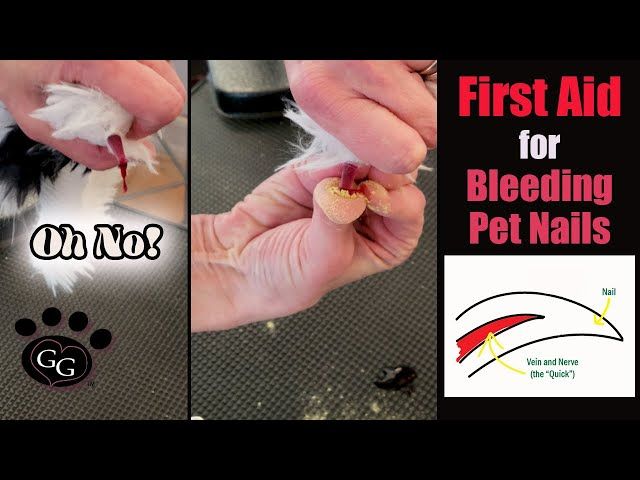
No, you should never use household super glue to stop a dog’s nail from bleeding because of the serious health risks involved.
Standard household adhesives contain industrial cyanoacrylate, which is a powerful chemical solvent designed for non-living materials.
When this harsh compound is applied to an open, active wound like a cut quick, it can cause severe chemical burns and intense stinging.
Furthermore, dogs naturally lick their wounds, meaning your pet is highly likely to ingest these toxic chemical residues.
This dangerous practice can easily lead to poisoning, localized tissue death, or a severe secondary infection.
Always rely on veterinary-approved styptic powder or safe, edible kitchen alternatives to manage minor bleeding emergencies at home.
If you find yourself in an emergency where your dog’s nail is bleeding, you must act quickly and calmly.
First, wrap a clean cloth or paper towel around the injured paw and apply firm, continuous pressure for at least two minutes.
Next, prepare a safe clotting agent like styptic powder, cornstarch, or baking soda in a small bowl.
Gently press the bleeding tip of the claw directly into the powder to pack the wound and encourage clotting.
Keep your dog completely still and quiet for at least ten to fifteen minutes to allow the protective seal to strengthen.
Avoid letting them run on hard surfaces or lick the affected paw during this critical recovery window.
If you want to handle this safely at home, the Zenpaw Maxpro Grinder provides painless, quiet filing — explore it here.
99-Day 100% Money-Back Guarantee
“Ever since we started using the Zenpaw Maxpro Grinder, it’s been such a peaceful experience. It’s very quiet, and my dog actually relaxes. It’s turned our stressful sessions into quick, quiet grooming times.”
— Sarah M. | ✔ Verified Customer
- ✓ Prevents Infection & Splitting
- ✓ Ideal for All Dog Sizes
- ✓ Low-Vibration Technology
- ✓ Fast 2-7 Days Delivery
Need Support? Call 302-307-1000
Understanding Canine Nail Anatomy: Where is the Quick?
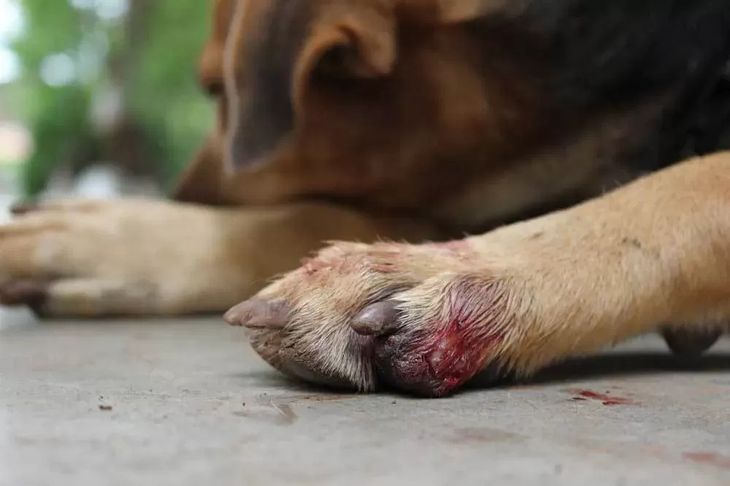
To safely maintain your dog’s paws, you must understand the internal structure of their claws.
Each nail is comprised of a tough outer shell of keratin and an inner vascular core called the quick.
The quick is a living part of the nail containing rich blood vessels and highly sensitive nerve endings.
When you use traditional clippers, it is extremely easy to accidentally sever this delicate tissue.
Slicing the quick causes sudden, sharp pain and immediately results in active bleeding.
On light-colored nails, the quick is easily visible as a soft pink zone in the center of the claw.
However, dark or black claws make locating this vital tissue almost impossible to do with the naked eye.
This is why many pet owners struggle and accidentally injure their dogs during home grooming sessions.
When a claw is neglected, the inner blood vessel naturally grows longer alongside the outer shell.
If a dog nail curled into paw is left untreated, it can cause severe pain and structural joint damage.
You can reference a professional dog nail length chart to understand the healthy proportions for your dog’s breed.
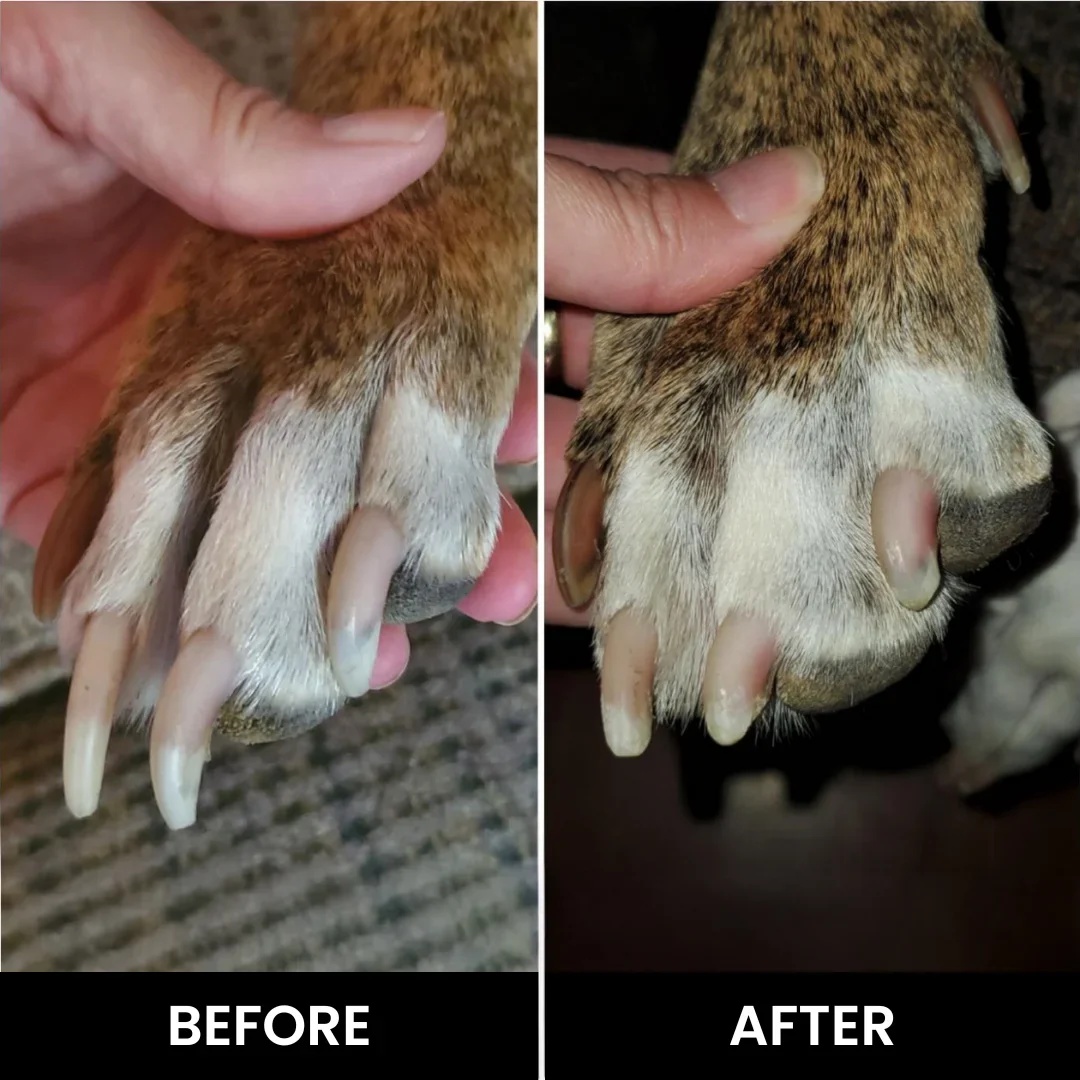
Using a gentle filing tool allows you to shorten the nail gradually, which safely encourages the quick to recede over time.
The Serious Risks of Cauterizing Bleeding Claws with Super Glue
Many frantic pet parents look for household items to manage grooming mishaps in moments of high stress.
This panic often leads to people considering cauterizing bleeding claws with super glue as a quick fix.
While cyanoacrylate adhesives do bond skin instantly, retail formulations are not designed for open wounds.
Standard household glue undergoes an exothermic chemical reaction when it makes contact with moisture.
This reaction can generate intense heat, causing painful chemical and thermal burns directly on the exposed nerve endings.
Furthermore, household glues release harsh, toxic fumes that can irritate your dog’s sensitive airway.
Attempting to use these products as an emergency pet first aid glue can easily worsen the initial injury.
When the glue dries, it forms a non-porous, hard barrier over the raw, open wound.
This airtight seal traps environmental dirt, debris, and anaerobic bacteria deep inside the claw structure.
Over the following days, this trapped bacteria can cause a severe infection inside the bone of the toe.
Your dog will likely chew or bite at the painful area, potentially ingesting the toxic dried chemicals.
Ingesting commercial adhesives can lead to chemical poisoning or severe blockages in their digestive tract.
To protect your pet from these unnecessary dangers, you must avoid chemical adhesives entirely.
Instead, choose safe, natural, and veterinary-approved methods to support your dog’s healing process.
How to Safely Stop Dog Nail Bleeding: Safe Home Remedies

When a minor bleeding emergency occurs, there are several safe, non-toxic household remedies you can use.
First, always keep a dedicated pet first aid kit fully stocked and within reach before you begin grooming.
Veterinary styptic powder is the most reliable tool for stopping blood flow from a nicked quick almost instantly.
This specialized powder contains active astringents that quickly constrict local blood vessels to form a secure clot.
If you do not have styptic powder, you can find simple, safe alternatives right inside your kitchen pantry.
Cornstarch is an excellent, non-toxic powder that works naturally to absorb moisture and encourage clotting.
You can mix cornstarch with a tiny amount of clean water to form a thick, clay-like paste.
Apply this paste directly to the tip of the bleeding claw and hold a clean cloth over it for a few minutes.
Baking soda can also be used in the exact same manner to pack the injured claw safely.
Another classic home remedy is gently pressing the bleeding claw directly into a clean bar of mild soap.
The soap naturally plugs the tiny opening in the claw to stop the bleeding while you soothe your dog.
To make future grooming sessions much safer, you can try using a dog nail trimmer with light to improve your visibility.
Using a professional nail grinder for dogs is another excellent way to keep your dog comfortable and completely safe.
How to Introduce the Zenpaw Maxpro Grinder to Your Dog
Transitioning your dog from scary, loud clippers to a gentle filing routine requires a patient approach.
The Zenpaw Maxpro Grinder is specifically engineered with a whisper-quiet DC motor that runs under 40 decibels.
This exceptionally low noise level prevents your dog from associating grooming sessions with fear and anxiety.
Begin by letting your dog sniff the turned-off device while rewarding them with their favorite treats.
Once they are comfortable, turn the grinder on its lowest speed while keeping it at a safe distance.
Let your dog get accustomed to the soft, rhythmic hum of the motor over several short sessions.
Gently press the vibrating handle of the grinder against their shoulder so they feel the physical sensation.
Always pair these positive steps with high-value treats to build a strong, happy association.
When you are ready to file, hold your dog’s paw securely but gently in a comfortable position.
Keep the grinding wheel at a precise 45-degree angle to the natural curve of the claw.
Apply the diamond bit in short, light bursts of no more than two to three seconds per claw.
This careful method prevents friction heat from building up and ensures a perfectly smooth, painless finish.
Common Pitfalls of Traditional Clipping and How to Avoid Them
Using dull, traditional metal clippers is one of the most common grooming mistakes pet owners make.
Dull blades do not cut cleanly; instead, they apply immense pressure that crushes and splits the claw.
This crushing force squeezes the highly sensitive nerve endings within the quick, causing sharp pain.
Even if you do not make the nail bleed, this painful pressure can make your dog terrified of grooming.
Another common mistake is rushing through the process because you feel anxious or stressed.
When you rush, you are far more likely to misjudge the distance and accidentally slice into the quick.
If you find the process too overwhelming, you can look for cheap dog nail clipping near you to get some initial hands-on help.
However, you can easily master stress-free nail care right in the comfort of your own living room.
The Zenpaw Maxpro Grinder completely eliminates the painful pinching and crushing of old-fashioned clippers.
Its high-speed diamond filing wheel wears down the keratin layer by layer with absolute precision.
This allows you to see the safety zone clearly and stop before you reach the sensitive inner quick.
By choosing a slower, gentler approach, you can protect your dog’s paws and build a stronger bond of trust.
Frequently Asked Questions About Dog Nail Bleeding and Trimming
Here are the most common questions dog owners ask about emergency claw care and grooming safety.
Is the Zenpaw Maxpro Grinder safe for very large dog breeds?
Yes, the Zenpaw Maxpro is fully equipped to handle dogs of all shapes and sizes.
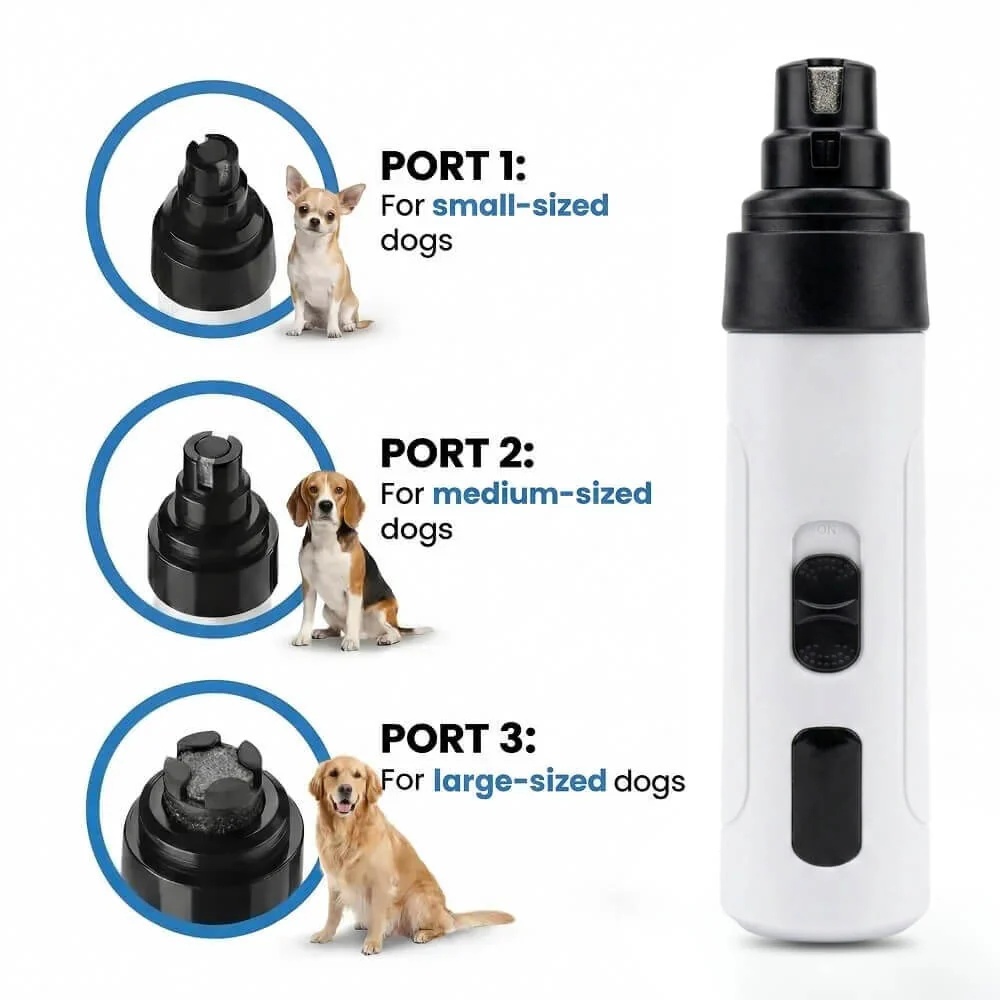
It features three specialized grooming ports designed for small, medium, and large claws.
You can use the open cap area to quickly file down the thickest nails of giant breeds.
How long does the grinder battery last on a single charge?
The Zenpaw Maxpro is equipped with a high-capacity lithium-ion battery that lasts up to seven hours.
This long battery life ensures you can complete multiple grooming sessions without needing a recharge.
It is fully USB-rechargeable, making it highly convenient for home use or travel.
Which speed setting is best for anxious puppies?
We highly recommend starting on the lowest speed setting for young puppies or anxious dogs.
The low speed minimizes vibration and noise, helping your puppy stay calm and relaxed.
Once your puppy gets used to the sensation, you can transition to the higher speed for faster results.
Does the grinding wheel get hot during extended use?
No, the Zenpaw Maxpro utilizes advanced low-heat technology to prevent the brass spindle from overheating.
However, we always recommend moving from nail to nail to prevent friction heat from building up on a single claw.
Limit your grinding contact to two or three seconds per nail before switching to the next paw.
What should I do if my dog will not stop licking the bleeding nail?
Licking introduces harmful mouth bacteria to the open wound and slows down the clotting process.
You should gently wrap the paw in a clean bandage or use a temporary protective bootie.
If they persist, you may need to use a temporary recovery cone until the wound is fully dry.
Can I use human liquid bandages on a dog’s bleeding quick?
Human liquid bandages often contain alcohol and other chemical solvents that sting intensely upon application.
This sudden pain can cause your dog to react defensively or become afraid of paw handling.
It is always safer to use specialized, sting-free veterinary liquid skin protectants.
How can I tell if a cut quick has become infected?
Keep a close eye out for signs of redness, swelling, or warm skin around the affected toe.
If your dog is limping, licking the paw constantly, or if you notice discharge, consult a vet immediately.
Untreated nail bed infections can quickly spread to the nearby joint bones.
How often should I grind my dog’s nails to keep the quick short?
We recommend a quick touch-up session every one to two weeks to maintain an ideal length.
Frequent, light filing encourages the live quick to naturally recede back toward the paw.
This regular maintenance is key to preventing joint discomfort and keeping their paws healthy.
Conclusion
Maintaining your dog’s claws does not have to be a source of stress and fear.
By replacing harsh chemical glues with safe clotting powders, you can handle unexpected nicks with confidence.
Upgrade to a gentle, quiet filing system to keep your dog’s paws healthy and completely pain-free.
Ready to transform nail trimming from a battle into a breeze? Explore the Zenpaw Maxpro 3-in-1 Grinder. Call: 302-307-1000 — our team can help you advise on the best grooming practices and help with any product questions.