I still remember the night my golden retriever, Cooper, let out a sharp yelp and began holding his paw up in absolute agony. He had snagged his long nail on the carpet, and I was terrified to find a dog dislocated toe nail limping situation unfolding right in front of me. That moment of panic led our team to develop safe, gentle grooming solutions like the Zenpaw Maxpro Grinder, designed to protect your pet’s sensitive paws.
Maxpro 3-in-1 Grinder.
Stress-Free Nail Trimming.
Whisper-quiet DC motor (<40 dB) eliminates fear & discomfort. Features 3 ports, dual speeds, and 7-hour battery life. Safe, precise, and painless.
In This Article
- Anatomical Signals: How to evaluate a dislocated digit versus a superficial claw tear.
- Veterinary Corrective Support: Professional methods for manual reduction and stabilization.
- Skeletal Health Connections: Why overgrown claws lead directly to painful joint misalignment.
- Preventative Grooming Strategy: Safe home maintenance steps to protect vulnerable paw joints.
Why Is Your Dog Limping? How to Spot a Dislocated Toe or Claw Injury
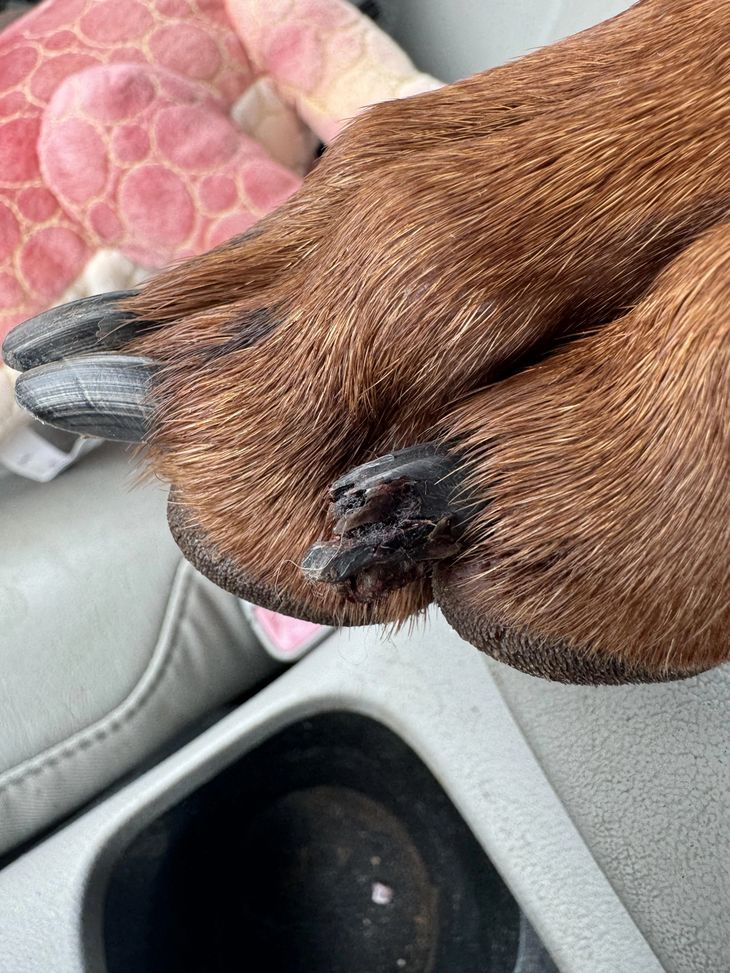
A dog dislocated toe nail limping issue occurs when sudden mechanical force, such as snagging an overgrown claw on a deck or carpet, violently forces the delicate toe joint out of its natural socket, resulting in immediate lameness and severe pain. This distressing injury typically affects highly active dogs or those with long, brittle nails during high-speed runs, play, or grooming accidents. If your dog is suddenly holding their paw up, licking the joint excessively, or showing visible swelling, you need to examine the area closely to see if the toe is sitting at an unnatural, crooked angle. This evaluation process should happen immediately at home by gently isolating the affected paw while keeping your pet calm to prevent further joint damage. By understanding that a dislocated digit is a joint displacement rather than a simple split nail, you can seek proper veterinary realignment instead of attempting to manipulate the joint back yourself.
To address this painful situation safely, you must first secure your dog with a gentle muzzle or helper, as even the sweetest pets may bite when in intense physical distress. Next, prepare a clean, supportive wrap to temporarily immobilize the paw, ensuring you do not wrap it too tightly which could cut off vital blood circulation to the digits. Then, transport your dog immediately to a veterinary clinic where an expert can perform digital X-rays to confirm if the bone is fractured or merely dislocated before administering safe sedation for realigning the joint. Once the toe is professionally set, you must restrict your dog’s physical activity for several weeks, keeping them on a short leash and preventing any jumping onto furniture.
To avoid these traumatic nail snags entirely, maintaining short, smooth claws is absolutely vital for your pet’s joint alignment. If you want to handle this safely at home, the Zenpaw Maxpro Grinder provides painless, quiet filing — explore it here.
99-Day 100% Money-Back Guarantee
“Ever since we started using the Zenpaw Maxpro Grinder, it’s been such a peaceful experience. It’s very quiet, and my dog actually relaxes. It’s turned our stressful sessions into quick, quiet grooming times.”
— Sarah M. | ✔ Verified Customer
- ✓ Prevents Infection & Splitting
- ✓ Ideal for All Dog Sizes
- ✓ Low-Vibration Technology
- ✓ Fast 2-7 Days Delivery
Need Support? Call 302-307-1000
Understanding Canine Paw Anatomy: The Anatomy of a Dislocated Claw Joint in Dogs

A dog’s paw is a complex masterpiece of biological engineering.
Each front paw has five digits, while the rear paws typically have four.
Every single digit consists of three distinct bones known as phalanges.
These phalanges are connected by delicate joints that allow for natural flexing and running.
The outermost bone, or the third phalanx, is directly fused to the claw itself.
To understand why injuries happen, we must first look at what are dog nails made of, which is primarily a tough outer shell of keratin surrounding a highly sensitive inner quick.
The quick is packed with blood vessels and nerves that connect directly to the bone.
When a claw gets snagged on a hard surface, the force is transferred straight to the joint.
If the force is strong enough, it can stretch or tear the surrounding ligaments.
This results in a painful condition known as a dislocated claw joint in dogs.
You might notice that the toe looks crooked or points in an unnatural direction.
This structural change is one of the most prominent dog toe dislocation symptoms to watch out for.
Unlike humans, dogs carry the entirety of their body weight on these tiny digits.
This means even a minor joint subluxation can cause immense pain during movement.
When a joint is out of alignment, the surrounding muscles will spasm in response.
This spasm is a natural defense mechanism to prevent further joint movement.
However, it also makes the area incredibly tender to the touch.
Your dog will likely flinch, whine, or even growl if you attempt to inspect the toe.
It is crucial to remain calm and gentle during this initial inspection.
Over time, an untreated dislocation can lead to chronic arthritis in the paw.
This is why timely identification and care are so vital for your dog’s long-term mobility.
Our team at Zenpaw stresses the importance of understanding this delicate anatomy.
By keeping the claws short, you significantly reduce the leverage force that causes these joint dislocations.
A short nail cannot easily hook into carpets, upholstery, or outdoor brush.
This simple preventative measure can save your dog from experiencing severe traumatic pain.
It also saves you from facing expensive emergency veterinary bills.
We believe that education is the first step toward better pet wellness.
When you understand the skeletal structure of your dog’s paws, you can groom them with confidence.
You will no longer view nail trimming as a chore, but as essential joint protection.
This mindset shift is exactly what we advocate for at Team Zenpaw.
The ligaments that support these small phalangeal joints are extremely thin.
This thinness makes them susceptible to lateral shearing forces.
When a dog runs on uneven terrain, their toes must bend and conform to the ground.
If they hit a sudden dip or rock, the joint can twist sideways beyond its normal range.
This lateral twisting is what pulls the articular surfaces of the bones apart.
Once displaced, the joint can remain subluxated, which is a partial dislocation, or fully luxated.
A full luxation means the bone surfaces are completely separated and no longer touching.
This separation causes immediate inflammation and localized edema.
You will observe your dog holding the leg up and refusing to touch it to the ground.
This is a protective instinct to prevent further mechanical damage to the joint capsule.
Differentiating Injuries: Sprains, Fractures, and Dog Toe Injury Limping
It can be incredibly challenging to tell the difference between a simple sprain and a dislocated toe.
Both injuries will cause your pet to favor one leg and show signs of discomfort.
However, a true dislocation involves a complete separation of the joint bones.
A sprain, on the other hand, is merely a stretching or mild tearing of the ligaments.
When dealing with dog toe injury limping, you must look for specific visual cues.
A dislocated toe will almost always present with a visible deformity.
The toe may appear shorter than the others, or it may stick out to the side.
A simple sprain will cause swelling but the toe will remain in its normal anatomical position.
Fractures, or broken bones, are also highly painful and can mimic dislocations.
A vet will need to perform digital X-rays to get a definitive evaluation.
To help you understand these differences, we have created a simple comparison guide.
| Injury Type | Key Symptoms | Typical Care Protocol |
|---|---|---|
| Toe Sprain | Mild swelling, limping, tenderness, no visible structural deformity. | Rest, environmental management, cold compresses. |
| Toe Dislocation | Crooked toe angle, severe limping, joint swelling, intense localized pain. | Manual joint reduction under veterinary sedation, splinting, restricted exercise. |
| Bone Fracture | Severe swelling, complete inability to bear weight, deep pain. | Splinting, casting, or corrective stabilization depending on severity. |
As you can see, a dislocation requires immediate professional intervention to realign the bones.
If you delay care, the body will attempt to heal the joint in its crooked position.
This can lead to permanent mobility issues and chronic pain for your beloved dog.
Many of these traumatic injuries can be traced back to poor claw maintenance.
When claws are allowed to grow too long, they alter the angle at which the paw strikes the ground.
This abnormal angle puts constant, unnatural stress on the delicate toe joints.
You should familiarize yourself with how long should dog nails be to keep them healthy.
Ideally, your dog’s nails should not touch the floor when they are standing still.
If you can hear a clicking sound on your hardwood floors, their nails are already too long.
This clicking is a warning sign that the claws are acting as levers, pushing the toe joints upward.
Over time, this pressure weakens the joint capsule and makes dislocations much more likely.
Regular maintenance is the most effective way to protect your dog’s paws from this pain.
You do not have to wait for an injury to occur before taking action.
By keeping their nails short and smooth, you ensure they walk with natural, healthy posture.
This simple act of preventive care protects their entire musculoskeletal system.
Your dog relies on you to monitor their physical health and comfort.
Paying close attention to their gait and limping behavior is a vital part of pet parenting.
When you examine the leg, look closely at the angle of each individual claw.
If one nail points sharply inward or outward compared to the others, a dislocation is highly likely.
Additionally, look for swelling that is concentrated around a single joint node.
A general sprain will usually cause diffuse swelling across the entire foot pad.
In contrast, a dislocation concentrates the swelling right at the site of the separated bones.
You can also check for a lack of resistance when the toe is gently moved sideways.
However, we strongly advise against manipulating the toe yourself, as this can pinch nearby nerves.
It can also cause micro-tears in the remaining intact ligaments, worsening the recovery time.
A veterinary professional will use sedation to relax the surrounding muscles before realignment.
This ensures the bone pops back into place smoothly without causing additional soft tissue trauma.
Preventing Paw Trauma: How to Safely Trim and Maintain Your Dog’s Nails
Preventing toe injuries starts with establishing a consistent and safe grooming routine.
For many pet parents, the mere thought of trimming nails brings on a wave of anxiety.
Traditional clippers can be loud, scary, and prone to cutting the sensitive quick.
Fortunately, you can achieve stress free nail grooming for dogs by switching to a modern nail grinder.
A high-quality grinder allows you to file the nail down gradually and safely.
This slow approach gives you complete control and prevents accidental injury to the quick.
To begin, you must introduce the grinder to your dog in a positive and relaxed manner.
Start by letting your dog sniff the grinder while it is turned off.
Reward their curiosity with high-value treats to build a positive association.
Next, turn the grinder on its lowest speed while keeping it at a distance.
This allows your dog to get used to the sound without feeling threatened.
The Zenpaw Maxpro Grinder is specifically designed with a whisper-quiet motor under 40 decibels.
This ultra-quiet operation is crucial for keeping sensitive or anxious dogs calm.
Once your dog is comfortable with the sound, gently touch the handle to their paw.
This helps them get accustomed to the minor vibrations of the tool.
Always praise your pet and offer delicious treats throughout this desensitization process.
When you are ready to trim, hold your dog’s paw securely but gently.
Gently isolate a single toe and push back the fur to expose the claw clearly.
Hold the grinder at a precise 45-degree angle to the tip of the nail.
Apply the grinding wheel in short, gentle bursts of two to three seconds at a time.
This technique prevents heat from building up on the nail surface.
Grinding in bursts also keeps your dog comfortable and prevents any burning sensations.
Repeat this process on each nail, working slowly and taking breaks if your dog gets restless.
With patience and consistency, your dog will learn that nail care is a peaceful bonding experience.
You will quickly see a massive improvement in their comfort levels during grooming.
No more struggling, whining, or running away in fear when the tools come out.
Instead, you will enjoy a quiet, cooperative session that strengthens your bond.
A peaceful grooming routine is the ultimate goal of Team Zenpaw.
We believe that every dog deserves a stress-free experience when it comes to their health.
Another crucial tip is to always inspect your dog’s paws before you begin grooming.
Look for any hidden debris, dirt, or small pebbles lodged between their toes.
Cleaning the paw pad first ensures you do not accidentally grind over a sensitive cut.
It also prevents dirt from clogging up the diamond-bit grinding head of your tool.
When using the Zenpaw Maxpro Grinder, you do not need to apply heavy physical pressure.
Let the rotating diamond bit do the hard work for you as you hold it to the nail.
Simply guide the wheel smoothly across the tip, sides, and bottom edge of the claw.
This rounds off the sharp corners, preventing them from catching on fabrics later.
A rounded nail glides smoothly over carpets instead of snagging and tearing.
This rounded finish is the ultimate defense against painful claw subluxation events.
Grooming Blunders to Avoid: Preventing Secondary Claw and Joint Damage
Many pet owners make the mistake of waiting too long between nail trims.
This neglect causes the quick to grow longer along with the outer nail shell.
If you try to cut a highly overgrown nail back all at once, you will inevitably cause bleeding and pain.
Instead, you must file overgrown claws gradually over several weeks to let the quick recede safely.
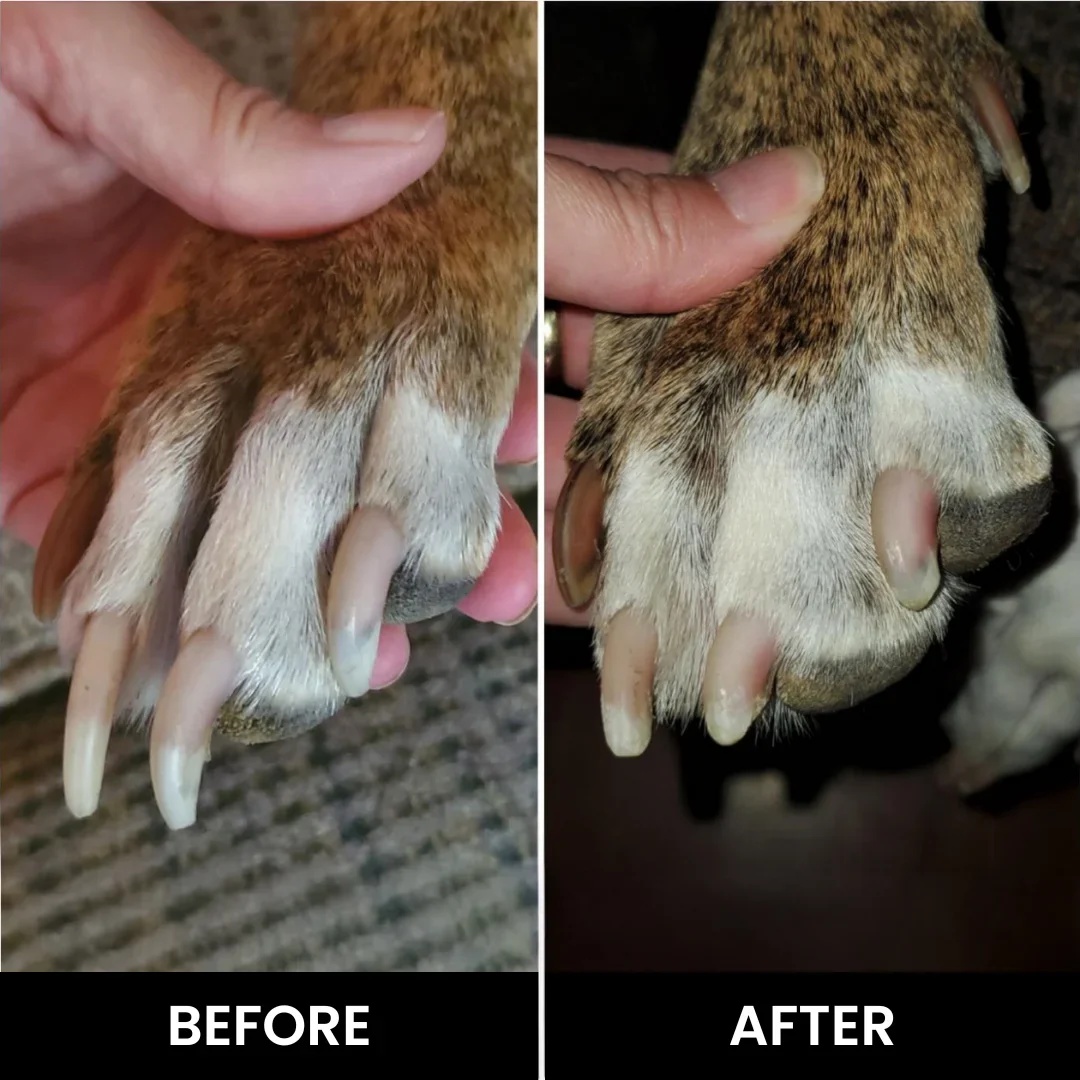
Looking at examples of dog nails before and after proper care can help you visualize the goal.
Another major mistake is using dull, traditional scissor-style clippers.
Dull clippers squeeze and crush the nail shaft instead of cutting cleanly through it.
This crushing pressure can split the nail right up to the sensitive quick.
It can also pull violently on the toe joint, potentially causing a painful dislocation.
A rotary grinder completely avoids this dangerous crushing action by filing the nail down smoothly.
However, if you do accidentally nick the quick and cause bleeding, you must remain perfectly calm.
Dogs are highly sensitive to our emotions and will panic if they see you get stressed.
You should always keep a styptic powder close at hand during your grooming sessions.
If you do not have styptic powder, some owners use home remedies like cornstarch or black pepper for dog nail bleeding in a pinch.
Simply apply a small amount of pressure to the tip of the bleeding nail to stop the flow.
Never rush the grooming process, as impatience is the leading cause of accidental injuries.
Always prioritize your dog’s comfort and safety over speed.
By using the right tools and techniques, you can keep their paws healthy and injury-free for life.
Rushing can cause you to slip and accidentally grind the surrounding skin.
This is highly painful and will set back your desensitization progress significantly.
Take your time, breathe deeply, and make the experience as positive as possible.
If your dog only lets you do one paw per session, celebrate that as a victory.
There is no rule saying you must finish all four paws in a single sitting.
Slow and steady progress is always better than a rushed, stressful job.
By respecting your dog’s limits, you build a foundation of lifelong trust.
Many owners also make the mistake of using loud, heavy-duty industrial rotary tools.
These tools operate at extremely high speeds that can quickly catch and wrap fur.
The intense noise and vibration can also permanently traumatize an anxious dog.
This trauma makes future nail trims an absolute nightmare for both you and your pet.
The Zenpaw Maxpro is engineered specifically for pets, featuring a quiet, low-vibration motor.
This custom design ensures that your dog remains completely relaxed during the process.
It protects their hearing and keeps their stress levels down to a bare minimum.
Another error is neglecting the dewclaws, which are located higher up on the inner leg.
Because they do not touch the ground, dewclaws do not wear down naturally at all.
These nails can easily curl back and grow directly into your dog’s sensitive skin.
Always make sure to check and grind the dewclaws regularly to prevent this painful condition.
Frequently Asked Questions About Canine Toe Injuries and Nail Care
Yes, the Zenpaw Maxpro Grinder is perfectly safe and highly effective for dogs of all sizes.
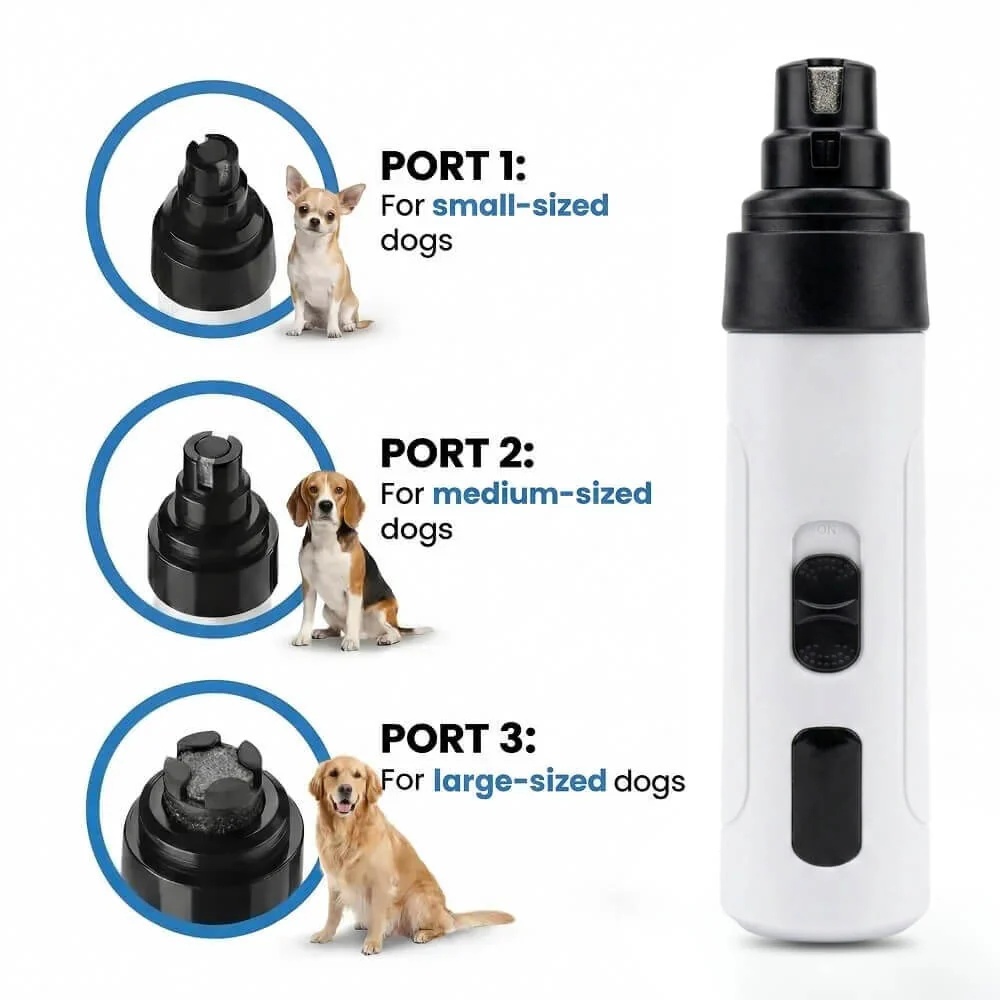
It features three specialized ports designed to accommodate small, medium, and large breeds comfortably.
The large port is perfect for grinding down thick, heavy nails on breeds like Golden Retrievers and Labradors.
The powerful motor provides consistent torque to file down even the toughest claws without stalling.
The built-in battery is designed for long-lasting performance on a single charge.
It provides up to seven hours of continuous use, which is enough for multiple detailed grooming sessions.
The device is fully USB rechargeable, allowing you to charge it easily using your phone charger or computer.
This cordless design gives you complete freedom of movement without annoying cords getting in your way.
The grinder features dual speed settings to give you complete control over the filing process.
The low speed is ideal for puppies, sensitive pets, or when working close to the sensitive quick.
The high speed is perfect for quickly grinding down thick, tough adult dog claws.
We recommend starting on the low speed first to let your dog get used to the sensation before increasing power.
No, the Zenpaw Maxpro is engineered with advanced low-heat technology to prevent burning.
Traditional high-speed grinders can heat up quickly, causing painful thermal sensations on the dog’s nail.
Our specialized grinding wheel material operates efficiently at cool temperatures to keep your pet comfortable.
However, we still recommend applying the grinder in short bursts of a few seconds to ensure absolute safety.
Conclusion
Ready to transform nail trimming from a battle into a breeze? Explore the Zenpaw Maxpro 3-in-1 Grinder. Call: **302-307-1000** — our team can help you advise on the best grooming practices and help with any product questions.