
I still remember the sheer panic when my sweet golden retriever yelped and a bright red pool of blood began spreading across the kitchen tile, leaving me wondering in absolute terror: can a dog bleed out from a nail cut too short? That heart-stopping moment forced our team at Zenpaw to develop a safer way to maintain your dog’s paws, which is why we created the whisper-quiet Zenpaw Maxpro Grinder to ensure you never have to experience that terrifying stress again.
Maxpro 3-in-1 Grinder.
Stress-Free Nail Trimming.
Whisper-quiet DC motor (<40 dB) eliminates fear & discomfort. Features 3 ports, dual speeds, and 7-hour battery life. Safe, precise, and painless.
In This Guide: What You Will Learn
- The concrete biological facts about whether can a dog bleed out from a nail injury.
- The unique physiological structure of the canine quick and why nail injuries look so alarming.
- Step-by-step emergency instructions to safely stop quick bleeding using home remedies.
- How to transition your dog to a completely stress-free grinding routine with Team Zenpaw.
Can a Dog Bleed Out from a Nail Cut Too Short? Here is the Veterinary Truth
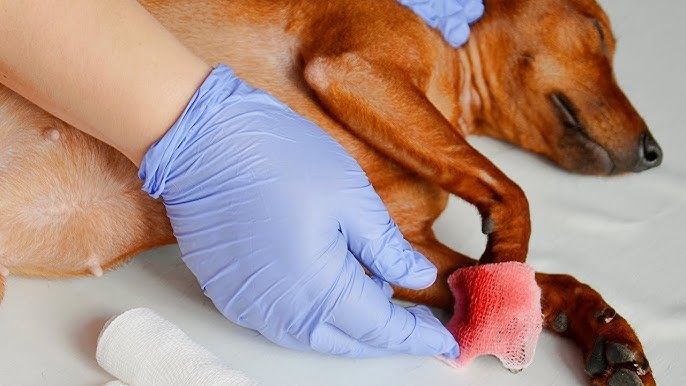
Every dog parent eventually faces the dreaded scenario of clipping a claw too close to the sensitive inner tissue.
According to the American Kennel Club, the short answer is that a healthy dog will not bleed to death from a nicked nail quick.
The blood vessels inside the claw are highly localized, meaning the body’s natural clotting mechanisms will eventually halt the flow of blood.
However, the experience is highly distressing for both you and your pet because the quick is packed with rich blood vessels and highly sensitive nerve endings.
This injury typically occurs when owners use traditional metal clippers that crush the nail, making it incredibly difficult to see where the living tissue begins.
Small dogs are especially vulnerable to pain during these sessions, and owners often wonder will a dog bleed to death from a cut quick when they see bright red blood pooling on the kitchen floor.
While the blood loss itself is rarely life-threatening, it causes immediate, sharp pain that can ruin your dog’s trust in grooming forever.
The bleeding happens immediately because the blood pressure inside the claw is surprisingly high, forcing blood out of the wound rapidly.
Most minor cuts will stop bleeding within ten to fifteen minutes once a natural clot forms over the damaged blood vessels.
Veterinarians emphasize that while a healthy dog’s liver produces clotting factors to resolve this, dogs with underlying bleeding disorders may need professional medical attention.
If you accidentally cut the quick, your first step is to remain completely calm to avoid elevating your dog’s blood pressure and anxiety.
You should immediately apply firm, direct pressure to the tip of the bleeding claw using a clean cloth, tissue, or paper towel.
Keep this pressure applied constantly for at least three to five full minutes without lifting the cloth to check if the bleeding has stopped.
If you have styptic powder or cornstarch nearby, press a generous pinch of the powder directly onto the wet wound to help form an instant plug.
In cases where you do not have styptic powder, some owners mistakenly try applying hydrogen peroxide on dog nail quick cut, but veterinarians advise against this as it can delay healing and cause intense stinging.
Keep your dog resting quietly on a comfortable surface for at least thirty minutes after the bleeding stops to ensure the delicate clot does not break open.
If the claw continues to bleed heavily after twenty minutes of continuous pressure, you should contact your local veterinary clinic for guidance.
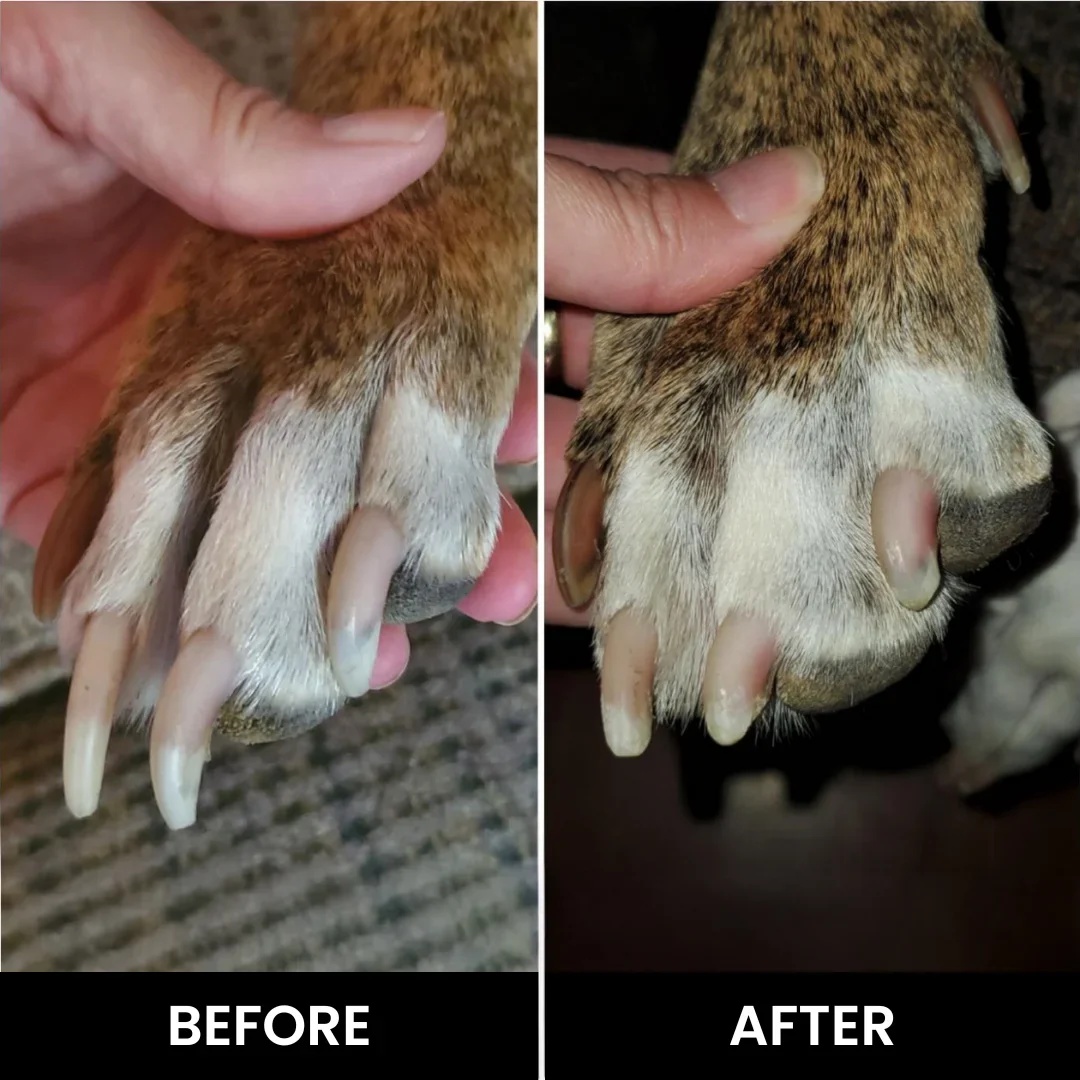
To avoid these stressful situations entirely, we recommend transitioning to a gentle grinding method that files the claw down safely without sudden cutting forces.
If you want to handle this safely at home, the Zenpaw Maxpro Grinder provides painless, quiet filing — explore it here.
99-Day 100% Money-Back Guarantee
“Ever since we started using the Zenpaw Maxpro Grinder, it’s been such a peaceful experience. It’s very quiet, and my dog actually relaxes. It’s turned our stressful sessions into quick, quiet grooming times.”
— Sarah M. | ✔ Verified Customer
- ✓ Prevents Infection & Splitting
- ✓ Ideal for All Dog Sizes
- ✓ Low-Vibration Technology
- ✓ Fast 2-7 Days Delivery
Need Support? Call 302-307-1000
The Physiology of the Canine Quick: Why Nail Bleeding Looks So Alarming
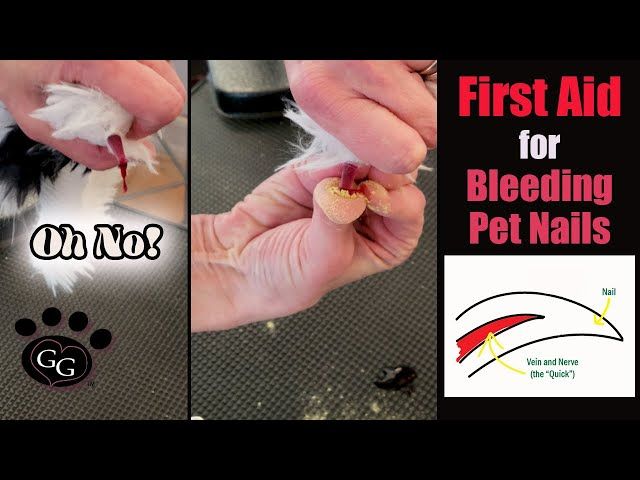
To understand why a nail injury looks like a major medical emergency, we must examine the internal anatomy of a dog’s claw.
The outer shell of the claw consists of hard keratin, which protects the delicate living tissue inside known as the quick.
The quick is directly connected to the digital bone of the paw, making it an extension of your dog’s skeletal and circulatory systems.
It contains a dense network of microscopic capillaries and highly sensitive pain receptors that trigger immediate withdrawal reflexes when damaged.
Because these capillaries are fed directly by the digital arteries, any nick to the tissue results in immediate, bright red arterial bleeding.
This blood often spreads quickly across floors, making the total blood loss appear far greater than it actually is in reality.
Unlike human nails, which are flat and separate from our blood supply, canine claws grow in a conical shape around this active blood flow.
As a dog’s claws grow longer, the quick also stretches outward, making long-neglected nails much harder to trim safely.
Understanding this anatomy is crucial when evaluating cutting vs grinding dog nails for your home grooming routine.
When you use traditional clippers, the metal blades squeeze and crush the hard keratin shell before making the cut.
This sudden pressure can splinter the nail, exposing the sensitive quick even if you do not cut it directly.
Our team at Zenpaw designed the Maxpro Grinder to bypass this crushing force entirely by gently wearing down the keratin layer by layer.
This gradual filing action allows you to see the dark dot of the approaching quick, giving you ample time to stop before causing pain.
Can Dogs Bleed Out from Their Nails? Debunking the Myth with Veterinary Science
Many pet parents experience severe anxiety during grooming because they wonder: can dogs bleed out from their nails during an accidental cut?
From a clinical perspective, it is virtually impossible for a healthy dog to bleed to death from a damaged claw.
The canine body possesses an incredibly efficient vascular system that initiates a process called hemostasis immediately after an injury occurs.
When a blood vessel inside the quick is severed, the surrounding tissue immediately constricts to reduce the overall blood flow.
Platelets in the blood then rush to the site of the injury, sticking together to form a temporary plug within seconds.
Finally, clotting factors in the plasma bind this plug with fibrin, creating a stable scab that seals the blood vessel permanently.
While this process is highly effective, certain factors can delay clotting, leading to prolonged bleeding that terrifies owners.
For example, if your dog is highly anxious, their elevated heart rate and blood pressure will continually push blood past the forming clot.
Additionally, dogs suffering from hereditary bleeding disorders, such as Von Willebrand’s Disease, lack the proteins needed to form a stable clot.
If you own a breed prone to these disorders, such as Dobermans or German Shepherds, you must take extra precautions during nail maintenance.
Furthermore, small toy breeds have a much lower total blood volume, meaning even minor blood loss requires careful monitoring for signs of lethargy.
To keep your pet safe and calm, some owners build a diy dog nail file board to let dogs file their own nails naturally through scratch play.
However, a specialized tool like the Zenpaw Maxpro Grinder remains the most precise way to maintain a safe claw length without any risk of sudden, deep cuts.
Restoring Calm: A Step-by-Step Guide to Stress-Free Nail Maintenance
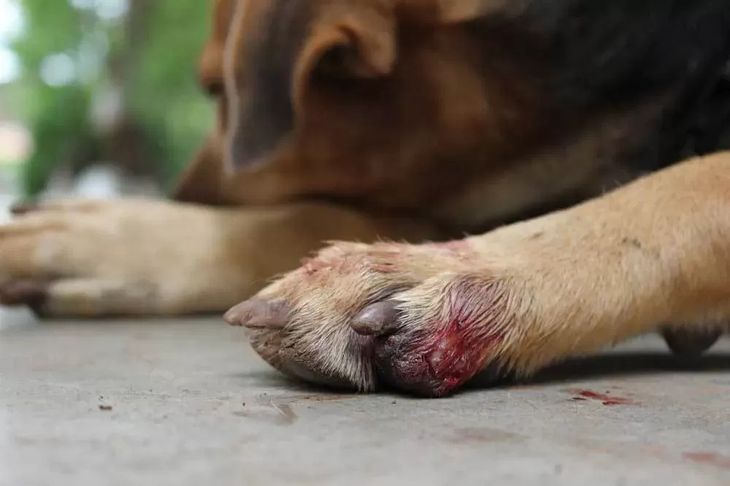
The secret to avoiding claw injuries is transforming the grooming session from a high-stress battle into a relaxed bonding ritual.
Many dogs develop intense fears of grooming tools due to past trauma from painful clipper cuts that nipped their sensitive quicks.
To overcome this fear, you must practice a systematic desensitization process to build new, positive associations with the tool.
We recommend learning how to get a dog used to a nail grinder by breaking the introduction down into small, rewarding steps over several days.
Begin by letting your dog sniff the turned-off grinder while feeding them high-value treats like chicken or peanut butter.
Next, turn the grinder on its lowest speed at a distance, allowing your dog to hear the soft, whisper-quiet motor hum under forty decibels.
Gradually bring the vibrating tool closer to their paws over multiple sessions, rewarding them constantly for remaining calm and relaxed.
If you have a particularly squirmy or large breed, you might consider using a large dog sling for nail trimming to keep them safely suspended and still during the session.
Once your dog is comfortable, gently hold a single toe and press the grinding wheel against the tip of the claw at a precise forty-five-degree angle.
Use short, gentle touches lasting only two to three seconds per nail to prevent friction heat from building up in the sensitive quick.
Always work in a well-lit area so you can easily spot the changing color of the nail’s core as you approach the living tissue.
By taking your time and using a quiet, gentle tool, you can maintain perfectly groomed paws without ever risking a painful bleeding incident.
Why Traditional Clippers Fail: The Hidden Risks of Squeezing and Splintering
Many pet parents do not realize that traditional scissor-style clippers act like miniature guillotines on a dog’s sensitive claws.
These clippers apply immense, concentrated pressure from both sides of the nail before the blade finally cuts through the keratin.
This crushing action causes microscopic fractures along the nail shaft, which can lead to painful splintering and uneven wear.
Even worse, if your dog flinches at the exact second you squeeze the handles, the blades can easily slice deep into the quick.
This sudden, sharp pain is the primary reason why so many dogs become aggressively resistant to paw handling and grooming sessions.
Rushing through the process out of frustration only increases the risk of making a serious mistake that leads to heavy bleeding.
In contrast, the Zenpaw Maxpro Grinder operates with a high-speed, diamond bit wheel that gently sands the nail down smoothly.
This rotational filing action eliminates all crushing forces, ensuring the structural integrity of the keratin remains intact.
Because the filing process is gradual, you maintain absolute control over the exact amount of nail material you remove in each pass.
Our whisper-quiet motor operates below forty decibels, which prevents the acoustic startle reflex that causes dogs to jerk their paws away.
By replacing the sudden, violent clip with a smooth, controlled file, you protect your dog from the trauma of a bleeding claw.
Is the Zenpaw Maxpro Grinder safe for large, heavy-clawed dogs?
Yes, the Zenpaw Maxpro is engineered to handle claws of all thicknesses, from tiny puppy nails to heavy, dense adult claws.
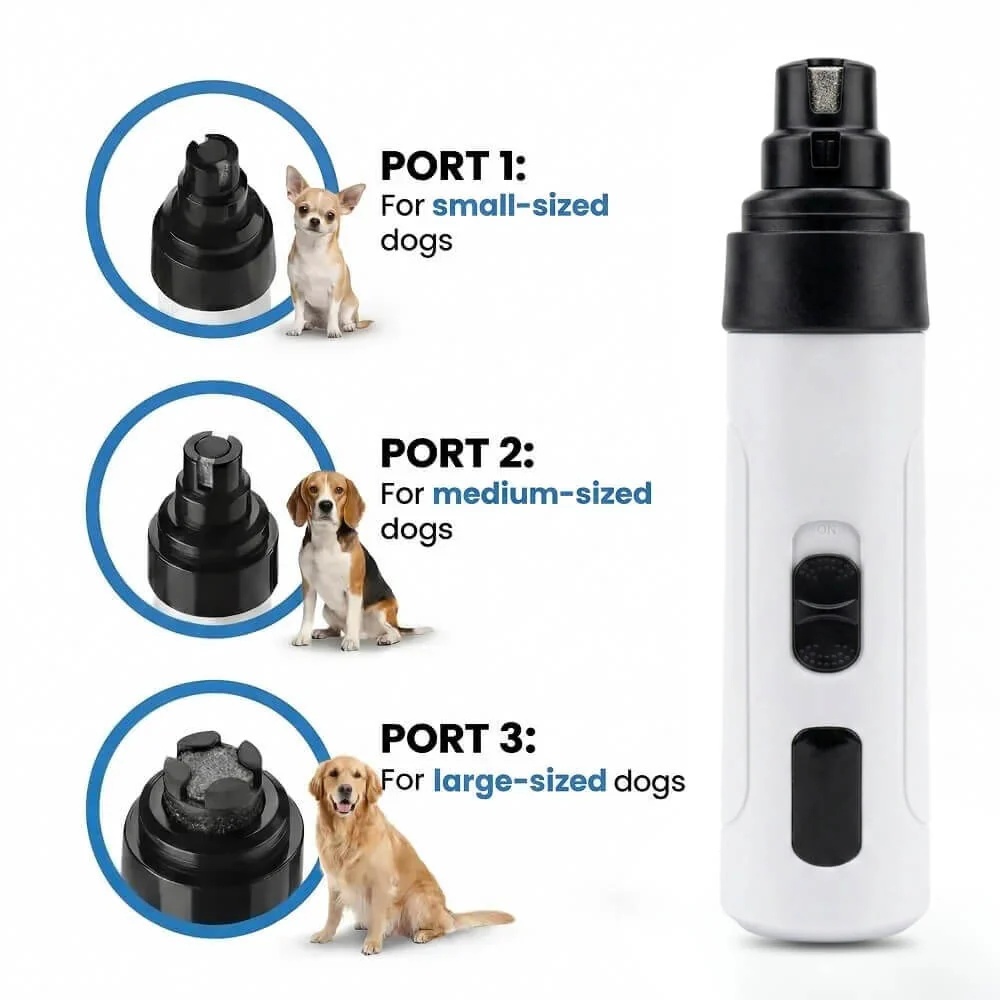
The safety guard features three distinct ports designed to accommodate different dog sizes and claw shapes safely.
The small and medium ports are perfect for directing thin claws precisely against the grinding wheel without slipping.
For large dogs, you can easily remove the safety cap to expose the entire grinding wheel for efficient filing of thick keratin.
Our high-torque motor maintains stable rotational speeds even when applying gentle pressure to the toughest, most stubborn claws.
How long does the battery last on a single charge?
The Zenpaw Maxpro features a premium lithium-ion battery that delivers up to seven full hours of continuous grooming time.
This exceptional battery life means you can complete multiple grooming sessions over several months without needing a recharge.
The device is fully rechargeable via a universal USB cable, allowing you to charge it using a phone adapter, laptop, or power bank.
A full charge cycle takes less than two hours, ensuring your grooming tool is always ready whenever your dog is relaxed.
An integrated LED indicator light lets you know the exact battery status so you are never caught without power mid-session.
Which speed setting should I use for my anxious pet?
We recommend starting all grooming sessions on the low-speed setting to let your dog adapt to the mild vibration.
The low-speed setting is perfect for precise touch-ups, smoothing rough edges, and working on small or highly sensitive claws.
Once your pet is completely comfortable with the sensation, you can click the power button to transition to the high-speed setting.
The high-speed setting provides the extra power needed to quickly file down thick claws on larger, more active breeds.
Always let your dog’s comfort level guide your speed adjustments, returning to the lower speed if they show any signs of tension.
Does the grinding head get hot during extended grooming sessions?
No, the Zenpaw Maxpro utilizes advanced low-heat technology to keep the grinding wheel cool to the touch throughout your session.
Traditional high-vibration rotary tools can generate intense friction heat that causes a painful burning sensation on the nail.
Our custom-engineered diamond bit wheel dissipates heat rapidly, protecting the sensitive nerve endings inside the living quick.
However, as a professional best practice, you should still avoid holding the grinding wheel against a single nail for more than three seconds.
Alternating between different claws allows any minor friction heat to cool down completely, ensuring a painless experience for your dog.
Conclusion: Safer Grooming Starts Today
Grooming your dog’s nails does not have to be a stressful battle filled with fear and accidental injuries.
Ready to transform nail trimming from a battle into a breeze? Explore the Zenpaw Maxpro 3-in-1 Grinder. Call: 302-307-1000 — our team can help you advise on the best grooming practices and help with any product questions.
Note: Individual results may vary depending on individual dog breeds, nail thickness, and behavioral temperaments. This article is intended for general pet grooming reference purposes only and does not replace professional veterinary advice.