
I still remember the absolute panic of my first grooming mishap when my sweet Golden Retriever yelped and I saw my cut dog’s toenails bleeding all over the kitchen floor. It broke my heart to see her in pain over a simple nail trim, and I knew I had to find a safer, stress-free way to support her paw health without the constant fear of sharp clippers.
Maxpro 3-in-1 Grinder.
Stress-Free Nail Trimming.
Whisper-quiet DC motor (<40 dB) eliminates fear & discomfort. Features 3 ports, dual speeds, and 7-hour battery life. Safe, precise, and painless.
In This Article
- Understand how to immediately resolve emergency bleeding at home with simple remedies.
- Explore the biological structure of the canine quick to avoid future painful groom sessions.
- Identify the hidden boundary on dark nails using professional groomer visual cues.
- Learn how to gently introduce a quiet, stress-free diamond bit nail grinder.
- Avoid common grooming mistakes like structural crushing and friction heat buildup.
What Should You Do When a Cut Dog’s Toenails Bleeding Emergency Happens?
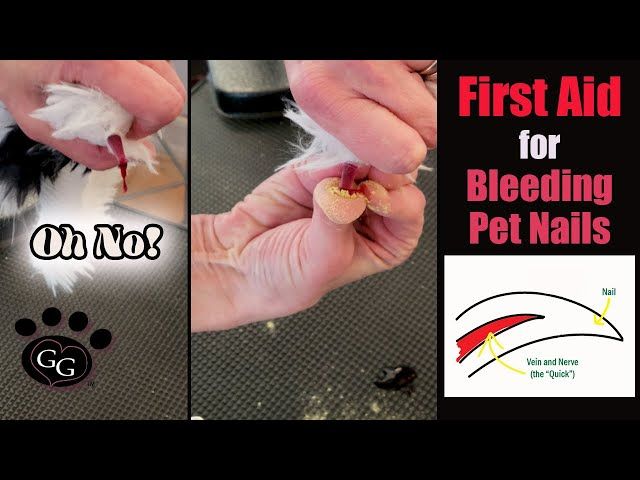
Experiencing a sudden grooming accident at home can instantly shatter your confidence as a pet parent.
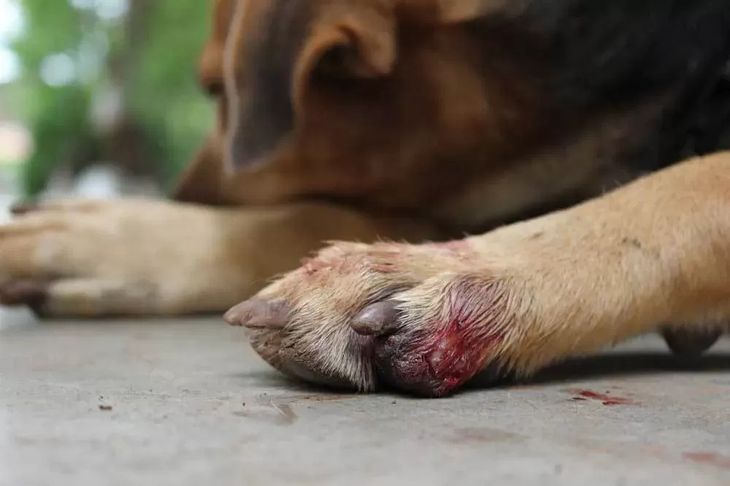
It is a common crisis that occurs when a sharp metal clipper accidentally slices into the highly sensitive quick.
This vascular zone is packed with nerve endings and blood vessels that bleed heavily when severed.
Many pet parents find themselves completely unprepared when a cut dog’s toenails bleeding emergency happens in their living room.
Knowing exactly how to respond within the first ten seconds is crucial to protect your dog’s physical and emotional health.
This accident typically happens because dog nails do not have a uniform structure, making the quick highly unpredictable.
The primary goal of first aid is to restrict blood flow by promoting rapid coagulation at the wound site.
You must act as the calm leader because your dog can easily sense your anxiety and mirror your panic.
When your dog’s heart rate spikes, their blood pressure rises, which makes the bleeding much harder to stop.
Having a dedicated pet first-aid kit nearby ensures you never have to hunt for supplies while holding a bleeding paw.
Every pet parent should understand how to stop a dogs nail from bleeding at home with immediate, practical steps.
To resolve the bleeding instantly, you should follow a simple but comprehensive protocol.
First, gently wrap a clean piece of gauze or a soft paper towel around the affected paw.
Apply steady, firm pressure directly to the tip of the bleeding nailbed for at least two full minutes.
Refrain from lifting the cloth to check the progress, as this sudden movement will tear the fragile, newly formed clot.
Next, scoop a generous amount of professional styptic powder or a homemade cornstarch paste onto your finger.
Press the powder firmly into the exposed tip of the nail and hold it there for thirty seconds.
The active chemical compounds in professional styptic powder work to constrict local blood vessels almost instantly.
Once the flow has stopped, keep your dog resting in a quiet, carpeted area for at least one hour.
Avoid letting them run, jump, or play outside on hard pavement where the clot could easily scrape off.
If you want to handle this safely at home, the Zenpaw Maxpro Grinder provides painless, quiet filing — explore it here.
99-Day 100% Money-Back Guarantee
“Ever since we started using the Zenpaw Maxpro Grinder, it’s been such a peaceful experience. It’s very quiet, and my dog actually relaxes. It’s turned our stressful sessions into quick, quiet grooming times.”
— Sarah M. | ✔ Verified Customer
- ✓ Prevents Infection & Splitting
- ✓ Ideal for All Dog Sizes
- ✓ Low-Vibration Technology
- ✓ Fast 2-7 Days Delivery
Need Support? Call 302-307-1000
The Biology of the Canine Quick: Why Dog Nail Bleeding After Trimming Happens
Understanding Canine Nail Anatomy: Where Is the Blood Vessel?
To prevent future accidents, we must dive deep into the biological structure of a dog’s claw.
Unlike human nails, which are flat and lack internal blood vessels, dog nails are complex, three-dimensional structures.
The outer layer consists of a hard, protective sheath made of alpha-keratin.
Beneath this tough exterior lies the quick, which is technically known as the ungual dermis.
The quick is directly connected to the distal phalanx, which is the last bone in your dog’s toe.
This means that the quick is a living extension of your dog’s skeletal and vascular systems.
It contains a rich network of capillaries that supply oxygenated blood to support healthy nail growth.
It also houses highly sensitive pain receptors that detect pressure, temperature, and spatial positioning.
When a sharp metal blade cuts through this living tissue, the pain is sharp, sudden, and memorable.
This painful experience can trigger a long-term fear response, causing your dog to fight future grooming sessions.
Understanding this intricate anatomy is the key to learning how to stop my dogs nails from bleeding permanently.
By choosing a gradual filing method, you can gently wear down the keratin without ever touching the ungual dermis.
This protective approach allows the quick to naturally recede deeper into the nail over several weeks.
Regular, micro-trimming sessions encourage the blood vessels to shorten, making future trims much safer.
Left untreated, overgrown claws alter the angle at which your dog’s paws meet the ground.
This poor alignment places unnatural stress on their wrists, elbows, and hip joints.
Over time, chronic nail overgrowth can contribute to early-onset arthritis and spinal alignment issues.
Keeping the nails trimmed short is not just an aesthetic choice but a clinical health requirement.
By understanding the physical connection between the claw and the skeleton, you can prioritize safer grooming.
How to Safely Identify the Quick in Light vs. Dark Nails
The color of your dog’s nails is determined by melanin levels in their skin and coat.
If your dog has white or light-colored claws, you have a significant advantage during grooming.
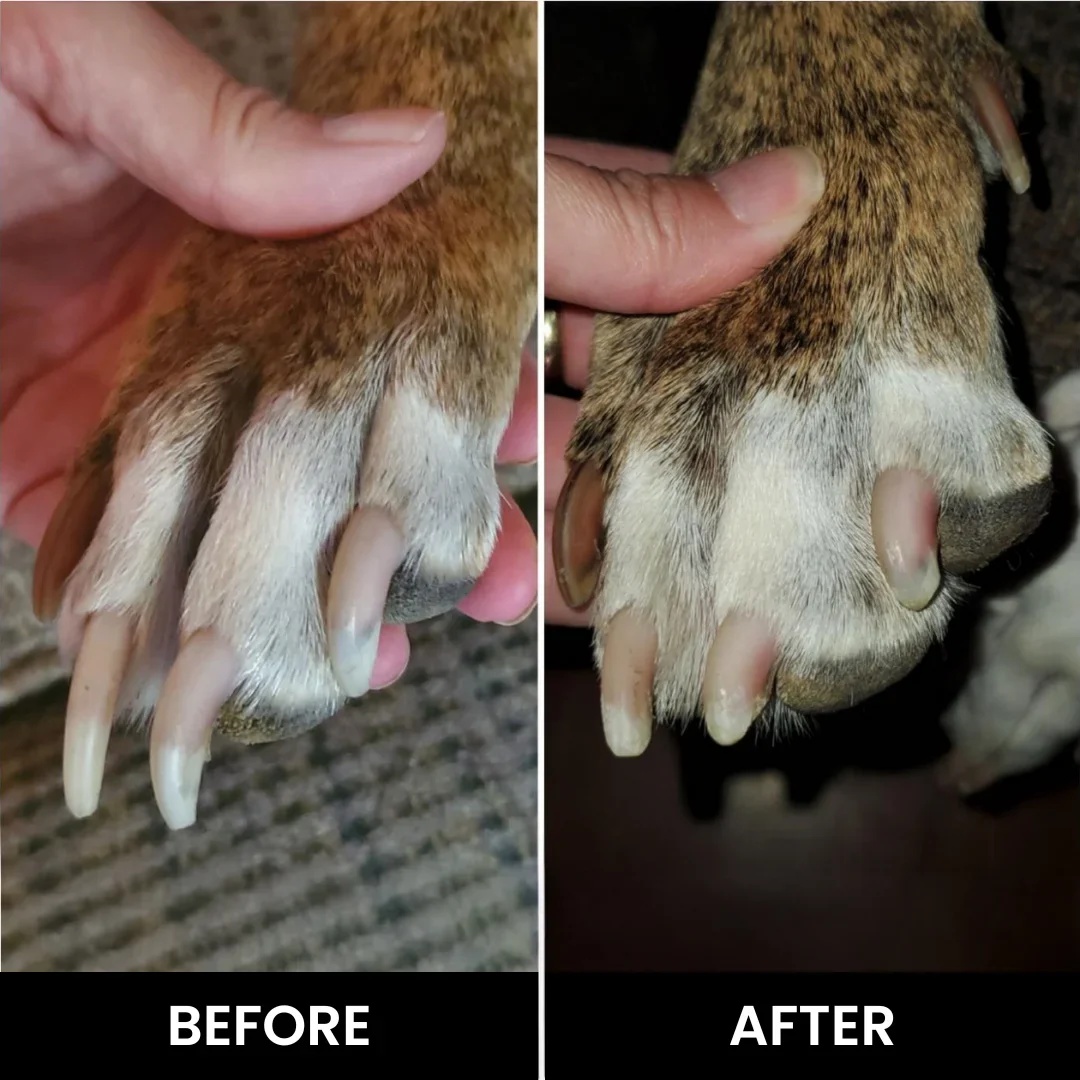
You can easily spot the quick by looking for the distinct pink zone inside the semi-translucent shell.
This pink color is the actual blood flowing through the capillaries of the quick.
When trimming light nails, you should always leave at least two millimeters of space before the pink zone.
However, black or dark nails require an entirely different approach because the melanin hides the blood vessel.
You cannot see the pink quick from the outside, which makes traditional clippers extremely risky to use.
To learn how to safely clip a dog’s nails when they are dark, you must work in tiny increments.
After each small cut or grind, examine the very center of the cut surface head-on.
At first, the cut area will look chalky, white, and completely dry.
As you get closer to the quick, the center of the nail will turn into a small, pale grey circle.
If you proceed further, this grey circle will transform into a distinct, moist black or dark-colored dot.
This dark dot is the outer protective wall of the blood vessel.
The moment you see this dark dot, you must stop immediately to avoid causing a bleeding injury.
A precision grinder is the safest tool for this delicate work because it removes tissue in micro-layers.
Many professional groomers use a small, bright flashlight to shine through the nail from behind.
This illumination technique is called candling and can reveal the quick in moderately dark claws.
However, for solid black, thick nails, candling is often ineffective.
In these challenging scenarios, gradual grinding remains the absolute safest path forward.
Step-By-Step Prevention: Transitioning Away From Dangerous Clippers
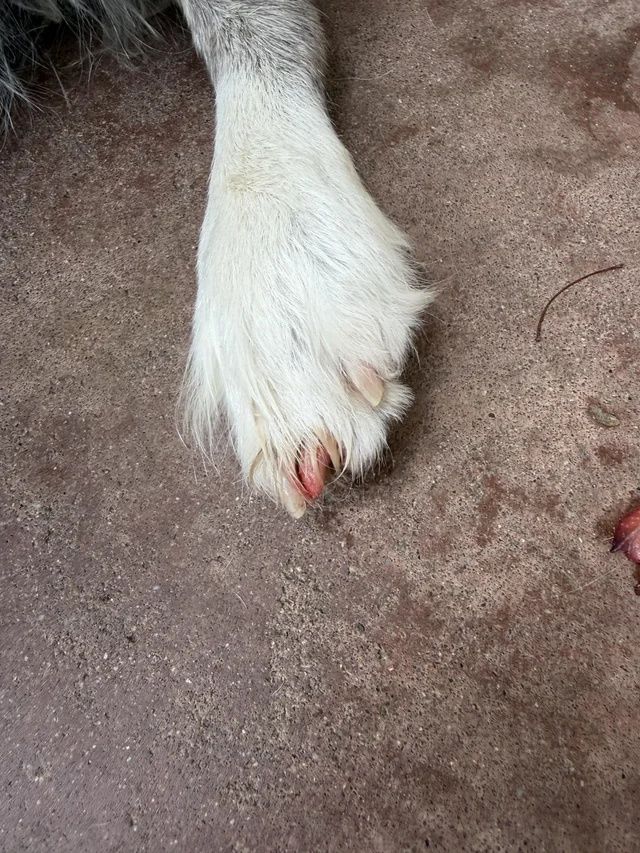
The Quick Guide to Immediate First Aid for Nail Bleeding
When a grooming session goes wrong, you must act with confidence and use the right tools.
Many pet parents do not realize that simple household ingredients can serve as emergency clotting agents.
Knowing which remedy to choose can save your pet from a stressful, expensive trip to the emergency clinic.
Let us compare the most common first-aid remedies for dog nail bleeding after cutting.
| Clotting Remedy | Average Clotting Time | Best Use Case |
|---|---|---|
| Styptic Powder | 10 to 30 Seconds | Severe bleeding, immediate professional-grade coagulation. |
| Cornstarch Paste | 2 to 4 Minutes | Safe home alternative, easy to apply in standard households. |
| Mild Bar Soap | 3 to 5 Minutes | Minor oozing, creates a quick mechanical plug over the nail. |
Styptic powder remains the gold standard because it contains benzocaine and ferric subsulfate.
The ferric subsulfate acts as a powerful hemostatic agent that rapidly coagulates blood proteins.
The benzocaine provides mild local anesthesia to numb the throbbing pain of the cut quick.
If you use cornstarch, always pack it tightly against the wound to form a physical barrier.
You can also use a clean bar of mild soap by gently pressing the bleeding nail directly into it.
The soap will plug the vascular opening and stop the flow of blood within a few minutes.
Always clean the paw thoroughly with warm water once the clot has fully cured.
How to Introduce the Zenpaw Maxpro Grinder to Your Anxious Dog
Transitioning from scary clippers to a high-quality grinder requires a thoughtful approach.
You cannot expect an anxious dog to accept a vibrating tool on their paws immediately.
Desensitization is a scientifically proven process that rewires your dog’s emotional response.
Many owners fail because they try to complete a full trim on the very first day.
When clipping dogs nails at home, patience is your most valuable asset.
On day one, simply let your dog inspect the Zenpaw Maxpro Grinder while it is turned off.
Reward their curiosity with delicious, high-value treats like chicken or peanut butter.
On day two, turn the grinder on at its lowest speed while holding it a few feet away.
Our whisper-quiet motor keeps the sound under 40 decibels, which is barely audible to sensitive ears.
This ultra-low noise level prevents the sudden acoustic shock that triggers a dog’s flight response.
On day three, touch the vibrating handle of the grinder to your dog’s leg without grinding.
This helps them adapt to the physical sensation of the mild vibration without fear.
Finally, on day four, gently touch the rotating diamond bit to a single nail for just one second.
Always use a 45-degree angle to match the natural growth curve of the canine claw.
Treat them immediately after each successful touch to solidify the positive association.
Always remember that forcing a dog through a stressful grooming session ruins their trust.
It is far better to trim just one nail per day with positive rewards than to rush.
Slow and steady progress ensures your dog remains calm and cooperative for years to come.
Team Zenpaw designed the Maxpro model specifically to turn this chore into a peaceful bonding moment.
How Proper Posture and Grip Protect Your Dog’s Paws
The way you physically hold your dog’s paw affects their comfort and safety.
Never pull your dog’s leg outward or backward in an unnatural skeletal position.
This awkward pulling can strain their shoulder and elbow joints, causing them to struggle.
Instead, sit beside your dog and gently bend their paw naturally backward at the wrist.
Hold each individual toe securely between your thumb and forefinger to stabilize the nail.
This firm but gentle grip prevents sudden jerking motions that could lead to accidents.
It also isolates the specific nail you are grinding, protecting the surrounding paw pad from friction.
Why Traditional Clippers Fail and Cause Bleeding Disasters
The Crushing Effect of Dull Guillotine Clippers
Traditional scissor and guillotine clippers are inherently flawed in their mechanical design.
They work by applying lateral force to squeeze and sever the hard keratin sheath.
If you search for the best pet nail clippers, you will see many scissor styles.
However, even brand-new clippers compress the entire nail structure before the blade cuts through.
This intense compression forces the sensitive quick to pinch, causing immediate pain.
It also creates microscopic fractures in the nail plate that lead to peeling and splitting later.
In contrast, a diamond-grit grinding wheel gently files the nail down in micro-layers.
There is absolutely no squeezing, no crushing, and no painful structural pressure.
This smooth process makes it virtually impossible to accidentally slice off the entire quick at once.
You retain complete control over the speed and depth of the trim throughout the session.
When a nail is violently crushed, the microscopic cracks can harbor moisture and bacteria.
This moisture buildup can lead to painful fungal or bacterial infections in the nail bed.
Many vets report seeing dogs with painful, infected split nails caused by dull clippers.
Transitioning to a high-speed diamond grinder prevents these structural fractures entirely.
The Danger of Rushing and Overheating
Rushing through a nail trim is the leading cause of painful grooming accidents.
When you are in a hurry, you cannot carefully inspect the cut surface for the quick’s dark dot.
However, using a grinder incorrectly can also present specific risks if you are not careful.
Holding the rotating bit against a single nail for too long creates friction heat.
This heat transfers through the keratin and can burn the sensitive nerve endings inside.
Your dog will react to this heat buildup by pulling their paw away sharply.
To avoid thermal discomfort, you should always use the “two-second rule.”
Apply the grinding wheel to the nail in short, gentle pulses rather than steady, heavy pressure.
Move systematically from one nail to the next to allow each claw to cool down.
The Zenpaw Maxpro utilizes advanced low-heat technology to minimize friction and protect sensitive paws.
If your dog flinches, it is often a reaction to heat rather than actual physical pain.
Checking the nail temperature with your own finger can help you monitor the session safely.
If the nail feels warm to the touch, pause the process for a few seconds.
Our specialized grinding wheel cools rapidly to keep the experience completely painless.
If you ever find yourself struggling with a cut dog nail and bleeding paw, you know how stressful it is.
Frequently Asked Questions About Dog Toenail Care
Standard nail care is a critical element of long-term canine wellness and joint health.
Many pet parents have specific questions about using our advanced grooming tools at home.
Here are the direct answers to the most common questions we receive from our community.
Is the Zenpaw Grinder safe for large dogs?
Yes, the Zenpaw Maxpro is engineered to support dogs of all breeds and sizes.
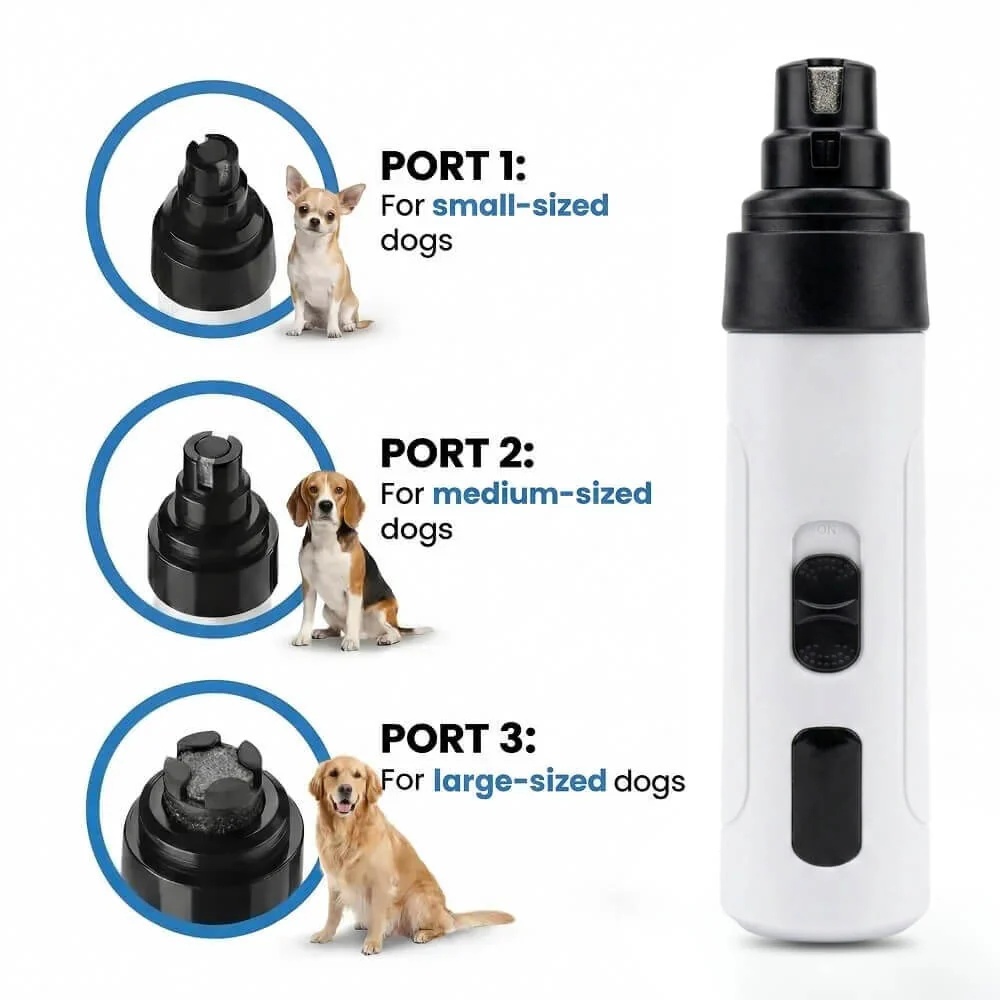
The protective safety cap features three distinct ports to accommodate different nail diameters.
Port one is a small opening designed for puppies and tiny toy breeds.
Port two is a medium opening that perfectly fits medium-sized breeds like Beagles or Spaniels.
Port three involves removing the safety cap entirely to expose the entire rotating diamond bit.
This open-face configuration easily grinds down the thickest claws of massive breeds like Great Danes or Mastiffs.
How long does the battery last on a single charge?
The grinder is equipped with a premium, long-lasting lithium-ion battery.
It provides up to seven hours of continuous runtime on a single charge.
Since a typical grooming session takes less than ten minutes, one charge can last for months.
The package includes a universal USB charging cable for easy recharging anywhere.
You can conveniently plug it into your phone charger, laptop, or power bank.
Which speed setting is best for my dog’s nails?
The Zenpaw Maxpro features two adjustable speed settings to give you maximum control.
The low-speed setting operates at a gentle RPM, which is perfect for fine adjustments.
We highly recommend using the low speed when first introducing the tool to your dog.
The high-speed setting provides extra torque to power through thick, dense claws.
You can easily switch between speeds with a simple slide of the thumb switch.
Does the grinding wheel get hot during use?
Standard grinders with sandpaper bands generate rapid heat that can burn your dog’s paws.
The Zenpaw Maxpro uses a professional brass-plated diamond drum bit instead.
This advanced material naturally dissipates heat and resists wearing down over time.
Our low-heat motor technology further reduces friction and thermal transfer during operation.
Your dog’s safety and physical comfort remain our top engineering priorities.
Conclusion
Ready to transform nail trimming from a battle into a breeze?
Explore the Zenpaw Maxpro 3-in-1 Grinder.
Call: 302-307-1000 — our team can help you advise on the best grooming practices and help with any product questions.
Note: Individual results may vary depending on individual dog breeds, nail thickness, and behavioral temperaments. This article is intended for general pet grooming reference purposes only and does not replace professional veterinary advice.