
I remember the panic when my senior rescue dog, Barnaby, began limping because his dewclaw had curled into a tight, painful circle, nearly piercing his paw pad. I was terrified that learning how to cut curled dog nails at home would cause a bloody accident. That stressful night inspired our team to design the Zenpaw Maxpro Grinder, a whisper-quiet solution to restore your dog’s paw health safely and painlessly.
Maxpro 3-in-1 Grinder.
Stress-Free Nail Trimming.
Whisper-quiet DC motor (<40 dB) eliminates fear & discomfort. Features 3 ports, dual speeds, and 7-hour battery life. Safe, precise, and painless.
In This Article
- Step-by-Step Instructions: Safe home grooming protocols for tightly curled claws.
- Anatomy Deep-Dive: Pinpointing the sensitive live quick in overgrown and curled nails.
- Orthopedic Impact: How circular claws disrupt canine skeleton alignment and paw health.
- Anxiety Management: Step-by-step counter-conditioning techniques for fearful dogs.
How to Safely Groom Curled Dog Nails: A Complete Step-by-Step Guide
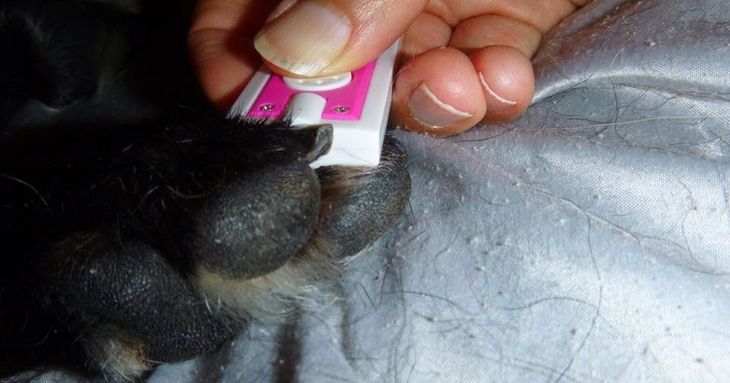
To safely manage overgrown, circular claws at home, you must prepare the correct set of specialized tools first.
Never rush into trimming a heavily curved nail with standard, thick clippers that can crush the keratin structure.
You will need thin-bladed bypass clippers, a whisper-quiet nail grinder, styptic powder, and high-value treats.
Make sure you work in a highly illuminated environment so you can continuously monitor the delicate internal blood vessels.
-
Step 1: Carefully Inspect the Curled Claw and Map the Quick
Before any physical cutting begins, hold your dog’s paw firmly and shine a bright light directly through the side of the nail.
This allows you to locate the pink, vascular quick that runs through the core of light-colored nails.
For dark, black claws, look closely at the hollow, chalky underside of the curve to identify where the solid nail begins.
If the nail has curled so tightly that it is touching the skin, identify the exact point of contact without pulling the toe.
This detailed inspection prevents accidental cuts to the sensitive nerves and blood vessels hiding inside the loop.
-
Step 2: Create a Calm, Comfortable, and Secure Grooming Station
Choose a quiet, draft-free room where your dog naturally feels safe and completely relaxed.
You can enlist a partner to gently feed lickable treats like peanut butter while you hold the paw.
If your dog is highly anxious or wriggly, you can utilize a hanging dog nail trim bag to keep them safely stabilized.
Ensure that the holding method never compresses their chest or induces any feeling of trapped panic.
Speak in soft, low tones to maintain a peaceful atmosphere throughout the entire preparation process.
-
Step 3: Perform the Initial Tension-Relieving Safety Snip
Hold the toe securely between your fingers to isolate the curled nail from the surrounding fur.
Slide the thin blade of your bypass clippers carefully under the outer, dead tip of the circular curve.
Make a single, quick, clean cut to remove the very end of the hook and relieve pressure from the skin.
Never attempt to chop off the entire overgrown loop in one giant cut, which can violently shatter the nail.
This initial tension relief creates the necessary space to use your primary finishing tools safely.
-
Step 4: Gradually Grind Down the Rest of the Keratin Curve
Turn on your nail grinder to its lowest speed and let your dog adjust to the soft humming sound.
Hold the rotating grinding wheel at a precise 45-degree angle against the freshly snipped edge of the nail.
Apply extremely light pressure and sweep the wheel across the tip in short, two-second intervals.
This intermittent contact prevents heat from building up and hurting the sensitive underlying nailbed.
Stop grinding immediately when you see a small, dark, moist circle appearing in the center of the cut area.
-
Step 5: Inspect the Surrounding Paw Pad and Give Abundant Rewards
Gently wipe the groomed paw with a clean, damp cloth to clear away the fine white nail dust.
Inspect the pad beneath the curled claw to ensure the skin is intact, healthy, and completely uninjured.
Immediately give your dog their absolute favorite high-value treat to reward their calm cooperation.
Enthusiastic praise helps build a positive, happy association with the grooming routine over time.
Allow your dog to rest comfortably before attempting to address any other overgrown claws on their paws.
To make this delicate process as safe and stress-free as possible, Team Zenpaw engineered the Maxpro Grinder with absolute precision in mind.
Its whisper-quiet motor keeps your anxious pet completely at ease while you work around sensitive paw pads.
You can discover how to transform your home grooming sessions by visiting the Zenpaw Maxpro 3-in-1 Grinder page today.
99-Day 100% Money-Back Guarantee
“Ever since we started using the Zenpaw Maxpro Grinder, it’s been such a peaceful experience. It’s very quiet, and my dog actually relaxes. It’s turned our stressful sessions into quick, quiet grooming times.”
— Sarah M. | ✔ Verified Customer
- ✓ Prevents Infection & Splitting
- ✓ Ideal for All Dog Sizes
- ✓ Low-Vibration Technology
- ✓ Fast 2-7 Days Delivery
Need Support? Call 302-307-1000
Understanding Canine Nail Anatomy: Where is the Quick on Curled Nails?
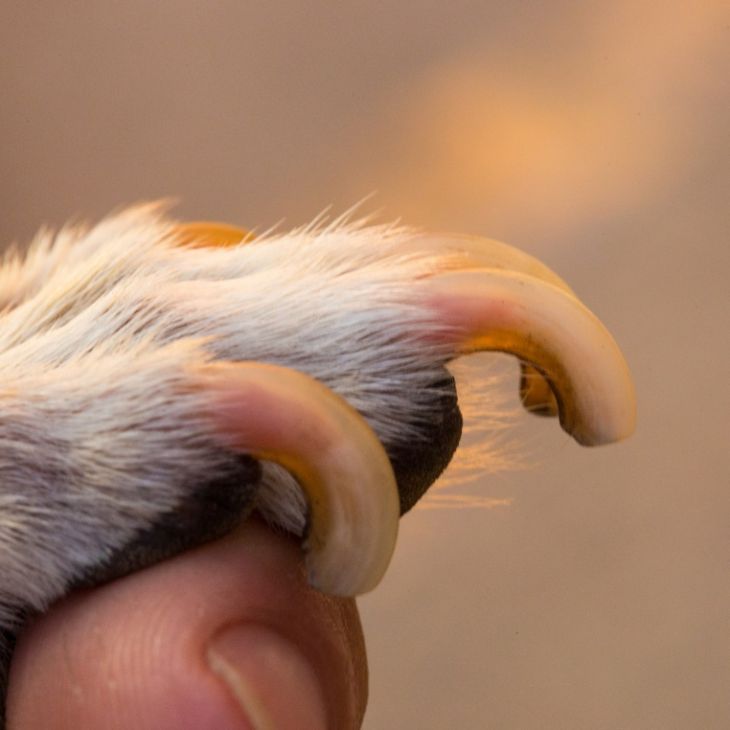
To safely manage overgrown, circular claws, you must first understand the biology of how a dog’s nail grows over time.
Every claw is composed of an outer sheath made of tough, protective keratin, which shields the sensitive inner pulp.
The inner core is called the quick, which contains live nerves and an active network of tiny blood vessels.
When a dog’s claw is left untrimmed, the quick grows progressively longer alongside the hard outer keratin sheath.
This means trimming curled dog nails is highly delicate because the quick may extend almost to the tip.
If you cut straight across an overgrown nail with standard clippers, you will likely sever these highly sensitive nerves.
This can result in immediate, intense pain and heavy bleeding that can severely damage your dog’s trust in you.
According to veterinary behavior experts, a single painful clip can create a lifelong fear of having paws handled.
By utilizing a gentle grinding tool, you can slowly and safely recede the long quick over several consecutive weeks.
Regular, incremental filing encourages the blood vessel to naturally retract, allowing you to shorten the nail safely.
If your dog has already managed to injure themselves, you might find yourself dealing with a stressful dog chewed nail off scenario.
Using a smooth, controlled grinder prevents the structural vibrations that can shatter weak, brittle outer keratin walls.
The Serious Orthopedic Risks of Neglecting Overgrown Circular Claws
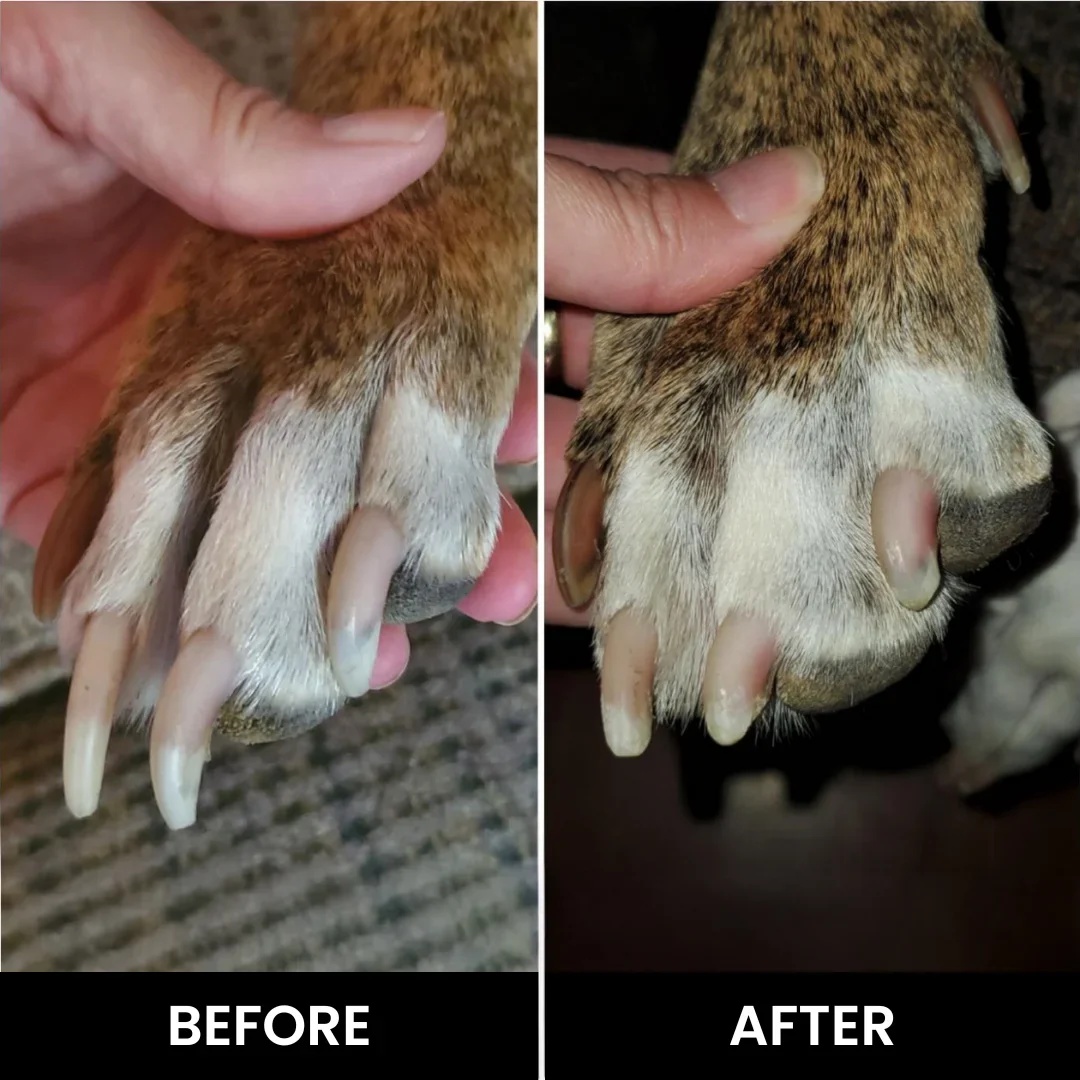
When claws are allowed to grow into a tight circle, they permanently alter the mechanics of how your dog walks.
Instead of placing weight flatly on their paw pads, the dog is forced to walk on their splayed toe bones.
This bad alignment causes their weight to shift backward, creating a highly unnatural posture across their limbs.
Over time, this continuous skeletal strain places immense pressure on their wrists, hocks, elbows, and back joints.
According to the American Kennel Club, chronic posture changes from long nails can accelerate severe canine osteoarthritis.
You might observe your pet licking or biting their paws frequently and ask, why are my dogs nails splitting so easily.
Splitting happens because the unnatural upward pressure of the floor weakens the structural integrity of the keratin.
These splits can travel high up the nail bed, exposing sensitive internal tissues to dirt, water, and debris.
In advanced cases, the sharp, circular claw will curve completely back and pierce directly into the soft paw pad.
This creates a painful puncture wound that is highly susceptible to deep, difficult-to-treat bacterial infections.
Consistently clipping circular dog claws is a crucial part of preserving your pet’s comfort, mobility, and happiness.
Trimming Overgrown Dewclaws: Managing a Common Grooming Hazard
Dewclaws are located higher up on the inside of the leg and do not make contact with the ground when walking.
Because they do not experience natural friction from pavement, they are highly prone to unchecked, rapid growth.
Dewclaws can easily curl into a complete, tight loop, making them incredibly difficult to reach with bulky tools.
Standard clippers often cannot fit inside the narrow gap between the curled claw and the sensitive skin of the leg.
To resolve this, you must learn how to cut a dogs nail that has curled without pinching the tissue.
Using a thin-tipped safety clipper or a quiet grinder allows you to work away at the tip without pulling the toe.
This careful approach minimizes the risk of tearing the delicate dewclaw skin and ensures a completely painless experience.
Desensitization and Perfect Grinding Angles for Anxious Canines

Most dogs fear nail grooming sessions because they associate the tools with loud noises, pressure, and past pain.
To overcome this deep anxiety, you must gradually desensitize your dog to the grooming equipment over time.
Start by placing your quiet nail grinder on the floor and rewarding your dog with treats for sniffing it.
Next, turn the device on its lowest speed while holding it far away, rewarding them for remaining completely calm.
Gently touch the body of the vibrating grinder to their legs to get them accustomed to the physical sensation.
When you are ready to file, make sure you hold the grinder at a precise 45-degree angle to the claw.
This specific angle follows the natural wear line of wild canines and prevents you from filing too close to the quick.
Never hold the rotating wheel on a single spot for more than two consecutive seconds to avoid friction heat.
If your pet refuses to let you handle their paws, you can try building a dog sandbox to file nails.
This interactive scratching game naturally wears down their front nails while you work on desensitizing them to tools.
Combined with the quiet operation of the best quietest dog nail grinder, you can restore their paw health peacefully.
How to Avoid Painful Grooming Mistakes and Protect the Paws
One of the most common home grooming mistakes is trying to trim all four paws in a single, rushed session.
Forcing an anxious dog through a long, stressful trim can permanently damage their trust in you and the tools.
It is far better to trim just one or two nails per day and keep the entire experience highly positive.
Another major error is using dull, traditional clippers that violently squeeze and crush the sensitive nail bed.
This intense compression can cause micro-fractures in the keratin, leading to painful splits and broken claw tips.
Using a quiet grinder completely eliminates this pressure by smoothly filing the nail away layer by layer.
If you accidentally nick the quick, do not panic, as your dog will mirror your sudden stress.
Immediately apply a pinch of styptic powder or cornstarch to the tip with firm pressure to stop the bleeding.
Reward your dog generously and end the session on a positive note to preserve their emotional comfort.
Home Grooming Tool Comparison: Grinders vs. Traditional Clippers
To help you select the safest tool for your dog’s paws, we have compared the most common home options below.
Traditional clippers offer fast cutting speed but carry a much higher risk of pinching, crushing, and quicking.
Quiet grinders offer exceptional safety, smooth finishes, and allow you to work around tight, circular curves easily.
| Grooming Feature | Zenpaw Maxpro Grinder | Traditional Pet Clippers | Guillotine-Style Trimmers |
|---|---|---|---|
| Risk of Cutting the Quick | Extremely Low (Gradual Filing) | High (Blind Snapping) | Very High (Poor Visibility) |
| Vibration & Noise Levels | Whisper-Quiet (<40dB) | None (Silent) | None (Silent) |
| Nail Splitting & Cracking | None (Smooth Finish) | Frequent (Crushes Keratin) | Frequent (Shatters Shell) |
| Suitable for Curled Nails | Excellent (Multi-angle Port) | Poor (Bulky Blades) | Extremely Poor (Cannot Fit Curve) |
| Grooming Stress Level | Very Low (Gentle Desensitization) | High (Sudden Pinching) | High (Sudden Pinching) |
Frequently Asked Questions About Dog Nail Grooming
Is the Zenpaw Maxpro Grinder safe and powerful enough for large dog breeds?
Yes, our advanced grinder is specifically engineered to handle the thickest and densest canine claws with ease.
It features a powerful dual-speed motor that delivers consistent torque without stalling under physical pressure.
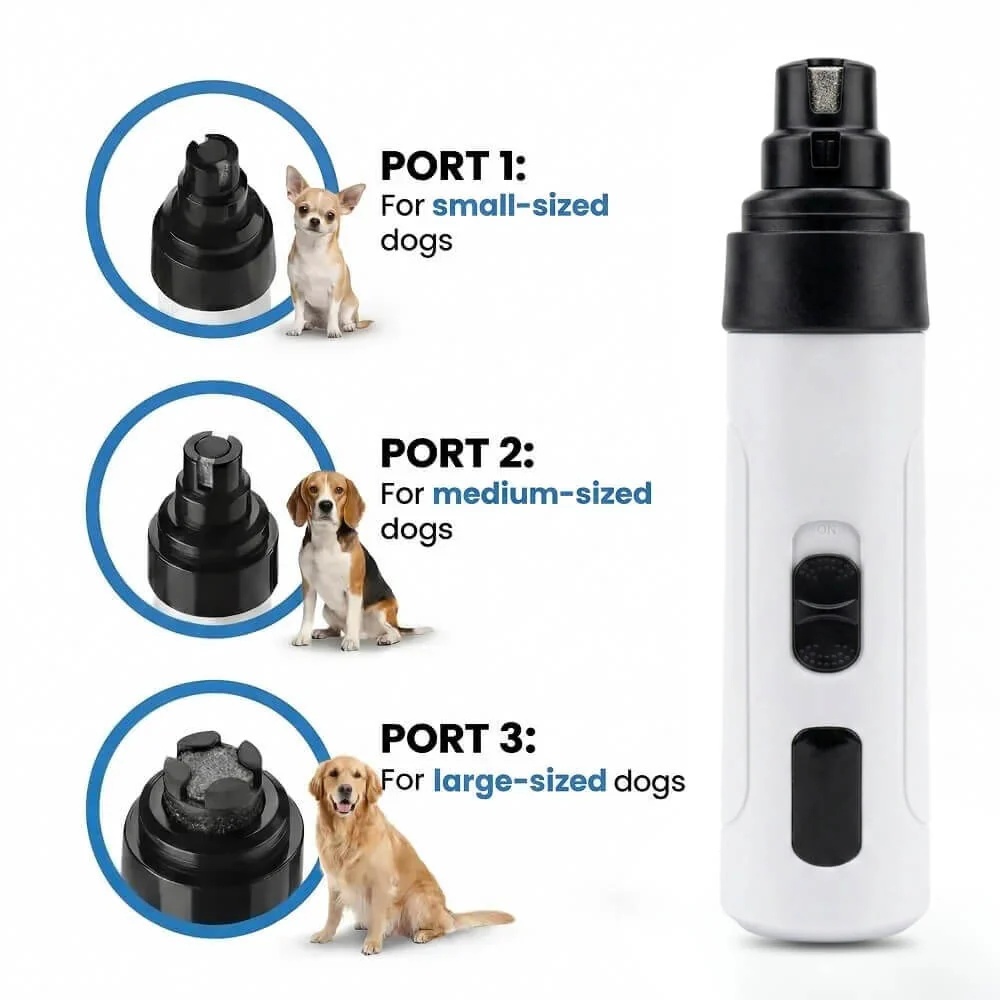
The protective safety cap is designed with three different ports to fit small, medium, and large paws perfectly.
For extra-thick claws, you can remove the cap entirely to expose the full diamond grinding wheel.
This allows you to safely and efficiently shape dense nails without causing your dog any discomfort.
How long does the battery of the Zenpaw Grinder last on a single charge?
The Zenpaw Maxpro Grinder is equipped with a high-capacity, rechargeable lithium-ion battery system.
A single full charge provides up to 7 hours of continuous, cordless grooming performance for your pets.
This industry-leading run time means you rarely have to worry about the device dying mid-session.
The grinder charges conveniently with any standard USB cable, making it perfect for grooming on the go.
Its cordless design gives you complete freedom of movement to keep your dog comfortable during trims.
Which speed setting should I use for trimming curled dog claws?
We strongly recommend starting on our low-speed setting when addressing tightly curled or delicate claws.
The lower speed offers maximum control and precision, which is vital when working near sensitive paw skin.
Once you have relieved the tension and your dog is relaxed, you can transition to the high-speed setting.
The high-speed setting is excellent for rapidly smoothing down thick, overgrown sections of keratin.
Always match the grinding speed to your dog’s unique comfort levels and nail thickness.
Does the grinding tip overheat and burn my dog’s sensitive nail beds?
No, our specialized diamond drum bit utilizes advanced low-heat technology to prevent thermal build-up.
However, you should still follow the professional rule of keeping the grinder in constant, sweeping motion.
Never hold the rotating tip on a single spot of the claw for more than two consecutive seconds.
By using brief, gentle passes, you keep the entire nail completely cool and comfortable for your dog.
This careful technique ensures your beloved pet enjoys a completely painless and worry-free experience.
Conclusion: Transform Your Pet’s Paw Care Journey Today
Grooming curled dog nails at home does not have to be a stressful battle for you or your dog.
With patience, correct grinding angles, and the right tools, you can easily keep their paws completely healthy and pain-free.
Ready to transform nail trimming from a stressful chore into a peaceful, bonding experience?
Explore the Zenpaw Maxpro 3-in-1 Grinder risk-free today and enjoy a happier, healthier pet.
Call us at 302-307-1000 — our pet care team is always here to advise you on the best home grooming practices.
Note: Individual results may vary depending on individual dog breeds, nail thickness, and behavioral temperaments. This article is intended for general pet grooming reference purposes only and does not replace professional veterinary advice.