
For years, I dreaded grooming day because my sweet retriever would tremble the moment I picked up the trimmers, and after one accidental nick that left us both in tears, I realized my entire grip was wrong. Learning how to hold dog nail clippers changed everything for us, transforming a terrifying chore into a calm, painless bonding routine that keeps his paws perfectly healthy and strong.
Maxpro 3-in-1 Grinder.
Stress-Free Nail Trimming.
Whisper-quiet DC motor (<40 dB) eliminates fear & discomfort. Features 3 ports, dual speeds, and 7-hour battery life. Safe, precise, and painless.
In This Article
- The exact grip techniques for maximizing your hand stability.
- How to avoid common quick-cutting accidents on both light and dark claws.
- The biomechanics of paw wellness and proper cutting angles.
- Step-by-step instructions to introduce stress-free grinding tools.
The Perfect Grip: How to Hold Dog Nail Clippers for Clean and Safe Cuts
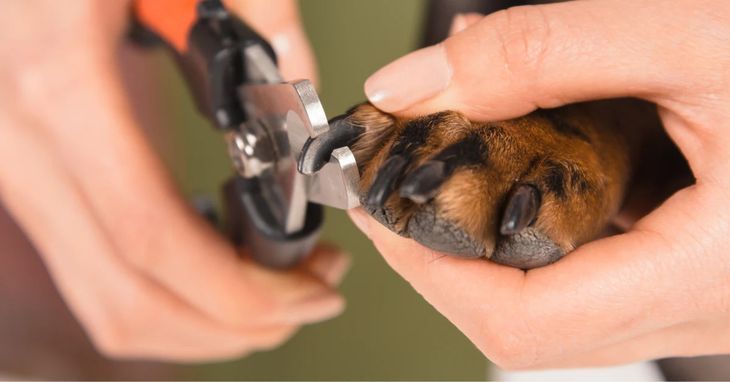
Trimming your pet’s claws at home does not have to feel like a stressful battle of strength.
The secret to achieving a smooth, clean slice lies entirely within your physical grip on the tool.
To master how to hold dog nail clippers, you must first understand the design of your specific grooming tool.
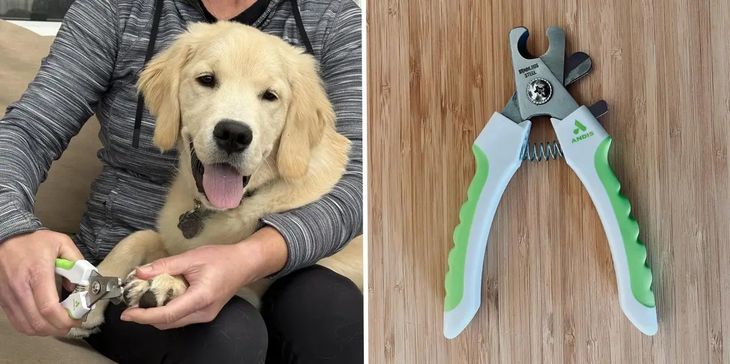
Most professional groomers prefer plier-style dog nail clippers because they offer superior control and tension.
Hold the clippers in your dominant hand with your palm wrapping securely around the base handle.
Your fingers should wrap around the active lever handle to guide the squeezing motion smoothly.
This scissor-like grip allows you to apply steady, controlled pressure rather than a sudden, jerky movement.
Never hold the clippers with a loose fingertips-only grip as this can cause the blade to slip mid-cut.
Keep your wrist straight and aligned with your forearm to maintain a stable, predictable cutting path.
Your non-dominant hand plays an equally crucial role by holding your dog’s paw firmly but gently.
Isolate each individual toe by placing your thumb on top of the toe fold and your index finger underneath the paw pad.
This “paw-pinch” technique stabilizes the joint and prevents your dog from pulling away suddenly.
Always cut with the blade facing away from the quick to ensure a safe distance is maintained.
If you are unsure of the blade alignment, examine which way to hold dog nail clippers before making any contact.
The cutting blade must always face toward you so you can visually verify the exact point of incision.
This positioning ensures you can visually verify the distance from the live tissue.
Squeeze the handles with a single, swift motion to prevent the nail from bending or fraying.
By executing a firm and rapid squeeze, you achieve a clean, smooth shear across the hard outer shell.
99-Day 100% Money-Back Guarantee
“Ever since we started using the Zenpaw Maxpro Grinder, it’s been such a peaceful experience. It’s very quiet, and my dog actually relaxes. It’s turned our stressful sessions into quick, quiet grooming times.”
— Sarah M. | ✔ Verified Customer
- ✓ Prevents Infection & Splitting
- ✓ Ideal for All Dog Sizes
- ✓ Low-Vibration Technology
- ✓ Fast 2-7 Days Delivery
Need Support? Call 302-307-1000
Understanding Canine Nail Anatomy: Where is the Quick?
Every dog claw consists of a hard outer shell made of keratin and a soft, highly sensitive inner core called the quick.
The quick contains active blood vessels and nerve endings that supply nourishment to the growing claw.
Cutting into this live tissue causes immediate pain and bleeding, which can deeply traumatize an anxious pet.
When learning how to cut dog nails with clippers, visual identification of the quick is your primary defense.
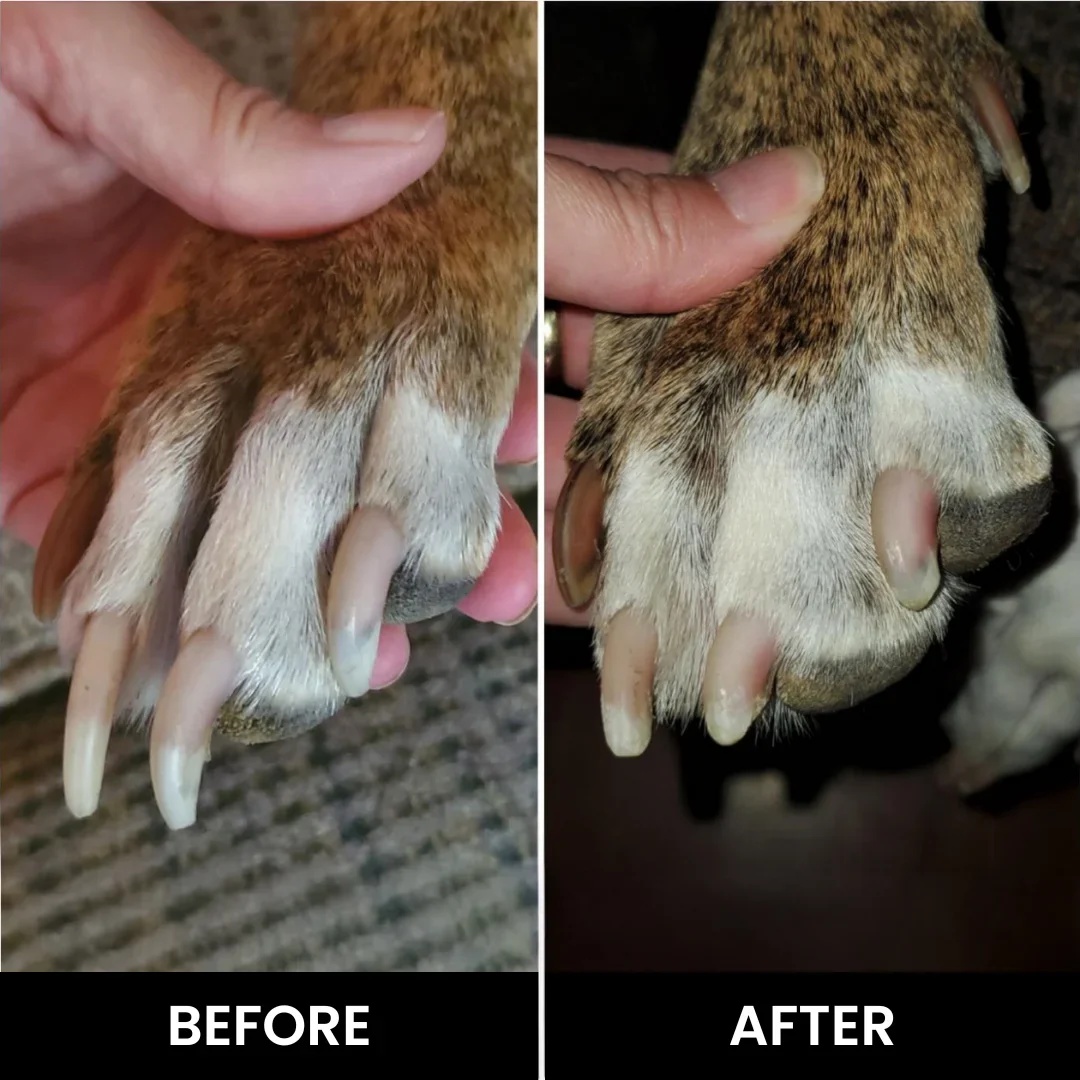
On light-colored nails, the quick appears as a distinct pink shadow running through the center of the claw.
You must always stop your cut at least two to three millimeters before this pink line begins.
On darker claws, the quick is completely hidden from external view, requiring a much more cautious approach.
Regular clipping pet nails prevents the quick from growing too far down the shaft.
When a dog’s nails are left untrimmed, the internal blood vessel elongates alongside the outer keratin shell.
This overgrowth makes it incredibly difficult to trim the claws back to a healthy, functional length without causing injury.
By performing weekly maintenance, you naturally encourage the quick to recede over time.
Understanding where to clip dog nails ensures you maintain optimal paw health and alignment.
If you accidentally nick the quick, stay calm and apply styptic powder to the tip immediately.
Maintaining a peaceful energy prevents your dog from associating the accident with overall grooming fear.
We engineered the Zenpaw Maxpro Grinder to bypass these anatomical risks entirely by filing the claw down gradually.
This gradual filing method allows you to see the exact state of the nail tip before reaching the sensitive tissue.
The Biomechanics of Canine Paw Health: Why Short Nails Matter
Maintaining short claws is not just an aesthetic choice; it is a fundamental requirement for orthopedic health.
When a dog’s nails grow too long, they make continuous, hard contact with the ground with every step.
This contact pushes the nail bone back up into the toe joint, causing chronic discomfort.
To compensate for this constant pressure, the dog must shift their weight backward onto their hind legs.
This unnatural weight shift alters the entire skeletal alignment of your pet’s body.
Over time, this poor posture places excessive strain on the wrists, elbows, shoulders, and hips.
In senior dogs, this chronic structural strain can significantly accelerate the onset of painful arthritis.
Long nails also reduce traction, making it much easier for your dog to slip and injure themselves on hardwood floors.
Additionally, long claws can cause a condition known as splay foot, where the toes spread apart abnormally.
Splay foot weakens the natural shock-absorbing capability of the paw pad, leading to ligament damage.
By keeping the nails trimmed short, you ensure that only the paw pads make contact with the floor.
This natural alignment allows your dog to walk, run, and jump with optimal joint biomechanics.
Our team at Zenpaw is dedicated to protecting this natural orthopedic balance through painless grooming solutions.
Regular maintenance with a whisper-quiet grinder is the easiest way to prevent these long-term skeletal issues.
How to Safely Cut Black Dog Nails Without Bleeding
Trimming dark or black claws is often considered the most intimidating task for home groomers.
Because you cannot see the pink blood vessel, you must rely on tactile feedback and internal structural cues.
To begin, you must understand what direction to cut dog nails to ensure safety.
The correct way to hold pet clippers during this process is at a strict 45-degree angle from the bottom pad.
Instead of taking off a large chunk of nail at once, utilize the shave-by-shave technique.
Take off tiny, paper-thin slices of the claw one small step at a time.
After each small slice, look directly at the cut surface of your dog’s nail.
Initially, the center of a dark nail will look dry, chalky, and completely white.
As you get closer to the sensitive tissue, this chalky white center will transition into a moist, grey appearance.
Stop cutting the instant you see a small, dark, circular dot appear in the dead center of the cut surface.
This dark dot is the outer protective membrane of the quick, indicating that you have reached the safe limit.
Using this cautious visual methodology is the key to learning how to cut dog’s nails properly without accidents.
If the nail begins to feel soft or spongy under the clipper blades, stop squeezing immediately.
Healthy, dead keratin feels hard and brittle, while live tissue feels soft, pliable, and rubbery.
For those who struggle with these visual cues, a low-vibration grinder is a much safer alternative to traditional blades.
The Zenpaw Maxpro Grinder slowly files away dark pigment, removing the guesswork entirely.
This controlled approach guarantees a painless session for both you and your beloved companion.
Which Way to Hold Dog Nail Clippers: Blade Direction and Angles
Many pet owners are confused about which way to hold dog nail climmers during a grooming session.
The orientation of your clipper blades directly dictates the pressure applied to the claw structure.
Always hold your clippers so the cutting blade operates from the bottom of the nail upward.
This specific direction prevents the blade from sliding down and scraping the sensitive pad.
Maintaining the proper angle of cut dog nails is vital to prevent painful splintering and cracks.
The blade should align at a precise 45-degree angle relative to the natural growth slope of the claw.
Cutting at a flat 90-degree angle applies excessive crushing force to the lateral sides of the nail wall.
This crushing pressure can cause micro-fractures in the keratin, leading to painful splits later on.
When you hold the tool at 45 degrees, you mimic the natural wear pattern of a wild canine’s claws.
This organic angle keeps the flat edge off the floor, allowing your dog to walk comfortably on their pads.
If your pet has dewclaws, remember that these sit higher up on the inner side of the front legs.
Dewclaws do not touch the ground, meaning they do not wear down naturally and can curl back into the skin.
To trim these safely, rotate your wrist slightly to gain a clear line of sight over the curved tip.
Using a correct way to hold pet clippers keeps the tool stable even when working on awkward angles.
Understanding these directional mechanics is the foundation of how to safely clip a dog’s nails without stress.
For an ultra-smooth finish, follow up your clipper cuts with a quick round of precision grinding.
The Zenpaw Maxpro 3-in-1 Grinder rounds off any remaining sharp edges, preventing snags on your carpets.
Traditional Scissors vs. Guillotine vs. Grinders: Which Is Best?
Choosing the right grooming tool is just as important as mastering the correct grip.
Home groomers typically choose between three main categories of tools: plier clippers, guillotine clippers, and rotary grinders.
Plier-style clippers are the most common and feature two opposing blades that meet in the middle.
These are highly durable and offer excellent leverage, making them suitable for thick claws.
Guillotine clippers feature a small ring where you insert the nail, and a single blade rises to slice the tip.
While guillotine tools are easy to line up, they tend to crush the nail wall if the blade becomes dull.
Additionally, replacing the delicate blades on guillotine models can be incredibly tedious.
Rotary grinders, such as the Zenpaw Maxpro, operate by filing down the claw using a high-speed abrasive head.
Grinders are widely considered the safest option because they reduce the risk of cutting the quick to near zero.
They also leave the nail tip smooth and rounded, eliminating the need for a separate filing step.
However, many traditional grinders on the market are loud and vibrate heavily, scaring anxious dogs.
That is why we engineered our device to operate with an ultra-quiet motor under 40 decibels.
This silent power allows you to enjoy the safety of a grinder without the stressful noise.
Review the comprehensive comparison table below to see how these options perform head-to-head.
| Grooming Tool | Primary Advantages | Primary Drawbacks |
|---|---|---|
| Plier-Style Clippers | Great leverage; highly durable; works well on very thick dog claws. | High risk of cutting the quick; can crush and splinter the nail structure. |
| Guillotine Clippers | Easy to align; good for small and medium breed paws. | Blade dulls rapidly; difficult to replace; applies high lateral pressure. |
| Zenpaw Maxpro Grinder | Gradual, painless filing; whisper-quiet under 40dB; zero quick cutting risk. | Requires initial behavioral conditioning; files slightly slower than a blade. |
Practical Guide: Introducing Your Dog to Stress-Free Grinding
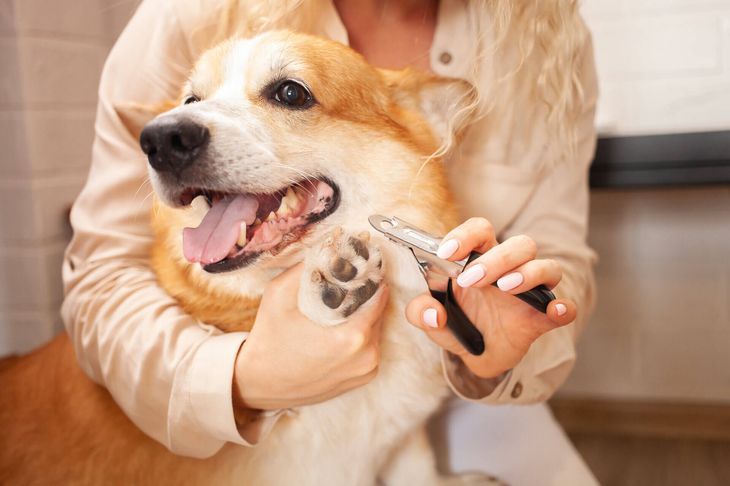
Transitioning from sharp clippers to a quiet grinder is the best decision you can make for an anxious pet.
Our team at Zenpaw designed the Maxpro 3-in-1 Grinder to make this transition incredibly seamless.
Before you touch a single nail, you must desensitize your dog to the sound and vibration of the new tool.
Start by letting your dog sniff the grinder while it is turned off, rewarding them with premium treats.
Next, turn the whisper-quiet motor on its lowest speed while holding it a few feet away from your pet.
Because our motor operates below 40 decibels, most dogs adapt to the sound within a few minutes.
Slowly bring the humming tool closer to their body, pairing the sound with continuous positive reinforcement.
Once they are comfortable, touch the non-spinning handle to their shoulder so they feel the gentle vibration.
Move the vibrating handle down to their paws, treating them generously for remaining calm and relaxed.
When you are ready to file, hold the grinder like a pencil in your dominant hand for maximum control.
Support the paw with your non-dominant hand, stabilizing each individual claw with your fingers.
Apply the grinding head to the nail tip at a 45-degree angle for no more than two to three seconds at a time.
This quick-touch method prevents heat buildup on the nail bed, ensuring a painless experience.
Refer to the structured progression guide below to map out your dog’s personalized training plan.
| Phase | Groomer Action | Dog Behavioral Goal |
|---|---|---|
| Phase 1: Scent & Sound | Present the off grinder for sniffing; turn on low speed 3 feet away. | Associate the physical tool and low hum with high-value treats. |
| Phase 2: Vibration Touch | Press the vibrating handle against the shoulder, then down to the paw. | Accept the physical sensation of micro-vibrations without retracting the leg. |
| Phase 3: Direct Contact | Touch the active filing wheel to a single nail tip for exactly one second. | Remain still during light filing pressure, rewarded with a jackpot treat. |
| Phase 4: Full Maintenance | File all four paws at a 45-degree angle, taking breaks between limbs. | Relax completely during a full, peaceful home grooming session. |
Avoiding the Crushing Effect: The Danger of Traditional Dull Clippers
Many pet parents do not realize that standard scissor-style clippers do not actually cut; they crush.
When the two opposing blades meet, they squeeze the curved cylinder of the claw with immense pressure.
If your clipper blades are even slightly dull, this crushing force splits the structural layers of keratin.
This splitting exposes the sensitive internal layers to moisture, dirt, and potential bacterial infections.
Furthermore, the sudden, loud snap of a crushing cut is often what terrifies dogs the most.
This physical shock wave travels up the nail bone, causing discomfort even if you do not hit the quick.
Rushing through the trimming process is another common mistake that leads to accidental bleeding.
By switching to a precision filing wheel, you eliminate this violent crushing force entirely.
The Zenpaw Maxpro 3-in-1 Grinder uses a high-speed diamond bit to gently shave down the nail tip.
This micromotor technology ensures the nail is rounded off smoothly without structural trauma.
The dual-speed settings allow you to adjust the power based on the thickness of your dog’s claws.
Our low-heat design protects the delicate nerve endings from thermal friction during longer grooming sessions.
With this tool in hand, you can confidently maintain your dog’s paws without fear of splits or cracks.
Frequently Asked Questions About Dog Nail Trimming
Is the Zenpaw Maxpro Grinder powerful enough for very large dog breeds?
Yes, the Zenpaw Maxpro Grinder is specifically engineered to handle all dog sizes, from tiny toy breeds to massive, thick-clawed giant breeds.
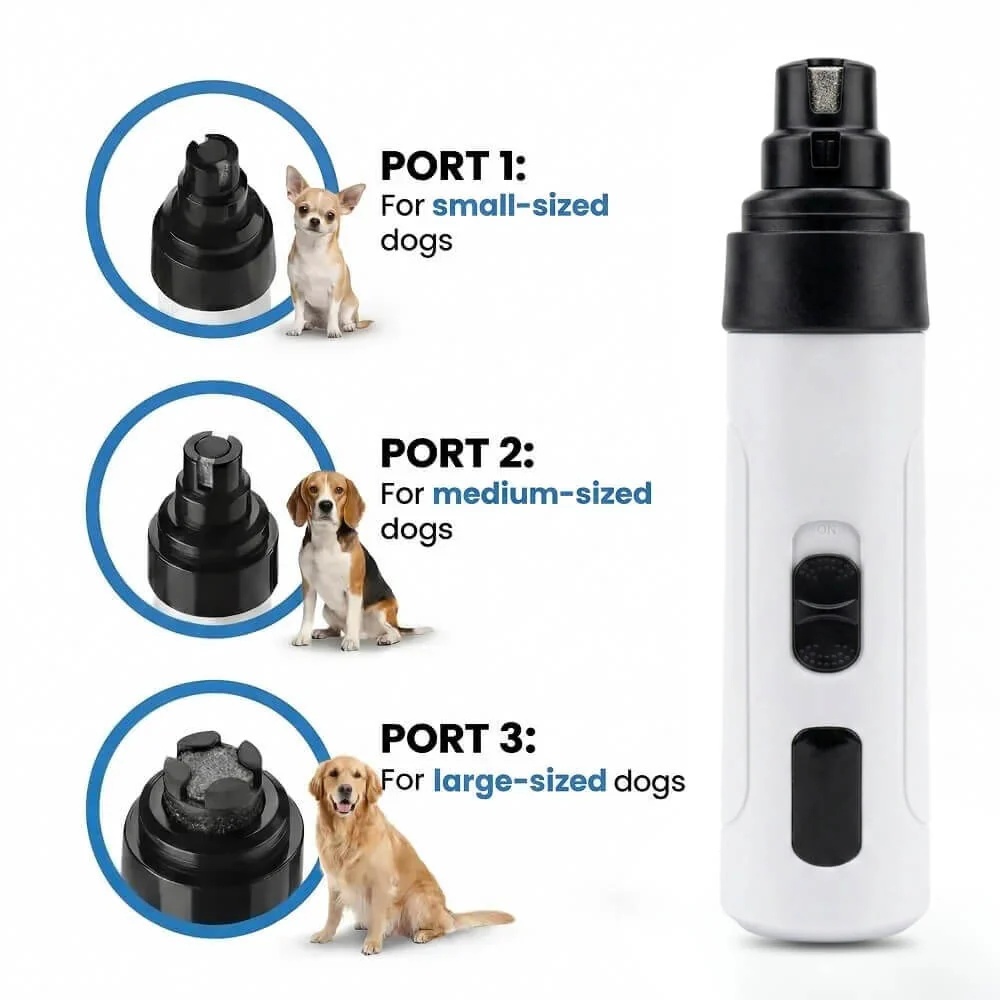
The device features an innovative protective cap with three distinct grooming ports designed for different nail sizes.
The small port is ideal for puppies and miniature breeds who require delicate, high-precision filing.
The medium port accommodates medium-sized breeds, protecting the surrounding skin from the spinning wheel.
For large breeds with heavy, dense claws, simply remove the protective cap to expose the entire diamond bit.
This open-wheel setting provides maximum surface area and power to grind down thick claws quickly and safely.
The high-torque DC motor maintains its spinning speed even under the resistance of dense keratin.
How long does the battery last, and how do I recharge the device?
The Zenpaw Maxpro 3-in-1 Grinder is equipped with a premium, long-lasting lithium-ion battery.
On a single full charge, the device provides up to seven hours of continuous grooming power.
This exceptional battery life means you can complete multiple grooming sessions without worrying about losing power mid-trim.
The device features a universal USB charging port, allowing you to charge it using a laptop, power bank, or wall adapter.
A convenient battery indicator light lets you know when the power is running low and when it is fully charged.
The long battery life makes this tool incredibly portable for travel, outdoor sessions, or professional mobile grooming.
Which speed setting should I use for my dog’s grooming session?
The Zenpaw Maxpro features dual-speed functionality to give you complete control over the filing process.
For puppies, highly anxious dogs, or thin dewclaws, we strongly recommend starting on the low-speed setting.
The low speed minimizes noise and vibration, allowing your pet to acclimate to the physical sensation comfortably.
Once your dog is relaxed, or if you are working on dense, thick rear claws, switch to the high-speed setting.
The high-speed setting delivers rapid material removal, cutting down the overall length of your grooming sessions.
Always start slow and gradually increase the power as your dog builds confidence and comfort with the tool.
Does the grinding wheel get hot, and can it burn my dog’s paw?
Traditional grinding tools can generate significant thermal friction, which can cause discomfort or burn the nail bed.
To solve this, Team Zenpaw engineered the Maxpro Grinder with advanced low-heat and low-vibration technology.
The high-grade diamond bit dissipates heat rapidly, keeping the filing surface cool during continuous contact.
However, as a professional safety practice, you should never hold the spinning wheel on a single claw for more than three seconds.
Instead, use a light, pulsing touch, moving back and forth between different nails to allow each claw to cool.
This simple technique, combined with our advanced hardware, completely eliminates the risk of thermal pain or burning.
Conclusion
Ready to transform nail trimming from a battle into a breeze? Explore the Zenpaw Maxpro 3-in-1 Grinder. Call: 302-307-1000 — our team can help you advise on the best grooming practices and help with any product questions.