I still remember the absolute panic of hearing my dog frantically licking her paws in the dead of night, only to turn on the flashlight and discover that she had completely chewed a nail off. It was a terrifying sight that left me feeling incredibly guilty and anxious about her pain, which is exactly why our team at Zenpaw created this guide to help you heal your pup’s paws and transition them to a stress-free, whisper-quiet grooming routine that keeps their nails perfectly smooth without the trauma.
Maxpro 3-in-1 Grinder.
Stress-Free Nail Trimming.
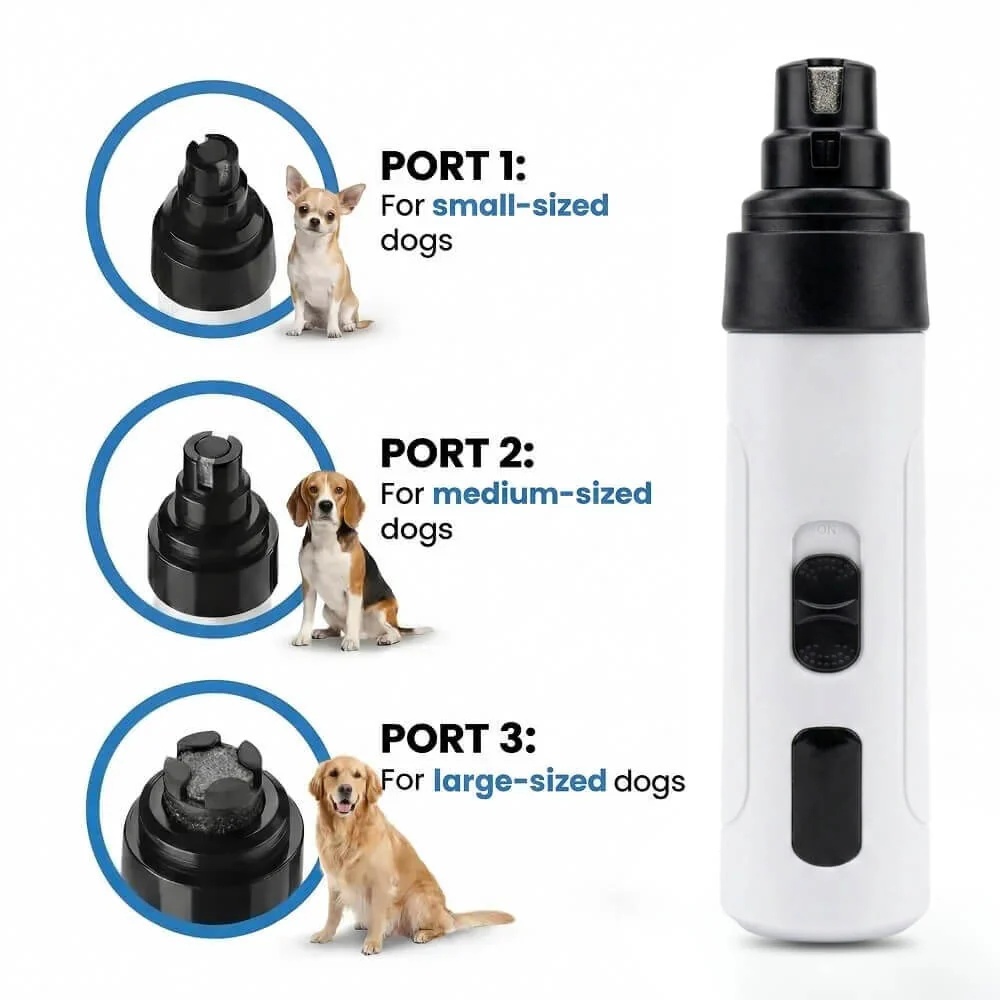
Whisper-quiet DC motor (<40 dB) eliminates fear & discomfort. Features 3 ports, dual speeds, and 7-hour battery life. Safe, precise, and painless.
In This Article
- Why Dogs Bite Their Nails: Uncovering the main causes of self-mutilation and biting behavior.
- Anatomy of the Quick: Understanding the blood vessels and nerves inside your dog’s claw.
- Step-by-Step Recovery Plan: How to disinfect, wrap, and protect a damaged nail bed.
- Prevention Strategies: Introducing gentle, low-vibration grooming tools to stop future chewing.
Why Has Your Dog Chewed a Nail Off? Here’s What the Experts Say
When you discover that your dog chewed a nail off, it is vital to understand that dogs do not engage in this painful behavior without an underlying cause.
Our pet wellness team points out that dogs frequently bite their claws due to environmental allergies, yeast infections, physical trauma, or severe behavioral anxiety.
According to the American Kennel Club (AKC), canine paws act as a primary target for atopic dermatitis, meaning allergen exposure makes their paws itch intensely.
To find relief from this burning itch, your dog may lick and chew their paws until a weakened or overgrown nail splits completely.
This destructive habit often turns into a cycle of self-mutilation where the dog chews deeper into the tissue to soothe the deep internal discomfort.
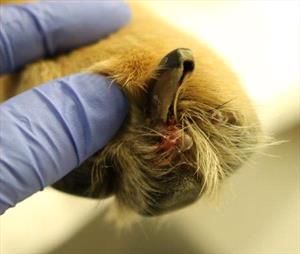
If you are facing this emergency right now, the immediate solution is to clean the affected paw and stop any active bleeding.
Start by flushing the raw nail bed with lukewarm water to remove dirt, saliva, and loose debris from the exposed quick.
Apply gentle pressure with a clean, lint-free cloth or sterile gauze to stop the bleeding, using styptic powder if you have it on hand.
Wrap the paw securely but lightly with a breathable self-adhering bandage to prevent your dog from licking the wound further.
Ensure your dog wears a protective Elizabethan collar (cone) or protective dog boot to allow the delicate nail bed to heal without interference.
If you want to handle this safely at home, the Zenpaw Maxpro Grinder provides painless, quiet filing — explore it here.
99-Day 100% Money-Back Guarantee
“Ever since we started using the Zenpaw Maxpro Grinder, it’s been such a peaceful experience. It’s very quiet, and my dog actually relaxes. It’s turned our stressful sessions into quick, quiet grooming times.”
— Sarah M. | ✔ Verified Customer
- ✓ Prevents Infection & Splitting
- ✓ Ideal for All Dog Sizes
- ✓ Low-Vibration Technology
- ✓ Fast 2-7 Days Delivery
Need Support? Call 302-307-1000
Understanding Canine Nail Anatomy: The Secret Life of the Quick and the Nail Bed

To properly care for your dog’s paws, you must understand the complex anatomy of the canine claw.
The outer shell of the nail is made of a hard protein called keratin, which protects the sensitive structures inside.
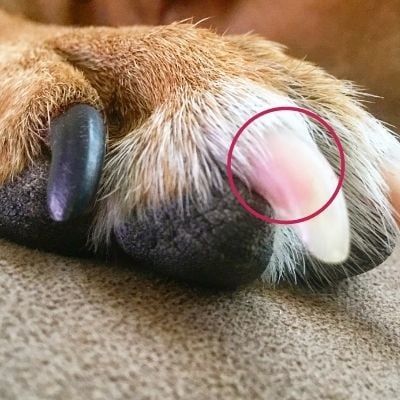
Deep within this keratin shell lies the quick, a highly vascular area packed with blood vessels and extremely sensitive nerve endings.
When a dog chews their claw, they risk exposing this delicate quick, which causes intense, sharp pain and significant bleeding.
If your dog has a dog nail split horizontally, the outer keratin layer separates from the quick underneath.
This separation leaves the nerve endings exposed to dirt, friction, and moisture from the ground.
Without prompt care, the exposed tissue can quickly become inflamed, making every step your dog takes highly uncomfortable.
In addition, the nail bed is directly connected to the distal phalanx, which is the last bone of your dog’s toe.
An untreated infection in the nail bed can travel upward into the bone, creating a much more severe medical condition.
This is why professional groomers advise against letting a dog continuously chew or lick at a damaged claw.
Using a high-quality grinder allows you to file down the dangerous rough edges of a broken nail safely.
The gentle spinning action of a professional grinder smooths the keratin without pulling on the sensitive inner quick.
This preventive filing keeps the quick safe and allows the healthy outer nail to grow back over time.
Medical vs. Behavioral Triggers: why is my dog biting its nails?
If you are constantly wondering, why is my dog biting its nails, you are not alone in your frustration.
Many pet parents struggle to determine whether their dog’s biting habit stems from a medical issue or a behavioral struggle.
Medical triggers often involve stubborn yeast infections, which thrive in the warm, humid spaces between your dog’s toes.
These infections cause intense irritation, prompting the dog to seek immediate relief by chewing on their claws.
Furthermore, environmental allergens like grass pollen, mold, and house dust mites can settle on their paws during daily walks.
This allergen contact triggers a strong localized immune response, which results in dry, red, and intensely itchy skin around the nail beds.
On the behavioral side, boredom, separation anxiety, and stress are major contributors to self-mutilation.
When left alone for long periods, an anxious dog may turn to nail biting as a compulsive coping mechanism.
This behavior is similar to humans biting their fingernails when feeling stressed or overwhelmed.
If a dog already has a dog nail broke in half, they will chew the hanging pieces to get rid of the annoying snag.
Similarly, a dog nail bent sideways will press painfully into the adjacent toe, driving the dog to bite at it frantically.
Identifying these physical discomforts early allows you to provide an effective dog nail biting treatment before they chew the entire nail off.
Our team recommends evaluating your dog’s environment, checking their paws daily, and consulting a professional if you suspect allergies.
How to Safe-Proof Your Dog’s Paws and Prevent Nail Biting
Preventing your dog from chewing their claws starts with establishing a consistent, positive, and pain-free nail care routine.
If your dog is terrified of traditional clippers, you can start by introducing a dog sandbox to file nails as a fun, interactive play activity.
This sandbox method works wonderfully for filing down the front claws of highly anxious dogs through natural scratching play.
For the ultimate controlled grooming session, many pet parents use a hanging dog nail trim bag to gently suspend their dog.
This hammock-style bag keeps your pup safely elevated, reducing their ability to wiggle or pull their paws away while you work.
Once your dog is comfortable, you can introduce the whisper-quiet Zenpaw Maxpro Grinder using step-by-step desensitization.
First, let your dog inspect the grinder while it is turned off, rewarding them with high-value treats for any curiosity.
Next, turn on the grinder’s whisper-quiet motor at a distance, allowing them to get used to the gentle humming sound.
Our whisper-quiet motor operates under 40 decibels, which means it will not trigger your dog’s natural startle reflex.
When you are ready to file, hold your dog’s paw firmly but gently, separating the target toe from the rest.
Hold the grinder at a precise 45-degree angle relative to the natural slope of the nail.
Apply light pressure in short, 2-to-3-second bursts to prevent heat from building up on the sensitive quick.
This careful method prevents accidental over-trimming and leaves the nail edge perfectly smooth and free of dangerous snags.
Common Pitfalls: Why Traditional Clippers Can Drive Dogs to Chew Their Nails
Many pet owners unwittingly contribute to their dog’s paw chewing habits by using traditional guillotine or scissor-style clippers.
These heavy metal clippers operate by applying immense crushing force to the entire structure of the nail before cutting.
If the clipper blades are even slightly dull, they will crush and splinter the dry keratin instead of slicing cleanly.
This crushing action creates microscopic cracks and sharp, jagged edges that easily snag on rugs, grass, and bedding.
The resulting frustration drives the dog to chew frantically at their claws to remove the uncomfortable, split fragments.
Another common mistake is rushing the trimming process, which often leads to cutting directly into the painful quick.
Cutting the quick causes a sudden, sharp pain that dogs remember vividly, making them highly resistant to future grooming sessions.
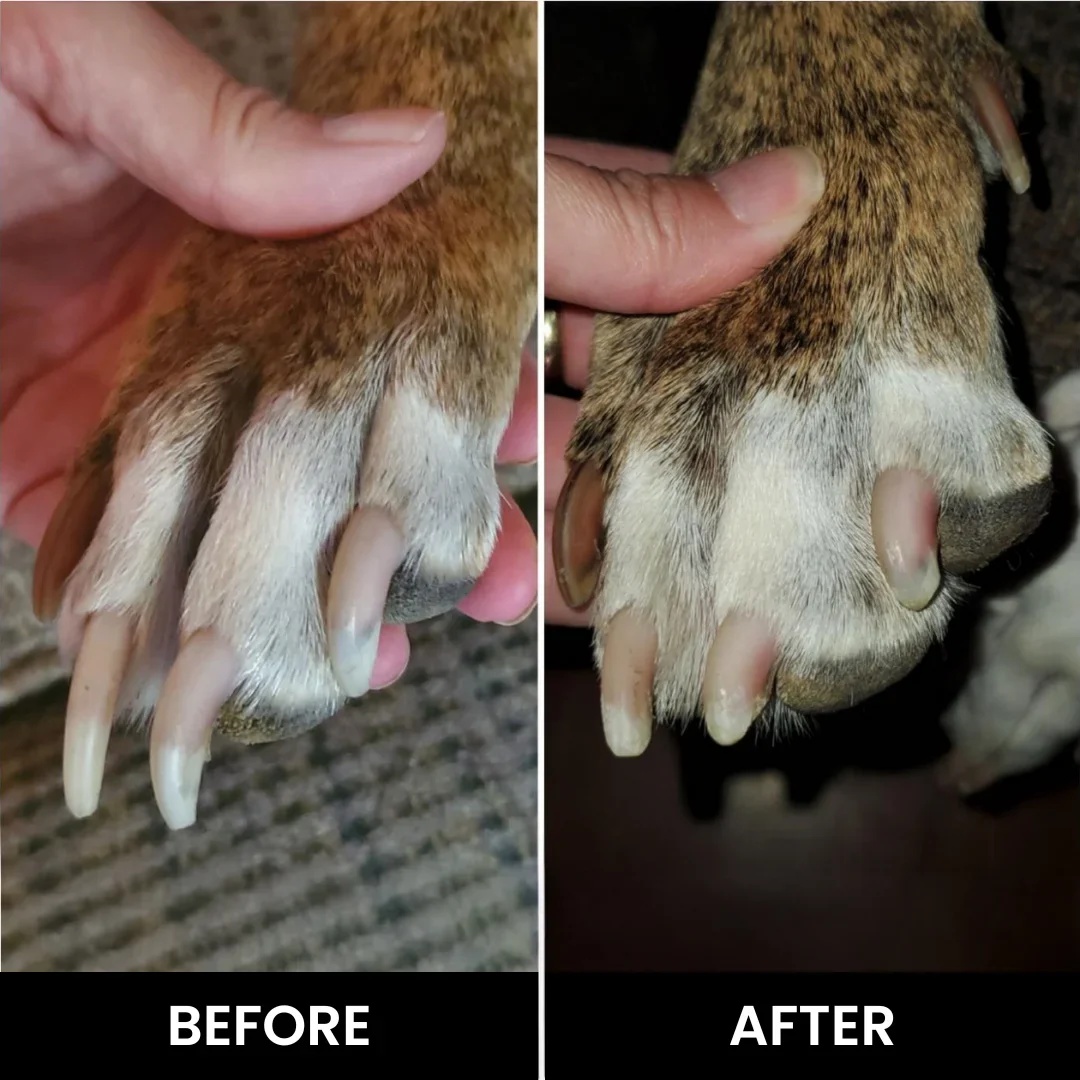
This fear-induced resistance often leads to skipped grooming sessions, resulting in severely overgrown, curling claws.
Overgrown claws put painful pressure on the toe joints, forcing the dog to bite their nails to relieve the pressure.
The Zenpaw Maxpro Grinder eliminates this danger by allowing you to file the nail down gradually and safely.
Our low-vibration technology ensures that your dog does not feel the intense, unsettling buzzing that makes other tools scary.
Grooming Comparison: Grinders vs. Traditional Clippers
| Grooming Feature | Zenpaw Maxpro Grinder | Traditional Metal Clippers |
|---|---|---|
| Painless Performance | Yes (gradual, precise smoothing) | No (violent crushing and cutting force) |
| Noise Level | Whisper-quiet (under 40dB) | Loud (terrifying metal clicking sounds) |
| Quick Protection | High (gradual filing control) | Low (high risk of cutting the quick) |
| Nail Finish | Perfectly smooth and rounded | Sharp, jagged, and prone to splitting |
Frequently Asked Questions About Dog Nail Chewing
Is the Zenpaw Maxpro Grinder safe for large, thick-nailed breeds?
Yes, our advanced grinder features 3 specialized ports and 2 dual-speed settings designed to handle all claw thicknesses.
The small and medium ports are perfect for tiny puppies, while the wide open-face area tackles the thickest claws of giant breeds.
How long does the battery last on a single charge?
The Zenpaw Maxpro Grinder is equipped with a high-capacity rechargeable battery that lasts up to 7 hours on a single charge.
It comes with a convenient USB charging cable, allowing you to charge the device via your laptop, power bank, or wall adapter.
Does the grinding tip get hot during prolonged use?
Our grinder uses advanced cool-surface technology to prevent excessive friction heat from building up on your dog’s claw.
To guarantee complete comfort, we still advise working on one nail for only 2 to 3 seconds at a time before moving to the next.
How should I disinfect my dog’s paw after they chew a nail off?
Soak the injured paw in a warm Epsom salt bath or dilute chlorhexidine solution for 5 minutes to eliminate harmful bacteria.
Dry the paw thoroughly with a clean towel and apply a pet-safe antiseptic ointment to support natural healing of the tissue.
Conclusion
Keeping your dog’s paws safe, smooth, and healthy does not have to be a source of stress or anxiety.
By understanding nail anatomy, treating underlying allergies, and using gentle grooming tools, you can easily prevent painful chewing.
Ready to transform nail trimming from a battle into a breeze?
Explore the Zenpaw Maxpro 3-in-1 Grinder today.
Call 302-307-1000 — our friendly team is always here to advise you on the best grooming practices and help with any product questions.
Note: Individual results may vary depending on individual dog breeds, nail thickness, and behavioral temperaments. This article is intended for general pet grooming reference purposes only and does not replace professional veterinary advice.