
I remember sitting on my living room floor, holding my trembling golden retriever’s paw while he whimpered in pure terror, and asking myself, “why does my dog shake when i cut his nails?” That heartbreaking moment changed how I approached pet care forever. At Team Zenpaw, we realized traditional tools were failing our pets, leading us to design the whisper-quiet Zenpaw Maxpro 3-in-1 Grinder to restore peace and joy to your grooming routine.
Maxpro 3-in-1 Grinder.
Stress-Free Nail Trimming.
Whisper-quiet DC motor (<40 dB) eliminates fear & discomfort. Features 3 ports, dual speeds, and 7-hour battery life. Safe, precise, and painless.
In This Article
- The neurological triggers that cause severe trembling during nail care
- How to easily identify paw sensitivity and anatomical pain limits
- A professional guide to step-by-step desensitization and stress-free grinding
- Proactive solutions to protect dark claws from dangerous over-trimming accidents
Why Does My Dog Shake When I Cut His Nails?
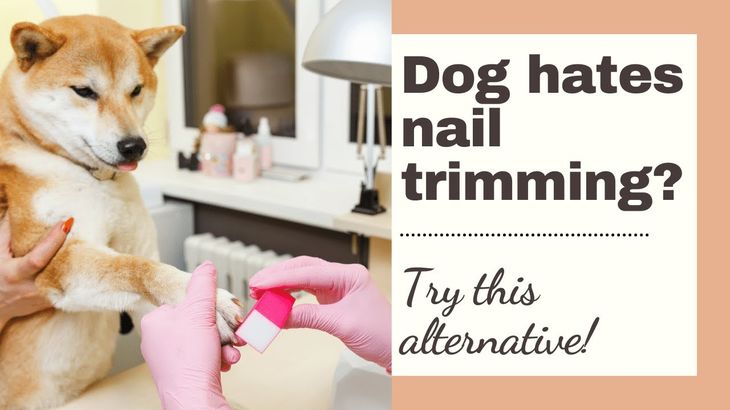
Your dog is experiencing a profound physiological fear response triggered by classical conditioning and sensory overload.
This shaking or dog trembling during grooming typically starts the moment they see the clippers or enter the grooming area.
Dogs possess highly sensitive paws loaded with complex nerve endings that transmit tactile information directly to their brain.
When traditional clippers pinch, squeeze, or crush these sensitive nerve pathways, it creates intense localized pressure even if you do not cut the blood vessel.
This traumatic sensation teaches your dog’s nervous system to anticipate pain during future trimming sessions.
This fear is especially common in rescue dogs or pets that have had their nails cut too short in the past.
By understanding that this shaking is a plea for safety, you can change your approach to protect their physical and emotional health.
To immediately stop the shaking, you must replace the terrifying pinching sensation with a gentle, non-threatening alternative.
We highly recommend transitioning to a high-quality nail grinder that files the claw down gradually.
You should begin by simply running the grinder near your dog without touching their paws, rewarding them with high-value treats to build a positive association.
Once they are comfortable with the sound, touch the vibrating tool to their body, then to their legs, and finally to their nails for just one second at a time.
If you prefer traditional methods, you can soak dog nails before cutting to soften the hard keratin shell and reduce the crushing pressure.
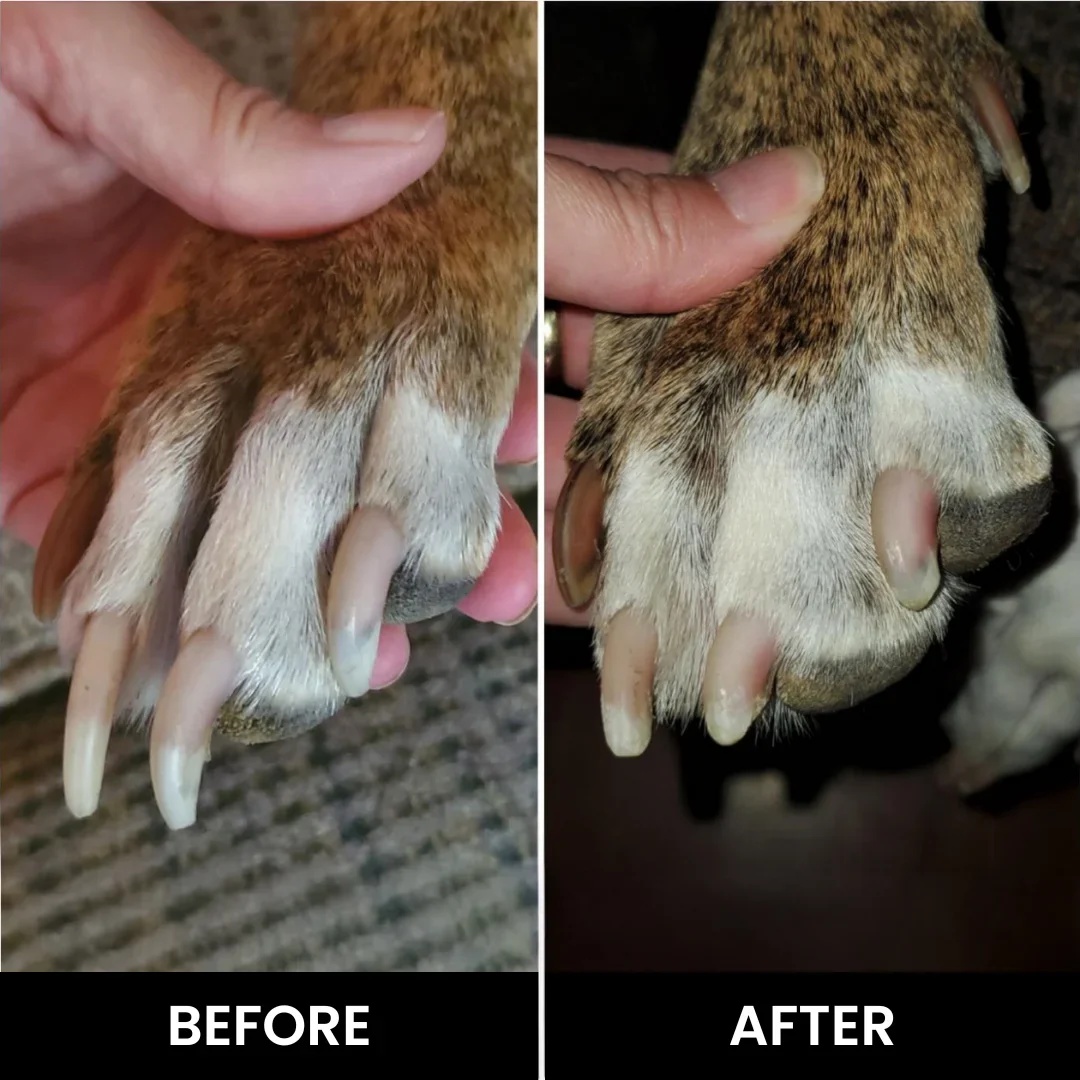
If you want to handle this safely at home, the Zenpaw Maxpro Grinder provides painless, quiet filing — explore it here.
99-Day 100% Money-Back Guarantee
“Ever since we started using the Zenpaw Maxpro Grinder, it’s been such a peaceful experience. It’s very quiet, and my dog actually relaxes. It’s turned our stressful sessions into quick, quiet grooming times.”
— Sarah M. | ✔ Verified Customer
- ✓ Prevents Infection & Splitting
- ✓ Ideal for All Dog Sizes
- ✓ Low-Vibration Technology
- ✓ Fast 2-7 Days Delivery
Need Support? Call 302-307-1000
Understanding Canine Nail Anatomy and the Sensitive Quick
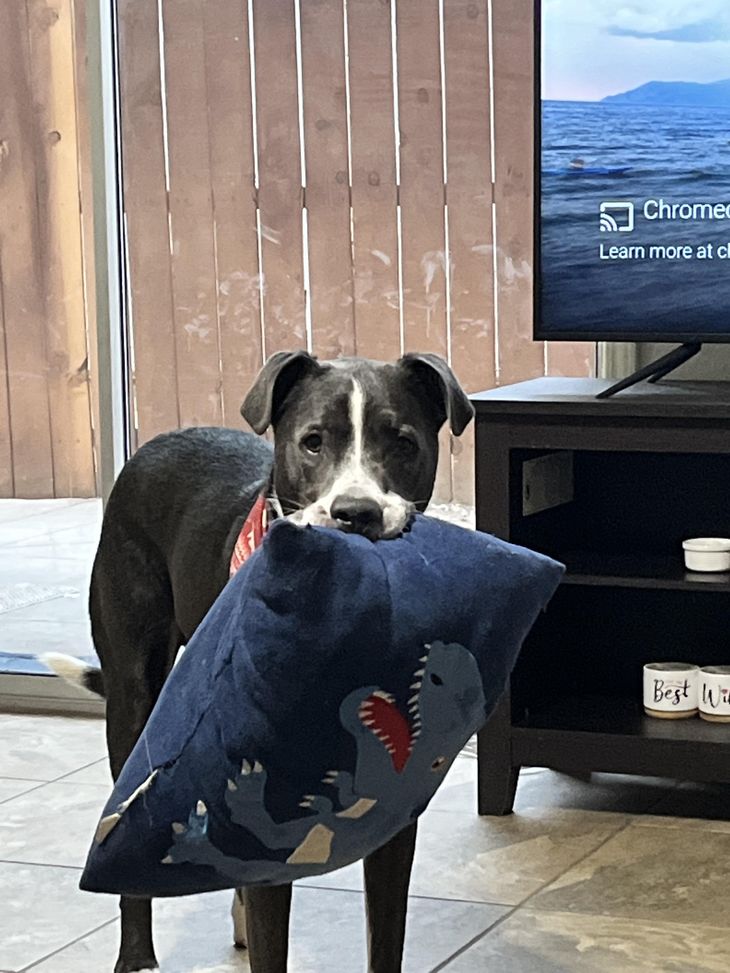
Every canine claw consists of a hard outer shell made of keratin and a soft, highly vascularized core known as the quick.
The quick contains a dense network of blood vessels and extremely sensitive nerve endings.
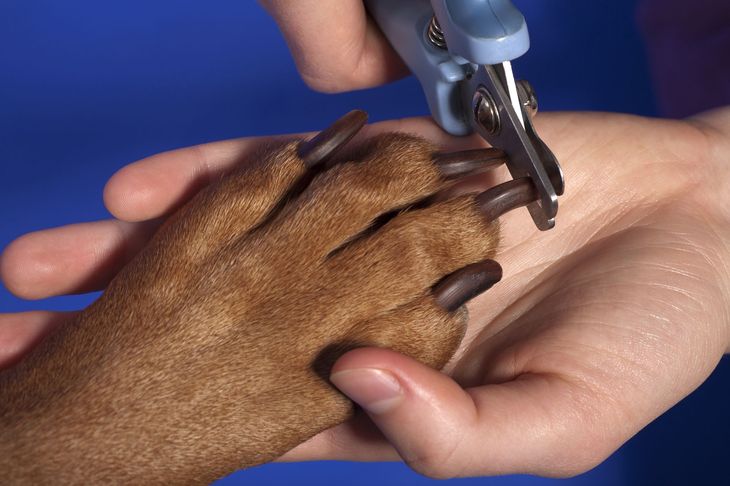
When you use traditional clippers, the metal blades squeeze the entire nail structure before cutting through it.
This squeezing action exerts massive pressure directly on the quick, causing sharp, radiating pain.
Even if you do not make the nail bleed, the mere pressure on the nerve endings causes extreme discomfort.
For dogs with dark claws, identifying the boundary of this nerve center is incredibly challenging.
Using specialized dog nail clippers for black nails can help, but the physical risk of pinching remains high.
If you accidentally cut into this nerve-rich zone, it causes immediate bleeding and intense pain.
Many worried owners ask: if an accident happens, dog nail cut too short how long to heal?
Generally, a nicked quick takes several days to heal, but the psychological trauma can last a lifetime.
This painful memory is the primary reason why do dogs cry when cutting nails.
The Science of Phantom Pain and Sensory Overload
Dogs have a highly developed sense of hearing and touch that amplifies their environment.
The loud, metallic “snap” of traditional clippers sounds like an explosion to an anxious dog.
Furthermore, the heavy physical restraint used to hold a struggling pet triggers their natural fight-or-flight response.
When a dog is pinned down, their adrenaline spikes, causing their muscles to tense up.
This physical tension actually makes their paws even more sensitive to touch and pressure.
The resulting shaking is a direct symptom of neuromuscular stress and sensory overload.
Over time, this stress manifests as a condition similar to phantom pain, where the dog trembles in anticipation of discomfort before the tool even touches their paw.
By shifting to a whisper-quiet tool, you remove these sensory triggers entirely.
Recognizing Early Warning Signs of Grooming Trauma
Understanding your dog’s subtle body language is crucial for preventing grooming-related trauma.
Shaking is an advanced warning sign that your dog’s nervous system is overwhelmed.
However, dogs display several milder stress signals long before they start trembling.
These early warning signs include rapid lip-licking, yawning when not tired, and avoiding eye contact.
Some dogs will pull their paws back tightly under their chest or try to hide behind their owner’s legs.
If these signals are ignored, the anxiety escalates into a full panic state characterized by panting, whining, and shaking.
In severe cases, a terrified pet may display defensive aggression, which explains why a dog shakes during nail trim sessions.
Understanding these behaviors allows you to stop the session before your dog reaches their emotional threshold.
By pausing and rewarding your dog when they show mild stress, you teach them that their voice is heard.
This building of trust is the foundation of stress-free grooming.
How to Safely Groom and Desensitize Anxious Dogs
Overcoming grooming anxiety requires a systematic process called desensitization and counter-conditioning.
This process slowly rebuilds your dog’s emotional response to nail grooming from fear to excitement.
Here is the exact step-by-step protocol recommended by professional dog trainers and veterinary behaviorists:
First, introduce the tool without turning it on.
Place the grinder on the floor and put high-value treats, like chicken or peanut butter, around it.
Allow your dog to approach and sniff the tool at their own pace.
Repeat this step several times a day until your dog wags their tail when they see the grinder.
Second, turn the grinder on its lowest speed while keeping it at a safe distance from your dog.
Feed your dog continuous treats while the quiet motor hums in the background.
If your dog shows any signs of fear, move the grinder further away and try again.
Third, bring the humming grinder closer and gently touch the handle to your dog’s shoulder.
The soft vibration will help them get used to the physical sensation without any pain.
Fourth, touch the spinning grinding wheel to a single nail for just one second.
Immediately follow this touch with a jackpot of delicious treats and vocal praise.
Limit your first few active sessions to just one or two nails per day to prevent overwhelming your pet.
If you are dealing with a massive breed, finding the best nail clippers for large dogs is important, but a heavy-duty grinder is often the safest path.
Always keep a styptic powder or silver nitrate for cut dog nails nearby just in case of an accidental over-trim.
The Perfect 45-Degree Filing Technique
To achieve a smooth, rounded finish, you must hold the grinding tool at a precise 45-degree angle to the nail.
This angle matches the natural slope of the claw and avoids direct contact with the quick.
Gently support your dog’s paw by holding a single toe between your thumb and forefinger.
This grip stabilizes the toe and prevents the grinding wheel from vibrating the entire paw.
Apply light, pulsing pressure to the tip of the nail for no more than two seconds at a time.
Grinding for too long in one spot can generate friction heat, which causes sudden discomfort.
By using short, steady pulses, you keep the nail cool and comfortable.
Gradually file away the sharp edges on the sides of the claw to prevent painful snagging on carpets.
The Zenpaw Maxpro 3-in-1 Grinder features an advanced brass grinding wheel that makes this precise technique effortless.
Traditional Clippers vs. Modern Grinders: Protecting Your Dog’s Paws
Using traditional, dull clippers is one of the most common mistakes pet parents make at home.
When blades become dull, they crush the nail rather than cutting cleanly through it.
This crushing force splits the keratin layers, leaving behind jagged edges that easily crack and bleed.
In contrast, a high-quality rotary grinder gently files the nail down micro-layer by micro-layer.
This gradual approach gives you total control over the trimming process.
You can easily see the quick appearing as a small, dark dot in the center of the nail before any damage occurs.
This visual safety signal is completely absent when using blind-cutting traditional clippers.
Furthermore, high-speed grinders can sometimes generate excessive heat if designed poorly.
That is why the Zenpaw Maxpro uses low-heat technology combined with a quiet DC motor to keep paws completely cool.
Let us look at how these two grooming methods compare across critical safety and comfort metrics:
| Grooming Feature | Traditional Clippers | Zenpaw Maxpro Grinder |
|---|---|---|
| Nail Impact Type | High-pressure crushing and pinching | Gentle, micro-layer abrasive filing |
| Noise Level | Loud metallic snapping sounds | Whisper-quiet motor under 40dB |
| Quick Identification | Extremely difficult on black nails | Gradual approach lets you stop safely |
| Post-Trim Finish | Sharp, jagged edges that snag carpets | Smooth, rounded, polished edges |
| Anxiety Reduction | Low (often triggers survival responses) | High (vibration desensitization works fast) |
Frequently Asked Questions About Anxious Dog Nail Trimming
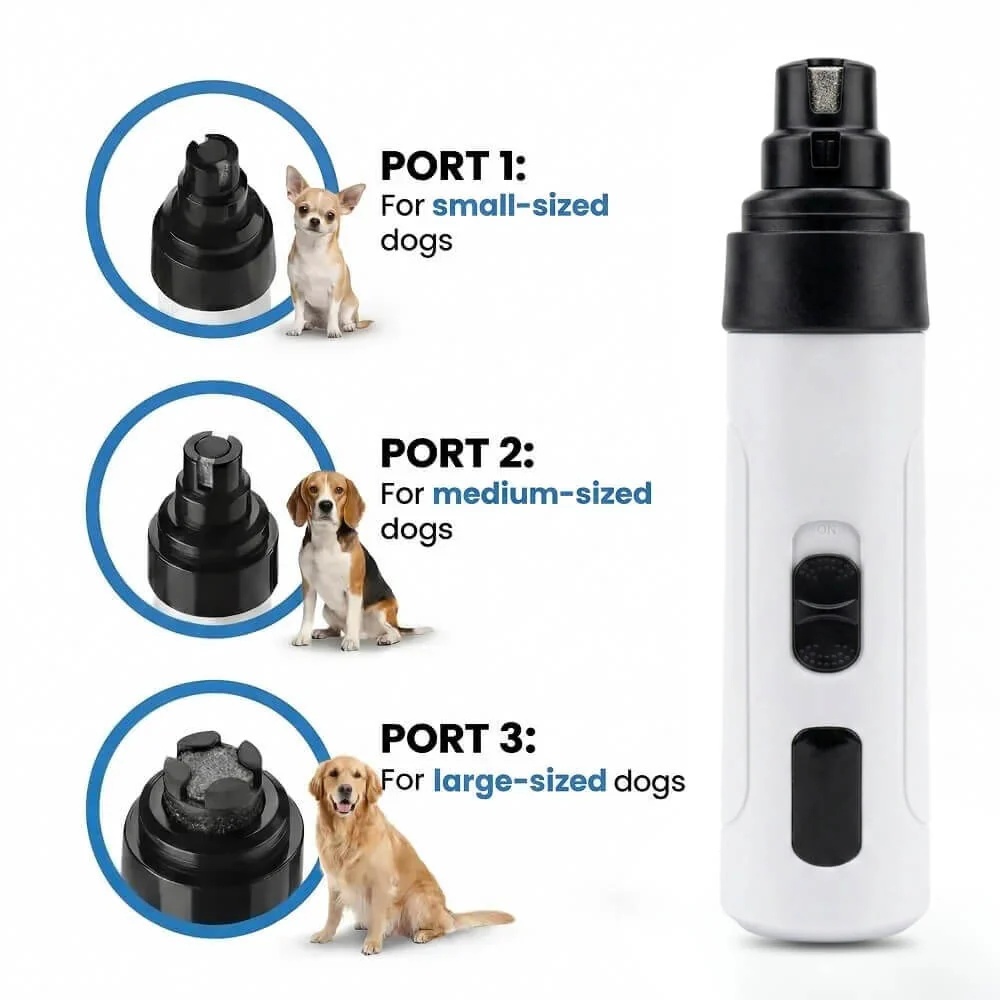
It features a specially designed safety cap with three distinct ports to match different nail sizes.
The small and medium ports are perfect for puppies and smaller breeds who require precise filing.
The wide-open port removes the cap completely, allowing you to easily tackle thick, heavy claws of large breeds.
Combined with its high-torque brass motor, it easily glides through dense nails without slowing down or stalling.
It delivers up to 7 hours of continuous run time on a single charge.
This long battery life ensures you never have to rush through a grooming session due to a dying tool.
It recharge easily using any standard USB cable, making it perfect for both home and travel use.
The lower speed minimizes vibration and keeps the noise under 40dB to help your dog feel safe.
Once your dog is comfortable, you can switch to the high-speed setting for faster and more efficient trimming.
Always use the speed that keeps your dog calm and relaxed during the session.
Our high-quality diamond bit grinding wheel disperses friction heat quickly during use.
To ensure complete safety, you should always apply light, pulsing pressure instead of holding the grinder on the nail.
This pulsing method keeps the nail cool and guarantees a completely painless grooming experience.
Conclusion
Ready to transform nail trimming from a battle into a breeze? Explore the Zenpaw Maxpro 3-in-1 Grinder. Call: **302-307-1000** — our team can help you advise on the best grooming practices and help with any product questions.