
I used to dread nail-trimming days because my sweet, anxious rescue dog would shake in terror at the mere sight of traditional clippers, making me wonder how do wild dogs trim their nails without human intervention. That exhausting cycle of stress, whimpering, and accidental quicking finally ended when our team at Zenpaw designed a whisper-quiet, painless grooming solution that respects natural canine paw health. Keep reading to discover how mother nature manages claw health in the wild, and how you can replicate this stress-free experience safely right in your living room.
Maxpro 3-in-1 Grinder.
Stress-Free Nail Trimming.
Whisper-quiet DC motor (<40 dB) eliminates fear & discomfort. Features 3 ports, dual speeds, and 7-hour battery life. Safe, precise, and painless.
In This Article
- How Wild Canines Maintain Claws: Discover the biological mechanisms and substrates that naturally file claws.
- The Role of Daily Terrain Friction: How wild substrates act as high-performance abrasive tools.
- Canine Paw Anatomy: Explore the delicate structure of the dog nail quick and keratin layers.
- Practical Home Grooming Application: Mimic wild grinding safely with the whisper-quiet Zenpaw Maxpro 3-in-1 Grinder.
- Safe Step-by-Step Training: Master desensitization and find the perfect 45-degree grinding angle.
How Do Wild Dogs Keep Their Nails Trimmed Naturally?
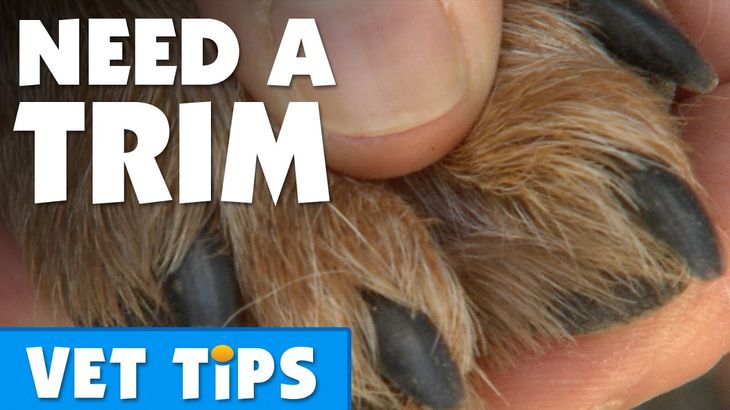
Wild canines like wolves, coyotes, dingoes, and African wild dogs roam massive geographical territories daily.
In fact, a single wolf pack can travel up to thirty miles in a single hunting cycle.
During these immense journeys, they traverse highly abrasive substrates like sandstone, granite, jagged gravel, and dry soil.
This continuous, high-impact friction acts as an automated, heavy-duty file for their growing keratin claws.
The constant pressure naturally forces the outer horn of the nail to break away in small, healthy fragments.
This self-regulating process is referred to by wildlife biologists as wild canine nail maintenance.
Every step taken on these natural abrasive surfaces works to keep the nail short and safe.
This natural friction ensures that the delicate inner blood vessel, known as the quick, remains safely retracted.
This is precisely how do wolves keep their nails short despite never seeing a pair of metal clippers.
The continuous grinding action creates a beautifully rounded, smooth tip that prevents painful splitting.
Additionally, wild dogs do not walk on soft carpets or slick hardwood floors that protect claws from wearing down.
The natural wear of wild claws is a direct byproduct of their active physical survival.
If their claws were to grow too long, they would lose their traction and speed during vital hunts.
Long, curled claws would also force their toes to splay outward, leading to chronic joint injuries.
Thus, evolutionary biology links daily survival directly with impeccable paw maintenance.
Through hunting, territorial patrolling, and den building, wild canines naturally achieve what domestic dogs struggle with.
99-Day 100% Money-Back Guarantee
“Ever since we started using the Zenpaw Maxpro Grinder, it’s been such a peaceful experience. It’s very quiet, and my dog actually relaxes. It’s turned our stressful sessions into quick, quiet grooming times.”
— Sarah M. | ✔ Verified Customer
- ✓ Prevents Infection & Splitting
- ✓ Ideal for All Dog Sizes
- ✓ Low-Vibration Technology
- ✓ Fast 2-7 Days Delivery
Need Support? Call 302-307-1000
Understanding Canine Paw Anatomy and Natural Wear
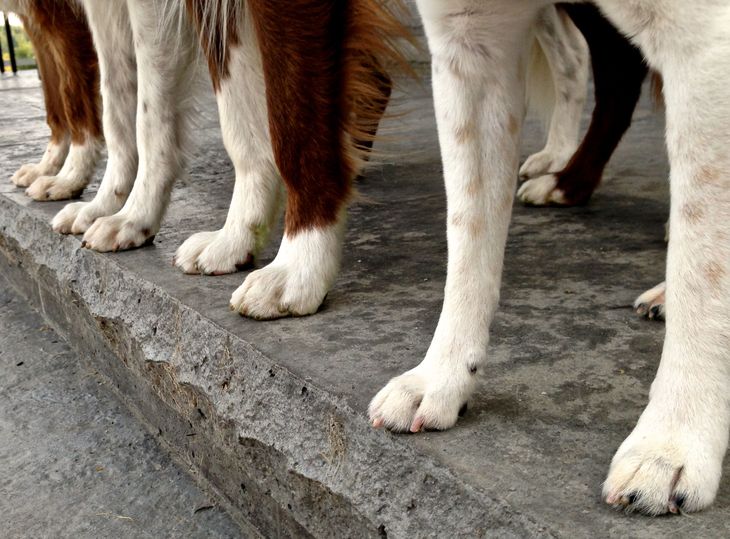
To understand why modern domestic dogs struggle with claw health, we must examine the physical structures involved.
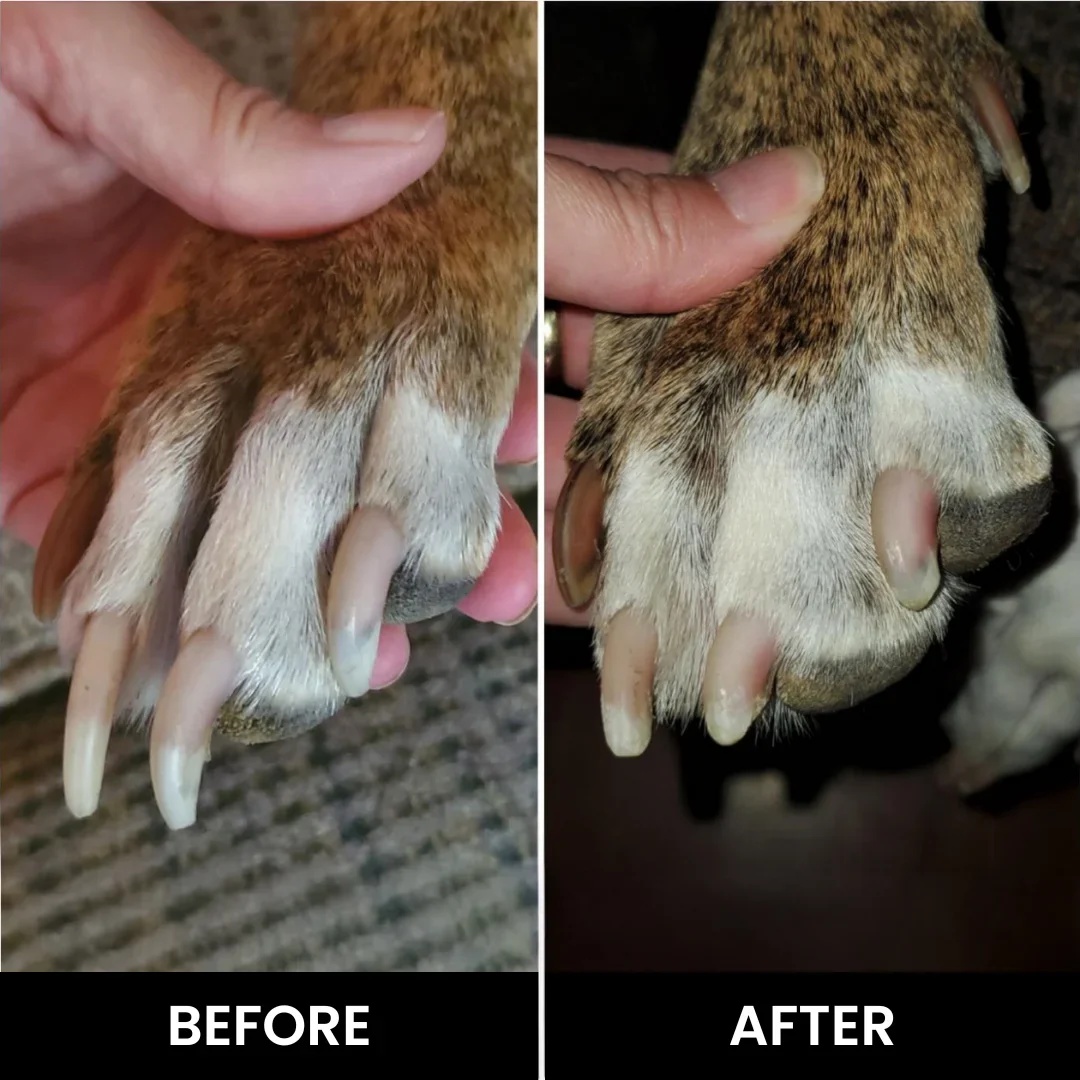
Every dog claw consists of a hard outer layer made of keratin, which protects the soft inner quick.
The quick is a vital, living organ containing sensitive nerve endings and a complex network of blood vessels.
If you cut into this living tissue, your dog will experience sharp pain and begin bleeding immediately.
In the wild, constant pressure on the nail tip signals the quick to recede backward naturally over time.
This allows the dog to maintain extremely short nails without ever risking injury to the blood supply.
However, our beloved family dogs spend most of their time on soft grass, laminate, or cozy rugs.
This soft lifestyle means the keratin shell is rarely exposed to natural friction or grinding.
As a result, many pet parents wonder, does walking dog trim nails sufficiently for indoor dogs?
The short answer is no; regular walks on suburban streets are rarely enough to handle the rate of claw growth.
This brings us to a second common question, does walking a dog help trim nails when we focus on concrete paths?
While paved paths offer minor abrasive assistance, they only contact the bottom edge of the nail slightly.
So, is walking on cement enough to trim dog’s nails completely without any grooming intervention?
For almost all domestic dogs, cement walking is not enough to manage dewclaws or maintain proper length.
This lack of friction allows the outer shell to grow incredibly long, pulling the living quick forward with it.
When the quick becomes overgrown, the claws must be trimmed in micro-increments over several weeks to safely push it back.
This is why high-quality filing tools are highly recommended by veterinarians to manage overgrown nails safely.
By mimicking the natural gradual wear of the wild, you can keep your dog’s quick safe and pain-free.
Behavioral Instincts: Digging, Scratching, and Self-Grooming
Beyond massive traveling habits, wild canines utilize instinctive behaviors to actively trim their claws.
Digging is a major instinctual behavior that serves multiple purposes for wolves and wild dogs.
They dig to create safe underground dens, uncover burrowing prey, or construct cool resting pits during summer heat.
This heavy excavation forces their claws deep into coarse soil, rocky clay, and tangled root systems.
This physical exertion acts as a powerful, natural filing mechanism that strips away dead, brittle outer keratin layers.
Our domestic dogs still possess these powerful ancestral instincts inside their genetic makeup.
If you notice your pup scratching at the couch, they are attempting to engage this very grooming instinct.
This behavior leads many modern dog owners to ask, can dogs file their own nails using structured scratching activities?
With proper training and specialized tools, they can indeed file their own front claws with incredible ease.
Some pet parents build a specialized dog sandbox to file nails naturally right in their backyards.
By layering coarse sand and smooth pebbles, you create a safe, highly abrasive playground for digging.
When your dog digs for buried treasures in this box, the abrasive grit gently files down their claws.
In addition, wild canines will occasionally chew on their nails to remove loose or split keratin shells.
This self-grooming behavior ensures that a small split does not turn into a massive, painful infection.
However, excessive chewing in domestic dogs is often linked to underlying allergies, paw pain, or chronic boredom.
To protect their health, we should provide controlled, positive grooming alternatives that channel these wild behaviors safely.
Bringing the Wild Method Indoors: Safe Nail Care for Modern Dogs
Since we cannot let our pets roam rocky mountain slopes, we must recreate that gentle abrasive friction indoors.
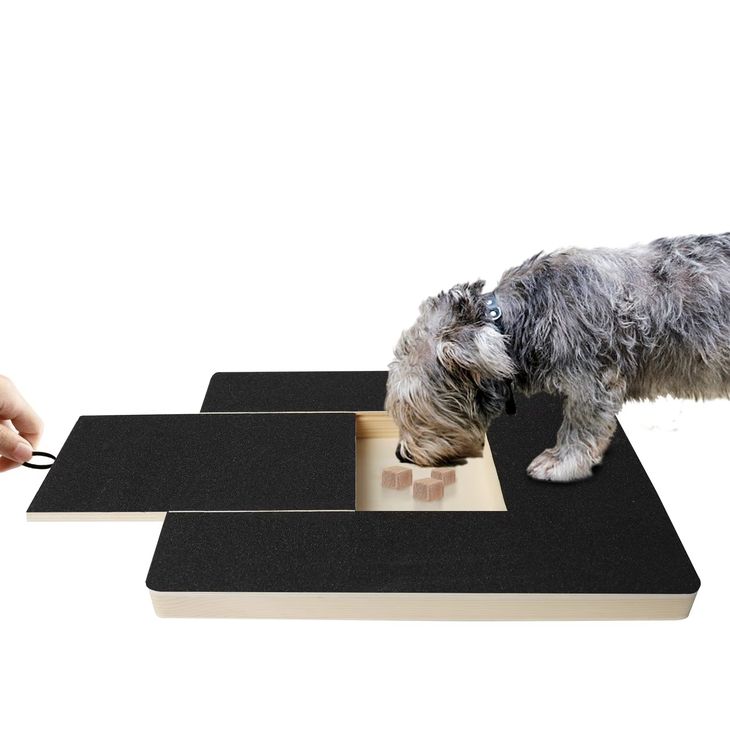
One engaging way to accomplish this is by introducing a specialized dog nail file toy to their daily play routine.
These toys use sandpaper surfaces to file down front claws while rewarding your pup with tasty treats.
Using these interactive tools allows you to keep dog nails short without clipping or causing unwanted panic.
However, file toys cannot reach the dewclaws and are difficult to use on the rear paws effectively.
For complete paw health, a professional rotary grinder like the Zenpaw Maxpro 3-in-1 Grinder is your best choice.
A rotary grinder uses high-speed friction to safely file the nail down layer by micro-layer.
This mimics the gradual, painless friction that wild canines experience on hard outdoor terrain.
To guarantee a stress-free experience, you should desensitize your dog to the grinder slowly over several days.
Begin by letting your dog sniff the turned-off device, immediately rewarding them with high-value treats.
Next, turn the grinder on to its lowest speed without touching their paws to let them adjust to the sound.
The Zenpaw Maxpro features an ultra-quiet DC motor that operates under 40 decibels to prevent startling your pet.
Once they are relaxed, gently touch the handle of the vibrating grinder to their leg to get them used to the feeling.
When you are ready to file, hold the paw securely but gently, separating the toes with your fingers.
Hold the diamond grinding wheel at a precise 45-degree angle relative to the nail’s natural downward growth line.
Work in short, light bursts of two to three seconds per claw to avoid heat buildup on the quick.
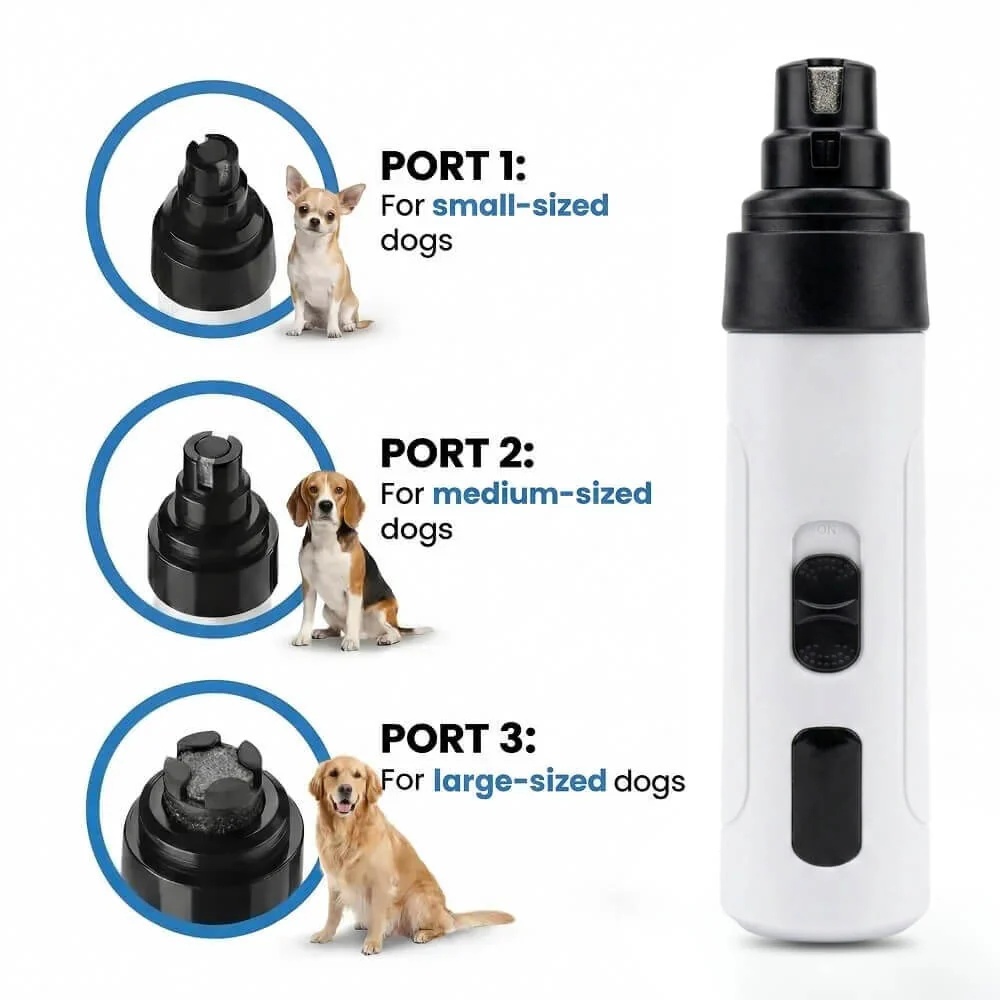
Utilize the three safety ports to match the unique size of your dog’s nails perfectly.
With just a bit of patience, this gradual process transforms scary grooming sessions into a calm, loving bonding routine.
The Hidden Dangers of Traditional Dog Nail Clippers
Despite modern advancements, many owners still rely on traditional metal clippers for their dogs.
Traditional clippers work by applying immense crushing force to the entire structure of the nail.
This sudden, violent force can shatter, split, or crack dry, brittle canine claws instantly.
Furthermore, clippers provide absolutely zero visibility when dealing with thick, black dog nails.
Because the quick is invisible from the outside, you are essentially cutting blind during every session.
If you make a mistake and clip the quick, your dog will experience sharp pain and lasting psychological fear.
This painful experience is the primary reason why so many dogs panic when they see grooming tools.
A high-quality grinder eliminates this sudden crushing force entirely by filing the nail down smoothly.
Grinding allows you to monitor the cross-section of the nail closely after every light touch.
When a small, dark circle appears in the center of the nail, you know exactly when to stop before reaching the quick.
This visual control makes the process incredibly safe and stress-free, even for absolute beginners.
Common Questions About Natural Nail Care and Grinding
Is the Zenpaw Grinder safe for extra-large dog breeds?
Yes, the Zenpaw Maxpro is engineered with a powerful, dual-speed motor to handle the thickest claws.
It features three separate safety ports designed to accommodate small, medium, and heavy-duty large claws safely.
Simply use the wide-open port configuration to quickly and smoothly grind down larger nails without any stalling.
How long does the battery last on a single charge?
The high-capacity battery is designed to last up to 7 hours of continuous use on a single charge.
It is fully USB-rechargeable, allowing you to charge it conveniently using your phone adapter, laptop, or power bank.
This extended runtime ensures you can easily groom multiple pets without worrying about a dying battery mid-session.
Which speed setting is best for anxious dogs?
We highly recommend starting on the low-speed setting to introduce the device to highly anxious or sensitive pets.
The lower speed produces minimal vibration and operates at our quietest sound level of under 40 decibels.
Once your pet becomes fully comfortable with the sensation, you can step up to the high-speed setting for faster filing.
Does the grinding wheel get hot during the grooming session?
Our advanced diamond drum bit features low-heat technology to prevent friction-based heat buildup during use.
However, you should still avoid holding the grinding wheel on a single nail for more than three consecutive seconds.
Alternating between paws allows each nail to cool completely, ensuring a comfortable, pain-free experience.
How often should I grind my dog’s nails to keep them short?
To keep the quick retracted and nails short, we recommend a quick grinding session once every one to two weeks.
Frequent, short sessions are far more effective at managing nail health than long, monthly grooming struggles.
This regular maintenance schedule mimics the natural, continuous wear that wild canines experience every single day.
Conclusion: Bring Safe, Natural Nail Care to Your Home
By mimicking the natural wear of wild canines, you can keep your pet’s paws healthy and pain-free.
Ready to transform nail trimming from a battle into a breeze?
Explore the Zenpaw Maxpro 3-in-1 Grinder today.
Call 302-307-1000 — our team can help advise on the best grooming practices and assist with any product questions.
Note: Individual results may vary depending on individual dog breeds, nail thickness, and behavioral temperaments. This article is intended for general pet grooming reference purposes only and does not replace professional veterinary advice.