
I still remember the cold sweat that broke out when I felt a sharp, hard hook buried deep against my rescue dog’s front leg. Finding a dew claw curled into leg tissue is terrifying because you realize your silent companion has been in quiet discomfort for weeks. After years of grooming trials, our team at Zenpaw designed a solution that turns this high-stress panic into a peaceful, painless bonding routine for paws everywhere.
Maxpro 3-in-1 Grinder.
Stress-Free Nail Trimming.
Whisper-quiet DC motor (<40 dB) eliminates fear & discomfort. Features 3 ports, dual speeds, and 7-hour battery life. Safe, precise, and painless.
In This Article
- Understanding why dew claws curl and how they damage the leg pad.
- How to safely identify the boundaries of the quick.
- Step-by-step techniques for using clippers and grinders on circular nails.
- Scientific ways to desensitize your anxious dog to grooming.
- Recognizing signs of infection and knowing when to see a professional.
The Hidden Danger of a Dew Claw Curled Into the Leg Pad
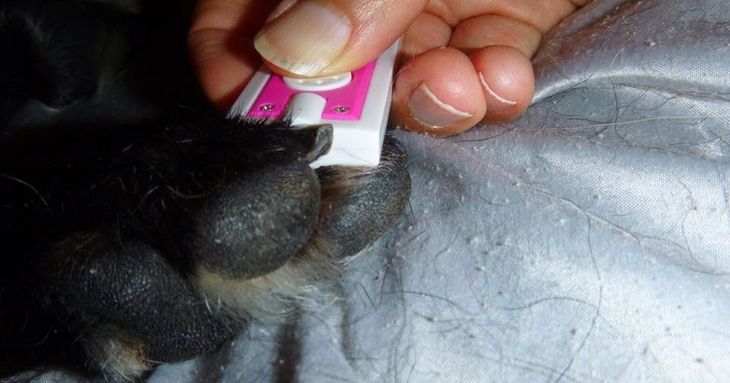
Every dog parent loves the playful energy of their canine companion.
Yet, many owners remain unaware of a hidden anatomical vulnerability on their dog’s inner front legs.
The dew claw is essentially the dog’s equivalent to a human thumb.
Unlike the other four nails on the paw, the dew claw sits higher up on the inner side of the lower leg.
Because it remains elevated, this claw never makes contact with walking surfaces like concrete or dirt.
Consequently, the nail does not wear down naturally over time.
Without regular maintenance, you will eventually find your how to cut dog’s dew claw nails guide becoming an absolute necessity.
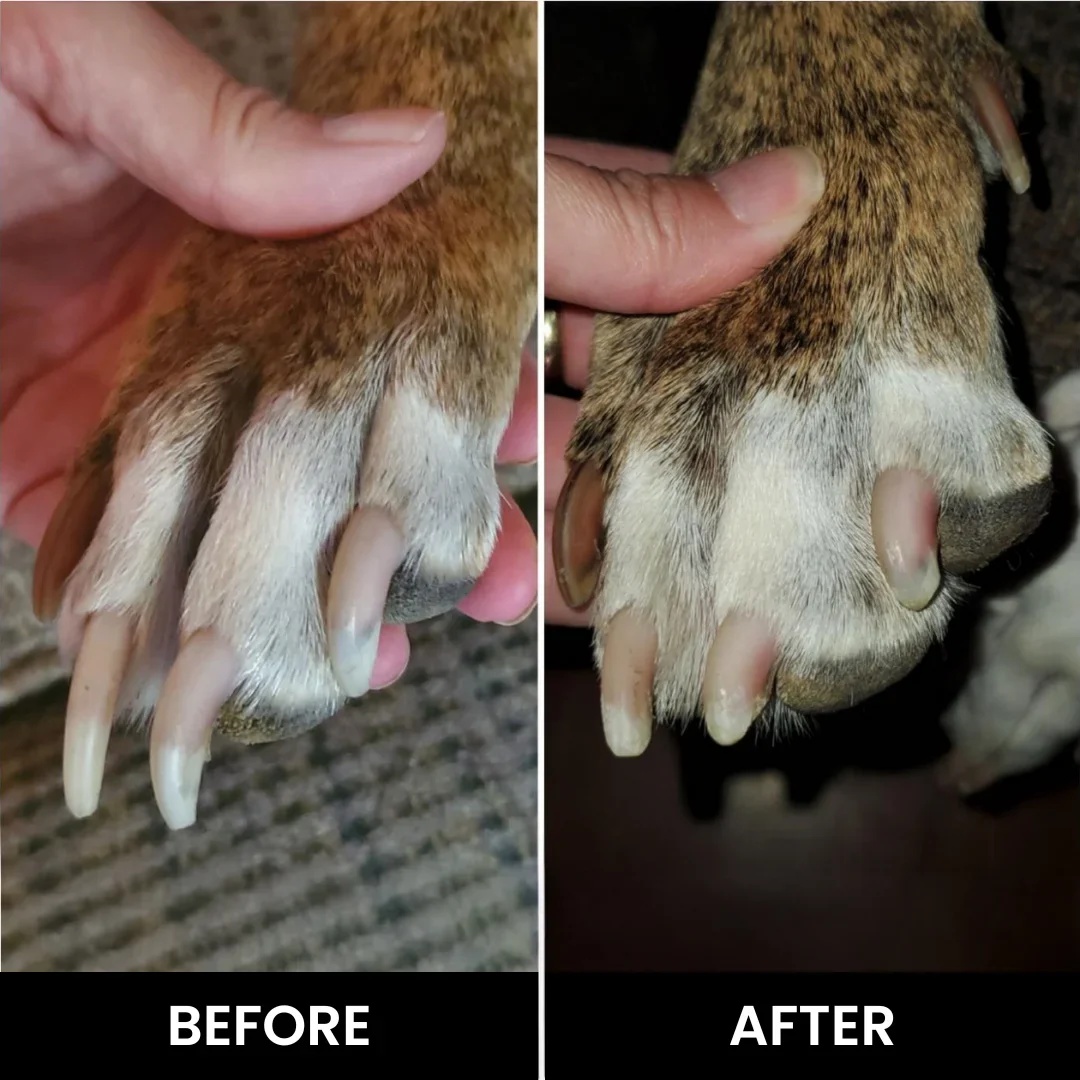
The nail naturally grows in a tight, circular spiral pattern.
Left unchecked, this continuous curve points directly back toward the leg pad or skin.
When this happens, it becomes a dog nail curled into paw hazard that can cause severe discomfort.
Why Dew Claws Require Special Attention
Some breeds are born with loose, floppy dew claws on their hind legs as well.
These rear dew claws are even more prone to snagging and severe curling because they lack strong bony attachments.
If you fail to trim these structures, a dog nail growing into pad situation will develop, embedding the sharp keratin tip directly into the soft flesh.
Every step your dog takes pull on the sensitive base of the dew claw.
This creates a constant, low-grade pinching sensation that makes your pet anxious and physically guarded.
You may notice your dog obsessively licking at their inner leg.
This is their only way of trying to soothe a painful, deep puncture wound.
Moisture from saliva combined with a puncture wound creates a perfect breeding ground for bacterial infections.
To avoid severe complications, you must understand how to cut curled dog nails with absolute precision and patience.
Letting the nail grow into a loop compromises your dog’s gait and structural posture.
It makes them lean awkwardly to avoid pressure on the inner leg.
By learning to address this problem early, you maintain your dog’s joint health and overall happiness.
99-Day 100% Money-Back Guarantee
“Ever since we started using the Zenpaw Maxpro Grinder, it’s been such a peaceful experience. It’s very quiet, and my dog actually relaxes. It’s turned our stressful sessions into quick, quiet grooming times.”
— Sarah M. | ✔ Verified Customer
- ✓ Prevents Infection & Splitting
- ✓ Ideal for All Dog Sizes
- ✓ Low-Vibration Technology
- ✓ Fast 2-7 Days Delivery
Need Support? Call 302-307-1000
Understanding Canine Nail Anatomy: Where is the Quick?
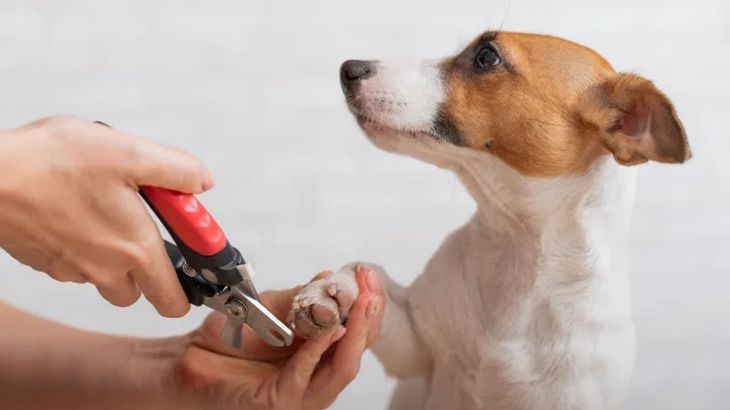
To safely handle a curved claw, you must first study basic dog nail anatomy.
Inside every canine nail lives a sensitive vascular core known as the quick.
The quick is packed with blood vessels and extremely sensitive nerve endings.
If you cut into this vascular bundle, it causes sharp pain and immediate bleeding.
This negative experience can make your dog highly fearful of future nail trims.
When dealing with overgrown dog nails, the quick actually stretches outward along with the shell.
This means you cannot simply cut the entire loop off in one go.
The blood supply inside the curled claw is much longer than it would be in a healthy, short nail.
Understanding this biological response is critical to avoiding a painful accident.
Mapping the Quick in Clear vs. Dark Nails
If your dog has white or transparent nails, mapping the quick is relatively simple.
You can see a soft pink shadow running through the center of the translucent keratin sheath.
The pink area represents the live blood vessels.
You must stop your cut at least two to three millimeters before this pink zone starts.
For dogs with solid black or dark brown nails, locating this boundary requires a different approach.
You cannot see through the dark outer pigments with the naked eye.
In this scenario, you must look at the nail head-on from the cut surface.
As you shave away small layers of a dark nail, look for a small, dark grey circle in the center.
As you get closer to the living tissue, this circle turns into a soft, fleshy, dark point.
If you see a moist, dark dot in the middle of the chalky white interior, stop immediately.
This moist center indicates that you are mere millimeters away from the live nerve endings.
Step-by-Step Guide: How to Safely Cut and Grind Curled Dew Claws

Approaching a tightly curled dew claw requires a calculated, multi-stage strategy.
You cannot treat this like a standard, straight-forward nail grooming session.
The key is to work in tiny, incremental steps to slowly relieve the physical pressure on the leg.
Your ultimate goal is to break the continuous loop of the claw without nicking the surrounding skin.
To do this, you will need a pair of sharp, high-precision, thin-bladed clippers and a safe grinding tool.
This is where learning how to cut dog’s side nails becomes an essential skill.
Before you begin, secure a quiet space with plenty of soft lighting.
Have your styptic powder or cornstarch nearby just in case of an accidental nick.
Keep high-value treats within reach to reward your pup for remaining still.
If the nail is already embedded in the pad, check for signs of swelling or pus.
If you suspect a deep infection, consult a professional groomer or veterinary clinic before proceeding.
Step 1: Create Space and Relieve Pressure
Gently slide your thumb under the dew claw digit to pull it away from the leg.
If the tip is touching or lightly pressing the pad, find the narrowest space near the outer edge.
Do not pull the nail outward violently, as this causes joint pain at the base of the claw.
Instead, use your thin-bladed clipper to nip off the very tip of the curve.
Take off only one to two millimeters of keratin shell at a time.
Once you break the circular loop, the immediate pressure on the skin pad will drop.
Step 2: Transition to Grinding at a 45-Degree Angle
Once you have snipped the sharpest point, put your traditional clippers aside.
Clippers apply blunt, crushing force that can crack a highly curved nail.
Switch to the Zenpaw Maxpro Grinder to gradually smooth out the remaining rough edges.
Hold the grinder hand steady and touch the rotating head to the tip of the nail for only two seconds at a time.
Always maintain a precise 45-degree angle to the natural growth line.
This angle allows you to shave back the dead keratin shell while gently encouraging the quick to recede.
The Zenpaw Maxpro’s whisper-quiet motor keeps your dog from flinching during this delicate phase.
Work slowly, alternating between a light touch and a short pause to prevent heat buildup on the nail bed.
The Science of Desensitizing Your Dog to Nail Tools
Many dogs associate nail grooming with pain, confinement, and loud noises.
This fear is a deeply rooted survival instinct rather than simple stubbornness.
To overcome this, you must understand what happens if you dont cut dog nails and why avoidance worsens the issue.
Over time, the pain of walking on long claws reinforces their fear of paws being touched.
You can break this cycle of anxiety through a process called systematic desensitization.
This behavioral method pairs the sight and sound of grooming tools with pleasant rewards.
The goal is to re-wire your dog’s autonomic nervous system to feel safe around grooming equipment.
A Practical 5-Day Desensitization Blueprint
Never rush your dog through behavioral training.
Progress at your pet’s individual comfort pace to build a foundation of lasting trust.
- Day 1: Familiarity and Positive Associations. Place the Zenpaw Maxpro Grinder on the floor turned off, surround it with treats, and let your dog sniff it freely.
- Day 2: Sound Introduction. Turn the grinder on its lowest speed several feet away from your dog while feeding them high-value chicken or cheese.
- Day 3: Passive Touch. Touch the plastic handle of the turned-off grinder to your dog’s paws and legs, reinforcing stillness with rewards.
- Day 4: Active Vibration. Turn the grinder on and gently touch the vibrating body of the tool (not the grinding stone) to their leg joints.
- Day 5: Single-Nail Success. Grate a single nail for just two to three seconds, then throw a praise party with their favorite treat.
Using a tool with a whisper-quiet sound profile makes this process dramatically easier.
The Zenpaw Maxpro operates at under 40 decibels, making it sound like a soft hum rather than a terrifying power tool.
This makes the transition from Day 1 to Day 5 incredibly smooth for anxious dogs.
Overcoming Risks & Common Mistakes: Why Traditional Clippers Fail
Many pet owners reach for traditional scissor or guillotine clippers out of habit.
However, these tools function by squeezing the nail sheath from both sides until it snaps.
On a curved dew claw, this squeezing pressure puts intense strain on the sensitive quick underneath.
Older or dry nails are prone to shattering under the brute force of a metal clipper blade.
A shattered nail can expose the raw quick, leading to intense pain and risk of infection.
Using a grinder eliminates this crushing force by filing away keratin layers smoothly.
| Grooming Method | Risk of Quicking | Nail Structural Impact | Anxiety and Noise Level |
|---|---|---|---|
| Traditional Guillotine Clippers | Extremely High | Crushes and splinters the outer shell | Loud “snapping” sound causes panic |
| Scissor-Style Hand Trimmers | High | Applies uneven lateral pressure | Quiet but physically invasive |
| Zenpaw Maxpro 3-in-1 Grinder | Extremely Low | Gently files in microscopic layers | Whisper-quiet (<40dB) and calming |
Another common pitfall is attempting to finish all four paws and dew claws in a single session.
When dealing with overgrown or curled nails, patience is your greatest asset.
Trimming just one nail per day allows your dog’s stress levels to remain low.
It also gives the long quick time to naturally recede back up the nail shaft.
If you file the tip weekly, the blood supply will retreat, allowing you to shorten the nail safely over time.
Frequently Asked Questions (FAQ)
Is the Zenpaw Grinder safe for extra-large dog breeds?
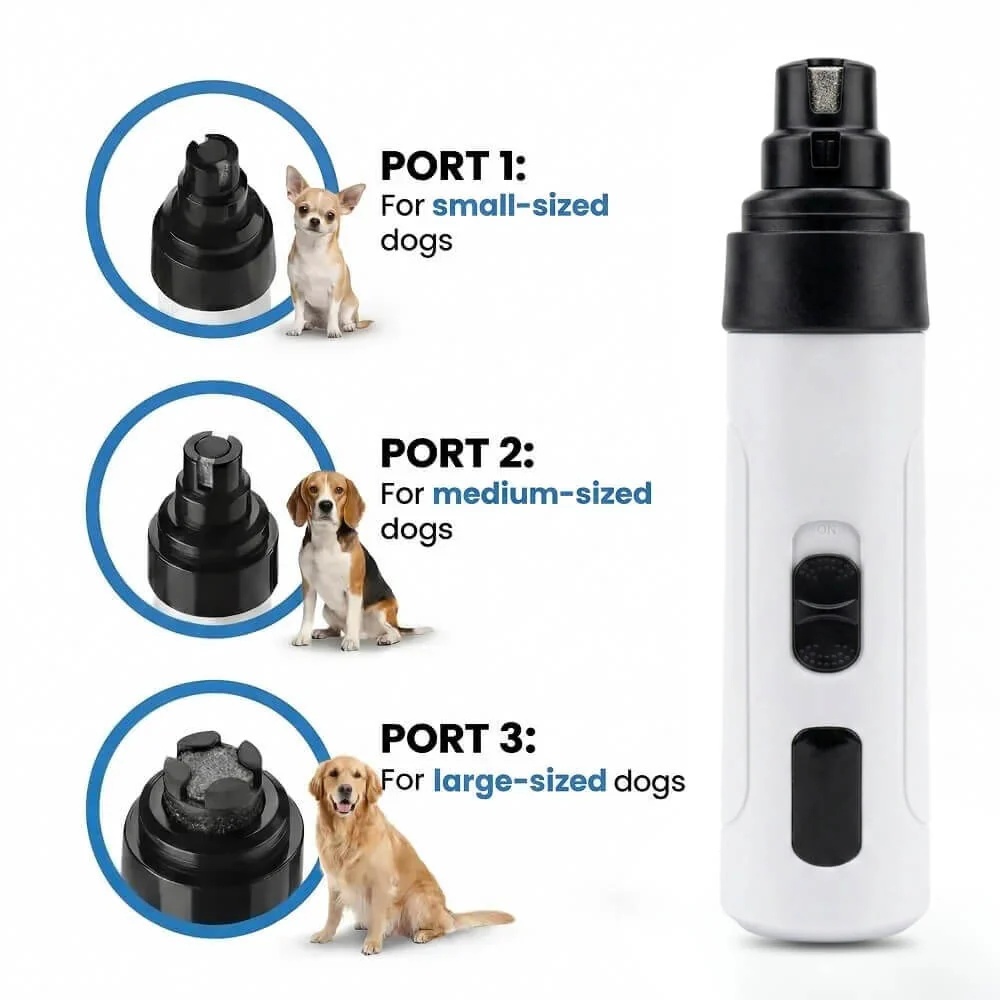
Yes, the Zenpaw Maxpro features three distinct ports designed to accommodate small, medium, and large breeds.
For large dogs with thick, dense nails, you can remove the protective cap entirely to expose the heavy-duty diamond grinding bit.
The high-torque motor provides continuous power without slowing down under pressure.
How long does the battery last on a single charge?
The Zenpaw Maxpro is built with a premium rechargeable battery that provides up to 7 hours of continuous run time.
This long life ensures you can groom multiple dogs or take your time during slow desensitization sessions without the tool dying.
It charges quickly via a universal USB cable, making it convenient for travel.
Which speed setting is best for sensitive dew claws?
We recommend starting on the lowest speed setting when working with sensitive, curled dew claws.
The lower speed provides maximum precision and minimizes the vibration sensation against the dog’s leg.
Once your dog is comfortable, you can switch to the high-speed mode for faster shaping on standard toe claws.
Does the grinding head get hot during operation?
No, the Zenpaw Maxpro is engineered with advanced low-heat technology to prevent friction heat from building up.
Traditional high-vibration grinders can overheat quickly, causing a burning sensation on the dog’s nail bed.
By using a professional-grade diamond bit, our tool files cleanly with minimal friction.
What should I do if the curled nail has already pierced the pad?
If the nail has pierced the skin, check the wound for fluid, extreme redness, or a foul odor.
For deep punctures with active infections, we strongly recommend visiting a veterinarian for professional cleaning and antibiotics.
If the puncture is shallow and clean, carefully snip the tip to relieve pressure, clean with antiseptic, and grind the edges smooth.
Conclusion
Keeping your dog’s dew claws short is vital for preventing pain, infections, and skeletal imbalances.
By pairing patience with the right tools, you can easily restore your companion’s paw health.
Ready to transform nail trimming from a battle into a breeze?
Explore the Zenpaw Maxpro 3-in-1 Grinder today.
Call 302-307-1000—our team is always here to advise you on stress-free grooming practices and answer product questions.
Note: Individual results may vary depending on individual dog breeds, nail thickness, and behavioral temperaments. This article is intended for general pet grooming reference purposes only and does not replace professional veterinary advice.